
Step away from busy schedules and digital distractions. Discover how a couples wellness retreat in India can create space for shared yoga, mindful meals, meaningful conversations and a deeper appreciation of Indian culture.
There is a particular kind of distance that can develop between two people who spend their lives together but rarely have uninterrupted time together.
Conversations become exchanges about schedules, responsibilities and what needs to happen next. Meals are fitted between meetings. Holidays are planned around itineraries, photographs and the pressure to make the most of every hour. Even when two people are in the same room, their attention may be divided between work, notifications and the demands of everyday life.
A journey together can offer something different.
Not necessarily an elaborate holiday or a tightly organised programme of activities, but a few days in which there is room to slow down, learn something new and experience a place together.
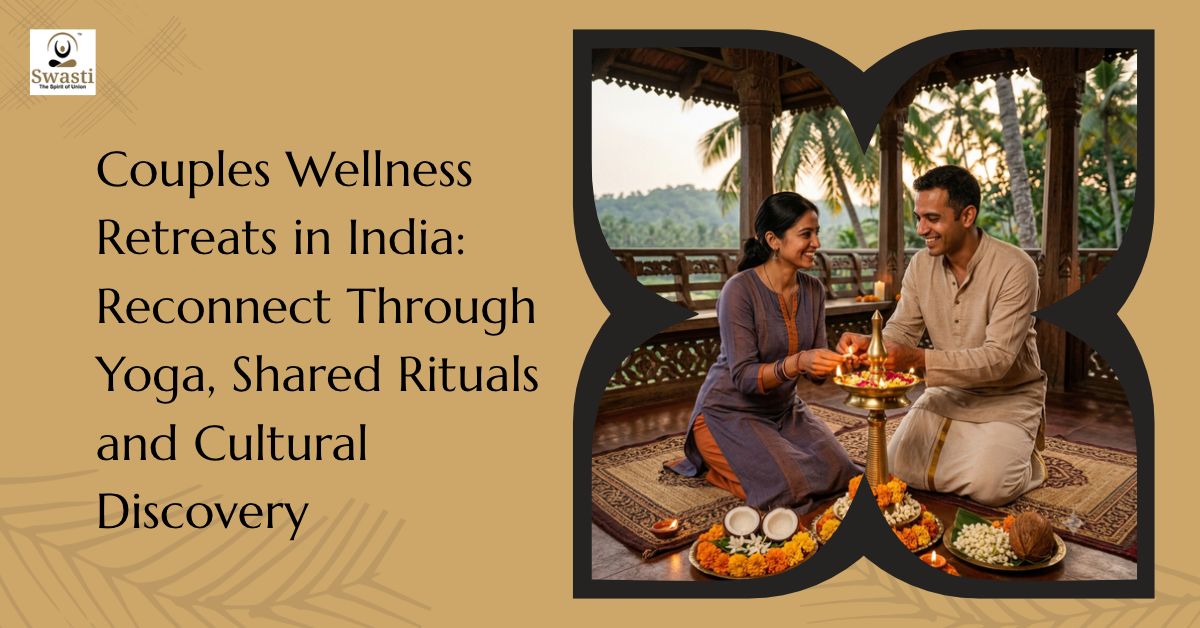
A couples wellness retreat in India can offer this opportunity through shared yoga, meditation, traditional Indian food, cultural discovery and unhurried time. It can introduce partners to practices that encourage attention and reflection while allowing them to encounter a different side of India—one shaped by philosophy, hospitality, regional cuisine and living traditions.
At Swasti Yoga Center in Pune, the philosophy is rooted in personal attention, professional yoga education, authentic Indian culture and a quieter way to experience India.
The intention is not to promise that a retreat will transform a relationship. It is to create a thoughtful setting in which two people can step outside their usual routines and make room for experiences they may have been postponing.
Why take a wellness retreat together?
A conventional holiday often revolves around sightseeing, dining and entertainment. These experiences can be enjoyable, but they do not always provide the space that couples are seeking.
A private couples retreat can be designed differently. Instead of following a packed itinerary, partners can share a few carefully chosen activities, enjoy time outdoors and participate in experiences that encourage them to pay attention to the present moment.
The value may lie in small things: learning a yoga posture together, preparing a meal from unfamiliar ingredients, listening to a teacher explain an aspect of Indian philosophy or taking a walk without checking the time.
These activities do not require partners to have the same interests or levels of fitness. One person may be an experienced yoga practitioner while the other is a beginner. One may enjoy cultural history, while the other prefers cooking or time in nature.
A well-planned retreat can accommodate these differences rather than expecting both people to follow an identical schedule.
The goal is not to measure the success of a relationship. It is to make room for shared experiences, curiosity and conversation.
Partner yoga: Learning to move together
Partner yoga can be an enjoyable introduction to practising together. It uses selected postures and movements that may involve coordination, balance, gentle assistance or synchronised breathing.
For beginners, a session might focus on simple standing postures, seated movements or supported stretches. More experienced practitioners may explore appropriate partner variations under the guidance of a qualified teacher.
The emphasis should be on communication, comfort and choice. Neither person should be expected to perform a difficult posture, accept physical contact they do not want or keep pace with the other.
A good instructor adapts the practice to each person’s mobility, experience and confidence. Partners can participate in the same session while receiving different instructions when necessary.
Partner yoga is not a relationship test, and physical synchrony does not prove emotional compatibility. Its value is more straightforward: it gives two people an opportunity to learn a new skill, coordinate their movements and share an experience outside their ordinary routines.
For couples who already practise yoga, it can offer a fresh perspective on familiar movements. For beginners, it can be a relaxed way to explore yoga without the pressure of a group class.
Meditation and shared quiet
Not every retreat experience needs to involve movement or conversation.
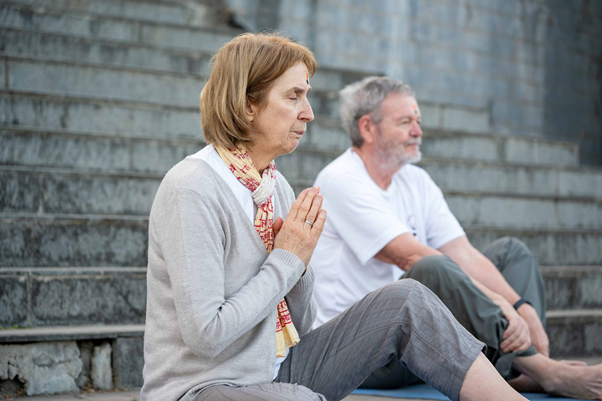
A guided meditation session can offer a structured period of quiet in which each person practises directing attention towards the breath, bodily sensations or another suitable focus. A gentle relaxation session may provide an opportunity to notice and release unnecessary muscular tension.
Couples can participate in the same session without being required to share their thoughts afterwards. Quiet can be a shared experience while still allowing each person to have a private inner life.
This distinction is important. Emotional connection cannot be scheduled, and a retreat should not pressure people into disclosing personal concerns or discussing sensitive relationship issues.
Instead, partners might choose to take a short walk after a session, share a cup of tea or simply enjoy a period without digital interruptions.
These are modest experiences, but they can feel different when daily life rarely allows them to happen.
Meditation and relaxation may help some people manage everyday stress, although individual responses vary. They are not substitutes for professional psychological care or relationship counselling when these are needed.
The pleasure of cooking and eating together
Food is one of the most immediate ways to encounter another culture.
In Maharashtra, everyday cooking offers a rich introduction to regional ingredients, household traditions and the relationship between food and hospitality. A shared Indian vegetarian cooking class can turn a meal into a collaborative experience.
Depending on the programme, couples might learn to prepare a simple dal, a seasonal vegetable dish, chapatis or a regional Maharashtrian preparation. They can discover how spices are combined, why different grains are used and how cooks adapt recipes according to the season and the ingredients available.
The pleasure lies as much in the process as in the final meal. One person might prepare the vegetables while the other learns to temper spices. Both can ask questions, make mistakes and discover unfamiliar flavours.
A workshop may also introduce the idea of sattvic eating, a traditional approach associated in yogic philosophy with qualities such as clarity, harmony and moderation. Interpretations vary across traditions, and sattvic eating should not be presented as a medically proven diet or a universal nutritional prescription.
A thoughtful food experience accommodates individual needs. Allergies, dietary restrictions, spice tolerance and personal preferences should be discussed in advance.
For couples who enjoy exploring food together, the experience can provide something tangible to take home: a recipe, a cooking technique or the confidence to prepare a new dish in their own kitchen.
Discovering India beyond the familiar itinerary
One of the most rewarding aspects of a couples wellness retreat in India is the opportunity to learn about the place in which the experience unfolds.
India is not a single cultural experience. Its languages, food traditions, architecture, philosophies and everyday customs vary considerably across regions.
Pune offers a useful base from which to encounter Maharashtra. The city combines a contemporary urban setting with a rich cultural history, educational traditions and access to the wider landscape of western India.
A thoughtfully arranged stay might include a heritage walk, a conversation about Indian philosophy, an introduction to local food traditions or an excursion to a suitable destination outside the city.
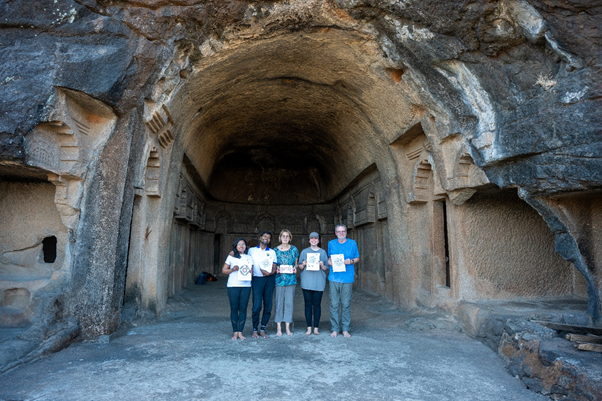
Couples interested in history may wish to explore the region’s Buddhist cave complexes, including the rock-cut architecture at Karla or Bhaja. Those drawn to the outdoors may prefer a scenic journey towards the Sahyadri mountains, with a gentle walk selected according to the season, weather and individual mobility.
These experiences should complement the retreat rather than fill every available hour. The aim is not to collect as many attractions as possible, but to encounter a place with enough time to notice its details.
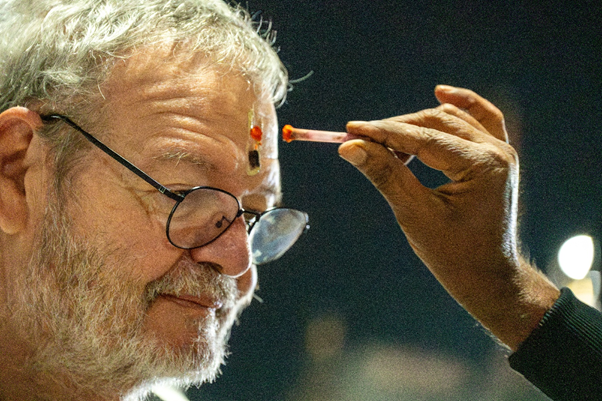
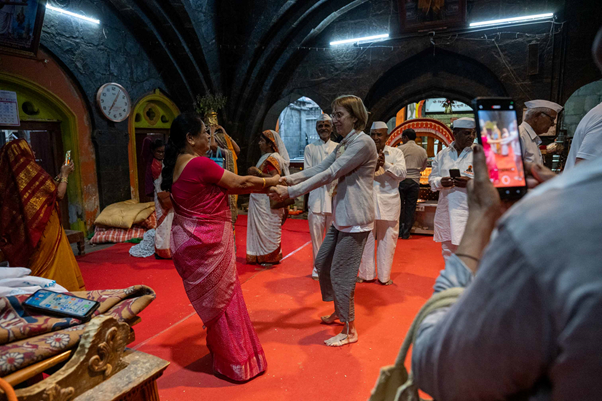
For international visitors, this can also mean learning everyday cultural practices: how a traditional meal is served, how to participate respectfully in a place of worship or how local customs shape hospitality.
A good cultural experience makes room for questions without treating a living tradition as a performance staged for visitors.
What does a private couples retreat look like?
The advantage of a private couples retreat is the opportunity to choose a rhythm that suits both partners.
One couple may want a short introduction to yoga and Indian food. Another may be looking for several days of practice, cultural learning and time outdoors. A third may prefer to combine individual yoga sessions with a few shared activities.
The following is an illustrative structure rather than a fixed Swasti package. Availability, accommodation, meals and activities should be confirmed before booking.
A five- to seven-day cultural immersion
A longer stay allows more time to explore yoga systematically, discover regional food and learn about Indian philosophy.
Couples might alternate shared sessions with individual instruction, giving each person the opportunity to pursue a particular interest. One partner may want more attention to posture and movement, while the other prefers a gentler introduction to meditation.
The programme can also include selected cultural experiences, subject to availability. A heritage excursion or nature outing can be balanced with unstructured time rather than becoming another demanding day.
The point of a longer retreat is not to keep the couple occupied. It is to give the experience enough space to develop at a comfortable pace.
Learning yoga in its Indian context
For many international visitors, coming to India is an opportunity to understand yoga beyond the physical practice.
Yoga has a long and diverse intellectual history, encompassing philosophical inquiry, ethical disciplines, meditation and different approaches to practice. Contemporary yoga classes represent only part of this wider tradition.
Learning with experienced faculty can provide context for the practices themselves. Guests may be introduced to foundational ideas from Indian philosophy, learn how to approach postures safely or discuss how different traditions understand meditation and daily discipline.
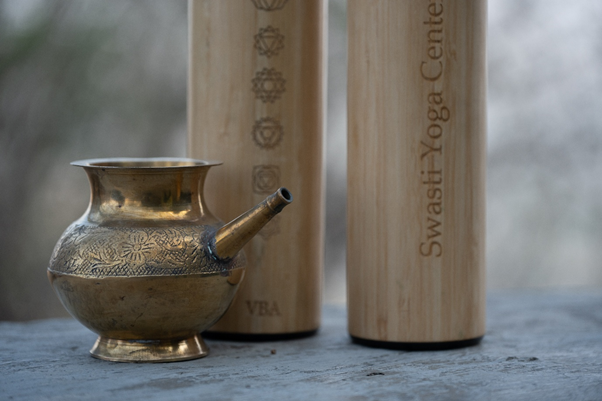
At Swasti Yoga Center, professional yoga education is an important part of the experience. Visitors who want to continue their learning beyond a private retreat can enquire about suitable programmes, depending on their interests and prior experience.
A short couples retreat should not be confused with formal teacher training or a professional qualification. It can offer an introduction to yoga and Indian culture without implying that a few days of practice qualify someone to teach.
This clarity makes the experience more valuable for both beginners and experienced practitioners.
Who might enjoy a couples wellness retreat in India?
A private retreat may appeal to couples who:
- Want a break from demanding work schedules and digital distractions.
- Are curious about yoga but prefer individual guidance.
- Already practise yoga and want to explore partner sessions.
- Enjoy food, history, architecture and cultural learning.
- Want a shared experience that does not revolve entirely around sightseeing.
- Prefer a flexible itinerary rather than a fixed group programme.
- Would like to combine personal interests with a few activities undertaken together.
Couples do not need to be at the same stage of their yoga journey or share every interest. The important consideration is whether the programme can accommodate both people comfortably and respectfully.
A retreat is not a substitute for couples counselling or treatment for mental health concerns. Where a relationship is experiencing significant difficulty, a wellness holiday should not be presented as a replacement for appropriate professional support.
How to choose the right retreat?
Before booking a private couples retreat, discuss the practical details with the organiser.
Ask about personalisation: Can each partner receive guidance appropriate to their experience and mobility? Is the programme genuinely flexible, or does it follow a fixed timetable?
Understand the accommodation: Confirm room arrangements, privacy, bathroom facilities, work access if required and what is included in the quoted price.
Clarify the activities: Ask whether partner yoga, cooking classes, meditation sessions, heritage walks and excursions are included or available at additional cost.
Discuss food in advance: Share allergies, dietary preferences, religious or cultural requirements and spice tolerance before arrival.
Check the faculty’s qualifications: Understand who will teach the sessions, what their experience covers and whether any activity involves medical or therapeutic claims.
Agree on expectations: A retreat can offer time, instruction and new experiences. It cannot guarantee that a relationship will improve or that either partner will experience a particular emotional outcome.
Transparent information makes it easier to choose a retreat that fits the couple rather than asking the couple to fit an advertised promise.
Plan a private couples retreat in Pune
Discover a more personal way to experience yoga, Indian food and Maharashtrian culture together.
Enquire about a bespoke couples wellness retreat or private partner yoga session at Swasti Yoga Center, Pune.
Partner yoga sessions, cooking experiences, cultural outings, accommodation and other retreat inclusions should be confirmed with Swasti before booking. Experiences and outcomes vary by individual; no retreat can guarantee psychological healing or relationship outcomes.