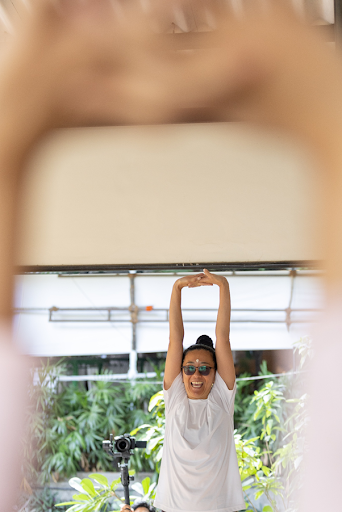
For expatriates and international professionals living in India, yoga can become much more than a fitness practice. It can be a way to manage stress, adapt to a new environment, build family connections, understand Indian culture and even develop a new professional direction.
Dr Vikas Chothe
Moving to another country can be an exciting life experience. India, in particular, offers international residents a completely different rhythm of life—new food, climate, languages, social customs, festivals, spiritual traditions and ways of relating to family and community.
But adaptation also has its challenges.
Homesickness, changes in routine, unfamiliar food and weather, professional responsibilities, parenting away from one’s home country and the challenge of building a new social circle can all affect wellbeing.
For many expatriates who have studied at Swasti Yoga Center in Pune, yoga has become an unexpected bridge between their previous life and their new life in India.
Their experiences suggest that yoga can serve not only as physical exercise, but also as a coping tool, family practice, cultural experience and professional skill.
From expatriate life to a new relationship with yoga
One of the distinctive experiences of international students at Swasti is that they often arrive with a specific purpose—improving their health, learning yoga, completing a teacher-training course or exploring Indian traditions.
But their relationship with yoga frequently develops beyond their original expectations.
For some, yoga becomes part of their professional work.
For others, it becomes a way to manage the emotional challenges of living away from home.
For parents, it becomes something they can share with their children.
And for some, it becomes a deeper connection with Indian culture and philosophy.
Hilal from Türkiye: Connecting yoga with psychotherapy
Hilal, a psychologist from Türkiye, explored yoga from a professional perspective.
For her, yoga was not simply another physical activity. She began to recognise how yoga could complement her existing understanding of psychological wellbeing.
Her experience led her to consider yoga as an additional arm of her psychotherapy practice.
This is particularly relevant for professionals working in mental health and wellbeing. Yoga can provide another framework through which practitioners can explore areas such as breath awareness, relaxation, body awareness, attention and self-regulation.
For Hilal, studying yoga in India helped broaden her professional perspective and gave her an opportunity to understand yoga within the cultural environment from which the tradition originated.
Her journey illustrates an increasingly relevant idea:
Professionals do not necessarily have to choose between their existing career and yoga. Yoga can become an additional professional capability.
A psychologist can integrate appropriate yoga-based practices into wellbeing work. A fitness professional can expand into mind-body practices. A teacher can introduce age-appropriate yoga into education. A corporate professional can develop workplace wellbeing expertise.
The possibilities become broader when yoga is approached as a structured discipline rather than simply a collection of postures.
Sueko from Japan: Yoga, health and adapting to a new environment
For Sueko from Japan, the benefits were both physical and emotional.
As a mother of two children living in India, adapting to a new environment involved more than simply establishing a new routine.
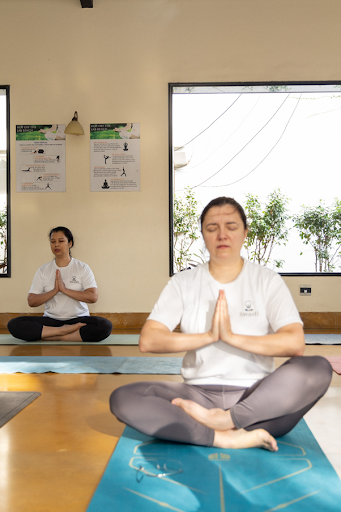
Yoga helped her work on her physical health and flexibility while also providing a regular personal practice.
But another dimension became important: adaptation.
Moving away from one’s home country can sometimes create a sense of disconnection. Familiar routines, food, climate, language and social surroundings may suddenly change.
A consistent yoga practice can provide something stable within that change.
The practice becomes time that belongs to oneself—a daily opportunity to slow down, breathe, move and reconnect.
For Sueko, yoga also became part of her experience of adapting to Indian climatic and lifestyle conditions.
This is an important distinction.
Wellness for expatriates is not only about avoiding stress. It is also about developing resilience and adaptability.
Naho from Japan: When yoga becomes a family practice
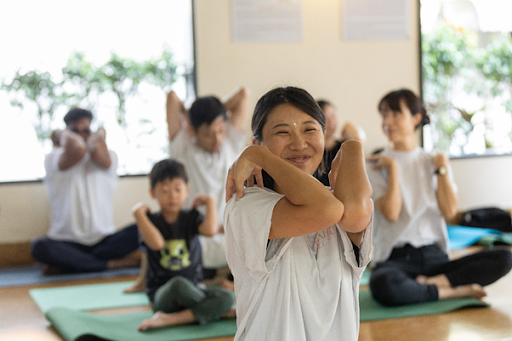
Naho moved from Japan to Pune with her two children.
Her experience demonstrates another dimension of expatriate wellness: family wellbeing.
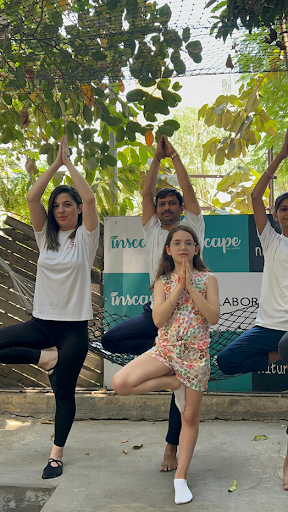
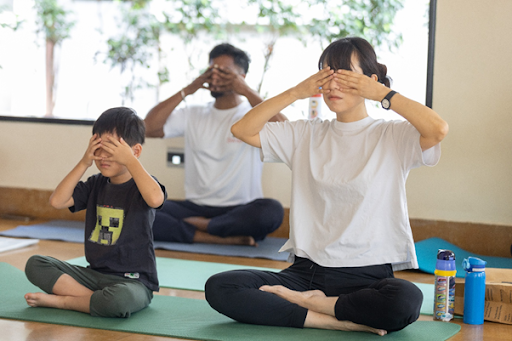
Yoga became something she could practise with her children rather than something that remained an individual activity.
Her children gradually became interested in yoga and began practising with her. Their experience also included Sanskrit mantra chanting.
For the family, this created a shared activity and a different kind of connection with Indian culture.
The impact went beyond physical movement.
Yoga provided an opportunity for the family to slow down together, practise together and create a calmer environment at home.
This is particularly meaningful for expatriate families, where parents may be balancing work, children’s education, cultural adaptation and the emotional adjustments associated with relocation.
A shared practice can create a small but meaningful family ritual.
Yoga can become something a family does together—not simply something one family member learns.
From Russia and Azerbaijan: Yoga as personal and professional development
Similar experiences have been echoed by international students such as Guzel from Russia, an IT engineer, and Elina from Azerbaijan.
Coming from different professional and cultural backgrounds, their journeys demonstrate that yoga can appeal to people far beyond traditional wellness professionals.
For professionals working in technology, engineering, psychology, education or other demanding fields, yoga can offer an opportunity to explore another dimension of wellbeing.
Their experiences also reflect an important aspect of learning yoga in India: the practice becomes connected with a deeper understanding of its cultural and philosophical foundations.
For an international student, learning yoga in India is therefore not only about learning how to practise.
It can also become an opportunity to explore:
- Why yoga developed the way it did
- Indian approaches to wellbeing
- Sanskrit terminology and traditional concepts
- Yogic philosophy
- Meditation and breath practices
- Indian approaches to daily routines
- The relationship between individual wellbeing and community
- The cultural context surrounding yoga
This broader exposure can change the way students understand the practice—and sometimes the way they understand themselves.
Yoga as a coping tool for expatriate life
Relocation requires adaptation.
The expatriate may have to adapt to a new workplace, new climate, unfamiliar food, different social expectations and a new rhythm of daily life.
Yoga cannot eliminate these challenges.
But a regular practice can provide tools for responding to them.
These may include:
Physical adaptation
Movement, flexibility, mobility and body awareness can support an active lifestyle.
Stress management
Breathing practices, relaxation and meditation can become part of a personal stress-management routine.
Emotional regulation
Developing awareness of breath, body and mental states can encourage greater self-observation.
Family connection
Parents and children can practise together and establish shared routines.
Cultural integration
Learning yoga in India can provide an entry point into Indian philosophy, Sanskrit, traditions and cultural practices.
Social connection
Yoga courses create opportunities to meet people from India and other countries with similar interests.
Professional development
Formal yoga education can become an additional qualification and career pathway.
In this sense, yoga can become a coping and adaptation tool for life abroad.
Why learn yoga in India?
For an expatriate already living in India, there is a unique opportunity that visitors may not have.
They can experience yoga not only through a short retreat, but through sustained exposure to Indian life.
They can practise yoga regularly, learn about Indian philosophy, experience local traditions, explore Ayurveda and understand how yoga fits into everyday Indian culture.
This makes professional yoga education particularly interesting for expatriates and their spouses.
Instead of treating their time in India only as a period of residence, they can use it as an opportunity for personal investment and professional development.
From yoga student to certified professional
For some expatriates, the journey does not end with personal practice.
They discover that they want to teach.
A structured Yoga Certification Board (YCB)–AYUSH pathway can provide an opportunity to pursue formal yoga education and develop professional competence.
For an expatriate or accompanying spouse, this can be particularly valuable.
Imagine spending several years in India and leaving with more than memories.
You could leave with:
A healthier lifestyle.
A deeper understanding of Indian culture.
A new professional skill.
A recognised certification pathway.
An international network.
And a practice that can travel with you wherever you live next.
This is one reason we encourage expatriates and their spouses to consider investing some of their time in India in structured yoga education.
Yoga can travel with you
One of the most practical advantages of learning yoga is its portability.
An expatriate may eventually move from Pune to Singapore, Dubai, London, Tokyo, Berlin or another country.
A yoga practice can move with them.
A professional qualification can potentially open opportunities to teach private clients, community groups,
schools, wellness centres or corporate programs, subject to the requirements of the country where they work.
The knowledge acquired in India can therefore become part of a longer professional and personal journey.
Your time in India can become an investment
Expatriate life is often viewed through the lens of relocation: finding a home, arranging schools, establishing professional networks and adapting to a new country.
But there is another way to look at the experience.
What can you take from India that will remain valuable after you leave?
For some Swasti students, the answer has been yoga.
Hilal discovered a way to connect yoga with her professional understanding of psychotherapy.
Sueko found a practice that supported her physical wellbeing and adaptation to life in India.
Naho discovered a family practice that brought her children closer to yoga, Sanskrit chanting and Indian culture.
Guzel and Elina experienced yoga as a pathway for personal and professional development.
Their stories are different, but the underlying lesson is similar:
Yoga is not merely an exercise you do in India. It can become a way of living, learning and adapting.
For expatriates and international families, the time spent in India can therefore become more than a chapter of life abroad.
It can become an investment in health, resilience, cultural understanding, family wellbeing and professional capability.
And perhaps that is one of the most meaningful ways to experience yoga in its birthplace.