For many global yoga students, visiting India is a journey into the heart of a living, breathing culture—one where tradition and philosophy seamlessly blend into everyday life. While most come seeking deeper knowledge of asanas, pranayama, and meditation, they often discover that yoga extends far beyond the mat. One of the most surprising and transformative cultural experiences for international students is learning how to drape a saree.
The saree—six yards of elegant, unstitched fabric—is more than a garment. In India, it is a symbol of identity, modesty, beauty, and resilience. For centuries, women across regions have draped sarees in countless styles, each reflecting local traditions, climate, and heritage. But for yoga practitioners, the saree holds a deeper truth: it becomes a yogic ritual that cultivates awareness, patience, and inner grace.
The Saree as a Practice of Mindfulness
Draping a saree is a slow, deliberate process. There is a rhythm to lifting the fabric, making neat pleats, securing the pallu, and adjusting the folds. For foreign students unfamiliar with this traditional attire, the experience becomes a lesson in presence.
Every movement demands focus. Every pleat requires precision.
In a world accustomed to fast fashion and instant clothing, the saree invites students to slow down. It draws them into the present moment, much like a meditation practice.
Many students describe the experience as an unexpected mindfulness exercise—one that teaches them how to be patient with themselves, breathe through frustration, and enjoy the process rather than rush to the outcome. This is the essence of yoga.
A Cultural Window Into India’s Yogic Values
Beyond its aesthetics, the saree embodies the Indian principles of simplicity (saucha), modesty, and harmony. When foreign yoga students drape a saree, they are not just wearing a garment—they are experiencing a key element of India’s cultural consciousness.
They learn:
- The beauty of handwoven textiles created by artisans rooted in generations of tradition.
- The significance of color, where red symbolizes prosperity, yellow represents wisdom, and white conveys purity.
- The role of tradition, especially during festivals, ceremonies, and rituals.
- The connection to the divine feminine, as the saree is often associated with Goddess energy—Shakti.
For many, wearing the saree becomes a cultural initiation into Indian life, enhancing their understanding of yoga as a holistic way of being.
Embodying Grace and Groundedness
Physical alignment is central to both yoga and saree draping. A well-draped saree encourages upright posture, mindful walking, and a grounded presence. Students often find that wearing a saree subtly transforms their body language—they move with more awareness, stability, and softness.
This conscious movement mirrors yogic principles such as:
- Sthira (steadiness)
- Sukha (ease)
- Prayatna Shaithilya (effortlessness in effort)
The saree becomes an extension of the body, a reminder to remain centered and poised.
A Shared Experience That Builds Community
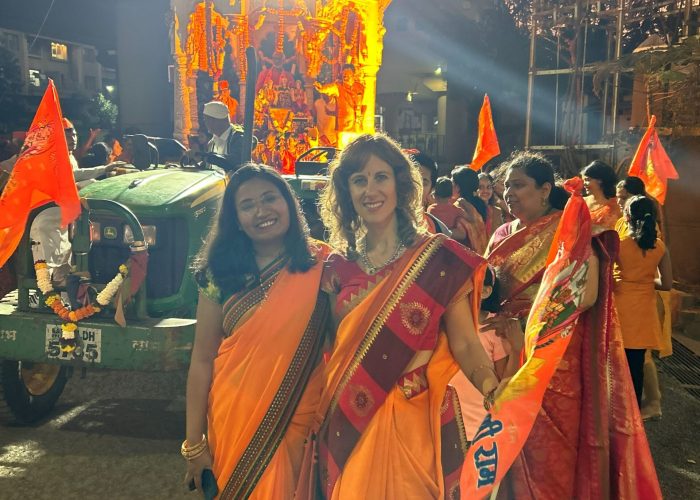
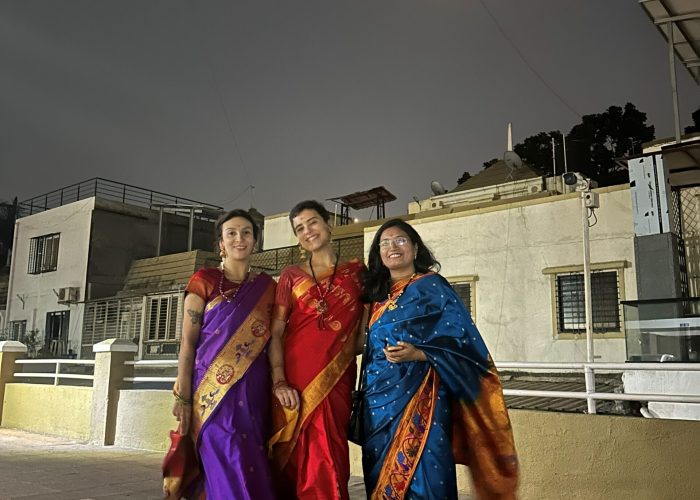
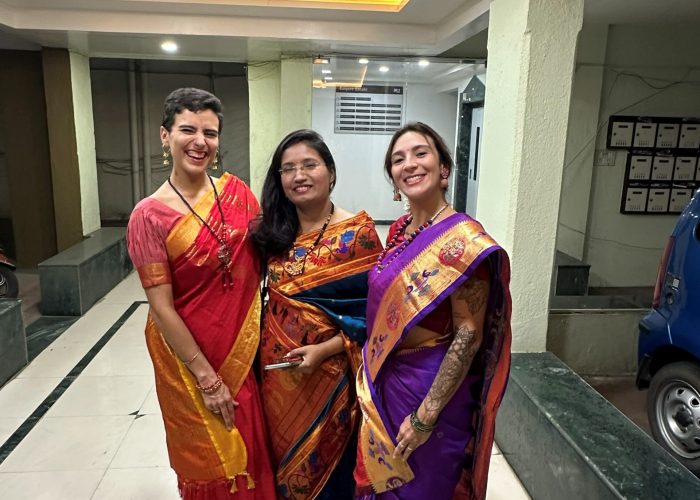
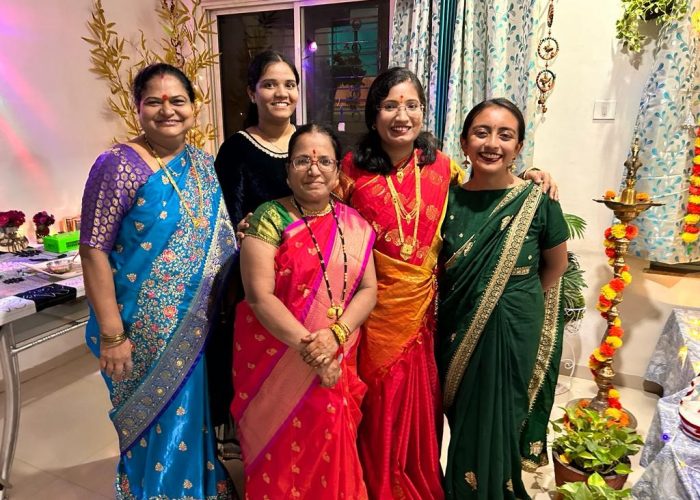
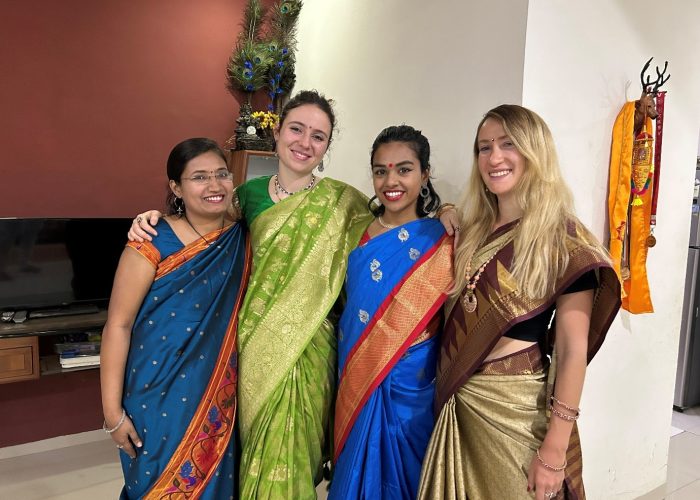
At institutions like Swasti Yoga Center, saree draping workshops create joyful cultural exchanges. Students laugh as they try to make their first pleats, help each other adjust the pallus, and click selfies capturing the transformation. What starts as a cultural activity often becomes a cherished memory of connection.
These workshops also honor India’s hospitality—offering guests not just knowledge of yoga but a holistic experience of Indian life, food, arts, and traditions.
A Living Ritual Connecting the Past and Present
In the end, saree draping is more than a skill—it is a ritual that connects yoga students to an ancient cultural lineage. Just as yoga has been passed down through generations, so has the saree. Both are timeless, adaptable, and deeply rooted in conscious living.
For global yoga students, learning to drape a saree becomes an embodiment of yogic values: mindfulness, patience, gratitude, and respect for tradition. It transforms six yards of fabric into a spiritual experience—one that stays with them long after they return home.
In an age where yoga is often reduced to fitness, the saree reminds us that true yoga is lived, felt, and woven into every layer of life