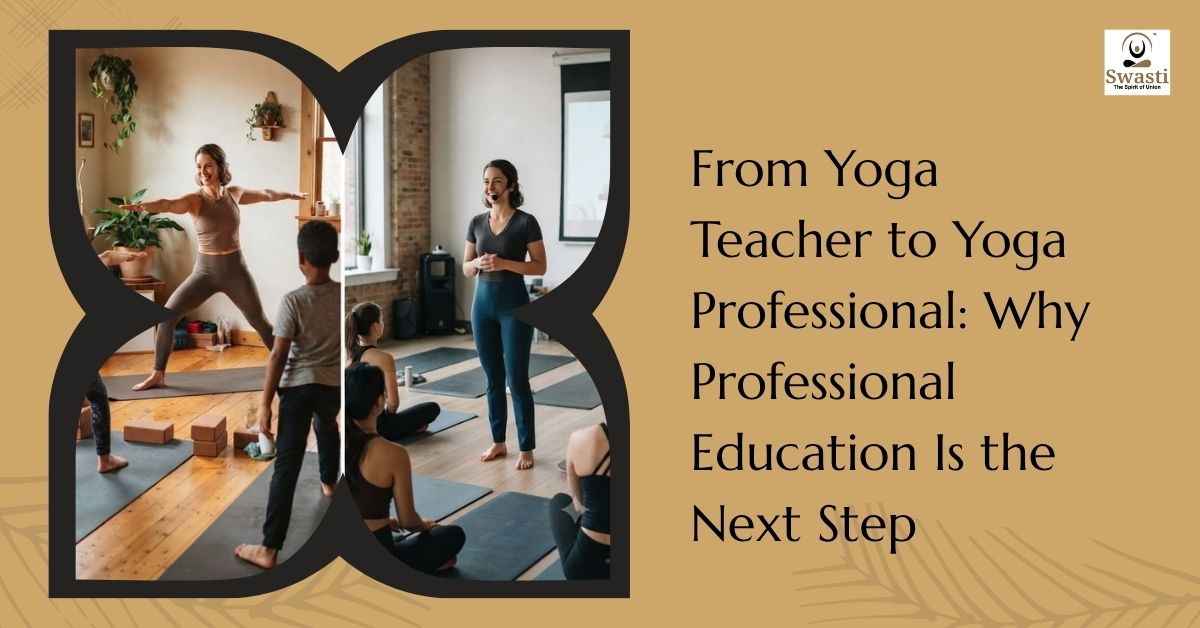
From Yoga Teacher to Yoga Professional: Why Professional Education Is the Next Step
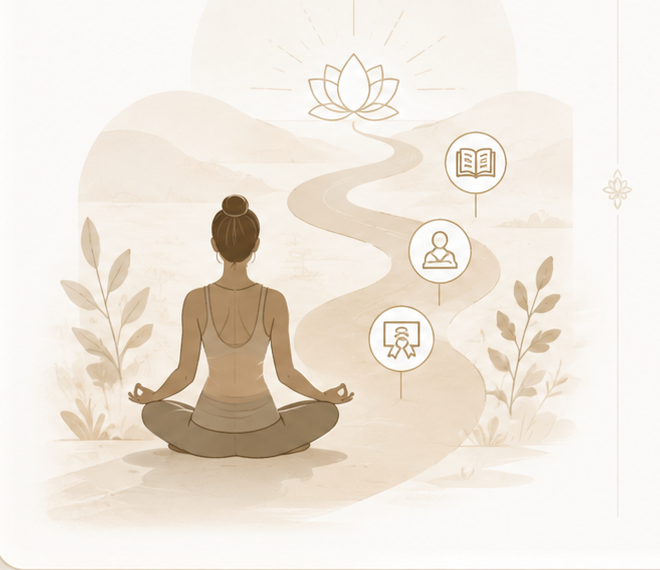
A yoga teacher training certificate can open the door to teaching. But walking through that door is not the same as building a profession. For many yoga teachers, the journey ends when the certificate is issued. They begin teaching general classes, repeat familiar sequences and gradually accumulate experience. Yet experience alone does not always produce professional growth. The more important question is: Are you simply teaching yoga, or are you developing yourself as a yoga professional? Teacher training gives you a foundation. Professional education gives you a pathway. A Teacher Training Is a Beginning, Not the End A foundational yoga teacher training introduces practitioners to the essential components of teaching: asana, pranayama, meditation, yoga philosophy, anatomy, sequencing, communication, ethics and teaching methodology. This foundation is important. Without it, responsible teaching is difficult. But foundation is not mastery. Learning how to demonstrate an asana is different from understanding how to adapt a practice for different learners. Knowing a sequence is different from knowing why, when and for whom it should be modified. Completing a course is different from developing professional judgement. Teacher training primarily answers: “How do I teach yoga?” Professional education asks a broader question: “How do I become consistently competent, specialised and professionally capable?” That distinction becomes increasingly important as a teacher’s responsibilities grow. The Yoga Profession Is Becoming More Diverse Today’s yoga professionals may teach children, older adults, athletes, corporate groups, school students, retreat participants or international learners. Some work in wellness centres, hospitality, education or online environments. Different populations require different knowledge, communication skills and teaching approaches. A teacher working with a general adult group may need a different skill set from someone designing a programme for children or developing yoga programmes for corporate employees. Professional capability therefore involves more than knowledge of postures. It requires: Knowledge + application + adaptation + communication + assessment + professional judgement. From Yoga Teacher to Yoga Professional The difference is not about status. It is about capability. Yoga Teacher Yoga Professional Delivers classes Designs appropriate learning experiences Has foundational knowledge Develops deeper specialist competence Completes initial training Pursues structured professional development Teaches general groups Understands specific learner needs Focuses on instruction Considers quality, outcomes and responsibility Holds a qualification Builds demonstrated competencies A professional does not stop learning because a certificate has been earned. Professional Education Is About Capability Professional yoga education can include advanced education, specialist training, competency-based learning, supervised practice, assessment, research literacy, professional ethics, mentoring and continuing professional education. The objective should not be to collect certificates. It should be to develop the ability to understand, apply, assess, adapt, communicate and reflect. This is the shift from: Certificate collection to capability development. A useful professional education programme should therefore leave you more capable than when you entered it—not simply more qualified on paper. Specialisation Is a Career Strategy For many teachers, the next stage is not another general yoga course. It is identifying an area in which they want to develop genuine expertise. Possible pathways include: Children’s Yoga Yoga for older adults Sports Yoga Corporate wellbeing Aqua Yoga Yoga in education Ayurveda-informed wellness Specialist wellness programmes Specialisation does not mean that every teacher must immediately choose a niche. But developing a clear area of competence can help a professional become more relevant, distinctive and confident. Specialisation is a career strategy, not merely another certificate. It can also encourage deeper study. Once a teacher chooses a population or professional context, questions become more sophisticated: What are the specific needs of these learners? How should sessions be designed? What outcomes are appropriate? How should progress be assessed? That is where professional education becomes meaningful. Assessment and Lifelong Learning Matter One of the least discussed aspects of yoga education is assessment. Professional development should help teachers understand what competence looks like, how teaching quality can be evaluated and how feedback can identify areas for improvement. Assessment should not simply be an examination at the end of a course. Done properly, it becomes a tool for professional growth. This connects to Continuing Professional Education (CPE) and Continuing Professional Development (CPD). In established professions, qualification is not considered the end of learning. Professionals continue updating their knowledge, skills and practice. Yoga professionals can adopt the same mindset. Learn deliberately, not endlessly. The goal is not to purchase a new course every few months. The goal is to identify genuine gaps in your competence and address them through purposeful education, practice and reflection. Indian Knowledge and Contemporary Professional Standards Professionalisation does not require yoga to abandon its Indian roots. In fact, the strongest model is one that brings together authentic Indian knowledge and rigorous contemporary education. Yoga philosophy, traditional texts, ethical principles, authentic practice and the teacher-student tradition remain important foundations. At the same time, professional education can strengthen learning through structured curricula, clear learning outcomes, assessment, evidence literacy and competency frameworks. Traditional and contemporary approaches do not have to be opposites. The challenge is to preserve the integrity of yoga while preparing teachers to work responsibly in a changing professional environment. This direction is also reflected in the work of India’s Yoga Certification Board (YCB), established under the Ministry of Ayush. YCB describes its role as developing standards, assessing competencies and certifying yoga professionals at different levels and categories. Its framework includes multiple professional pathways rather than treating yoga education as a single, one-time qualification. The World Health Organization’s 2025 technical report on yoga training similarly identifies the need for competency-based knowledge and skills for those involved in teaching and training yoga, while noting that training approaches vary across countries. A Professional Career Has a Pathway Professional development does not have to be linear, but it should be intentional. Foundation → Teaching Experience → Specialisation → Advanced Competence → Credential → Leadership This pathway can lead towards studio teaching, private practice, corporate wellness, schools, retreats, hospitality, specialist programmes, online education, teacher education, programme design or entrepreneurship. The important point is not how many directions you pursue. It is whether your education