๐Ÿ‡ฎ๐Ÿ‡ณ India | ๐Ÿ‡บ๐Ÿ‡ธ USA | ๐Ÿ‡ซ๐Ÿ‡ท France | ๐Ÿ‡ฒ๐Ÿ‡ฝ Mexico | ๐Ÿ‡ฆ๐Ÿ‡ช UAE

๐Ÿ‡ฎ๐Ÿ‡ณ India | ๐Ÿ‡บ๐Ÿ‡ธ USA | ๐Ÿ‡ซ๐Ÿ‡ท France | ๐Ÿ‡ฒ๐Ÿ‡ฝ Mexico | ๐Ÿ‡ฆ๐Ÿ‡ช UAE

Blog

News & Articles

Crack the YCB Yoga Teacher Exam Pathway to Certification, Credibility & Career Growth

Crack the YCB Yoga Teacher Exam: Pathway to Certification, Credibility & Career Growth

Anxiety is now recognized as one of the most pressing global health concerns, affecting over 300 million people worldwide (WHO, 2023). While modern medicine explains anxiety through overactive amygdala pathways, excessive cortisol secretion, and imbalanced neurotransmitters such as serotonin and GABA, ancient traditions framed it as a disturbance of inner harmony. Today, combining ancient wisdom with the modern science of anxiety offers a holistic approach to restore calm. Ancient Wisdom for Inner Peace In yoga and Ayurveda, anxiety (chittodvega) is linked to imbalances in prana and the nervous system. Practices such as meditation, mantra chanting, pranayama, and mindful rituals were prescribed to stabilize the mind. Similarly, Buddhist mindfulness emphasized non-reactivity to thoughts, while Traditional Chinese Medicine used Qi-regulating practices like Tai Chi and acupuncture to reduce inner turbulence. Science of Anxiety Relief Modern research validates these ancient practices: Yoga and Meditation: A 2018 meta-analysis in Depression and Anxiety found yoga significantly reduced symptoms of generalized anxiety disorder (GAD). Pranayama Breathwork: Slow diaphragmatic breathing increases vagal tone, activates the parasympathetic nervous system, and improves heart rate variability (HRV), a key marker of stress resilience (Frontiers in Human Neuroscience, 2020). Mindfulness: Randomized controlled trials published in JAMA Psychiatry (2022) show mindfulness-based interventions are as effective as escitalopram, a common anti-anxiety medication, for mild to moderate anxiety. Mechanisms of Action Neurobiological:ย  Meditation reduces hyperactivity of the amygdala, the brainโ€™s fear center, while enhancing prefrontal cortex regulation. Hormonal: Yoga and pranayama lower cortisol and adrenaline, balancing the HPA (hypothalamic-pituitary-adrenal) axis. Neurochemical: Mind-body practices boost serotonin, GABA, and dopamine, neurotransmitters linked with calm and well-being. Holistic Management When ancient wisdom meets modern evidence, we gain not only symptom relief but also long-term resilience. Integrating yoga, breathwork, and mindfulness into daily routinesโ€”alongside healthy lifestyle choicesโ€”creates a holistic management strategy for anxiety. This union of science and tradition helps us truly move from chaos to calm. Author: Dr Shwetambari Chothe

Read More ยป
Online Yoga TTC vs. In-Person Pros, Cons, and How to Decide

Online Yoga TTC vs. In-Person: Pros, Cons, and How to Decide?

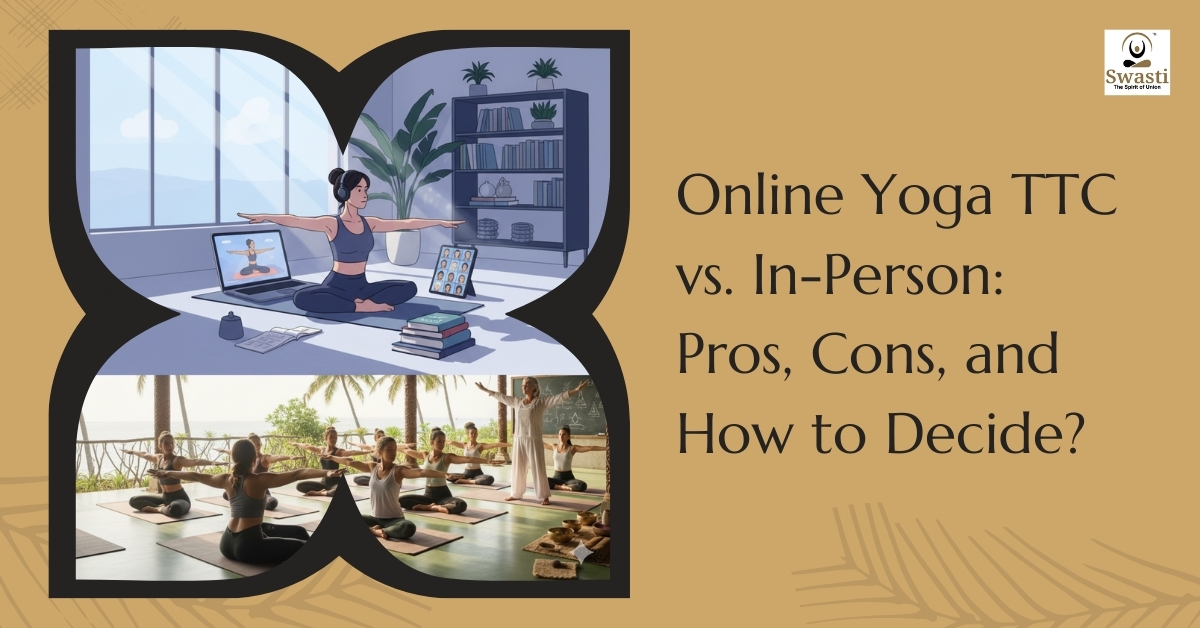
Deciding to become a yoga teacher is more than signing up for a courseโ€”itโ€™s a step into a lifelong practice of self-discovery, discipline, and service. But hereโ€™s the thing: todayโ€™s aspiring teachers often face a tough choice. Should you go for an online yoga teacher training course (TTC) from the comfort of your home, or take the leap and attend an in-person TTC in India? Both paths can lead you to the same certification, but the experience along the way can feel very different. Letโ€™s break it down. Online Yoga TTC: Flexibility Meets Accessibility Pros: Learn from anywhere: No travel required โ€” ideal for students balancing work, family, or remote locations. Self-paced study: Many online courses allow you to progress at your own speed. Affordable: Lower costs compared to in-person programs since travel and accommodation arenโ€™t needed. Cons: Limited hands-on guidance: Posture corrections and real-time adjustments can be challenging. Reduced community experience: You may miss the immersive environment and peer bonding found in in-person training. In-Person Yoga TTC in India: Immersion and Transformation Pros: Deep immersion: Daily practice, meditation, and philosophy sessions create a transformative experience. Direct mentorship: Teachers provide immediate corrections and guidance. Cultural and spiritual exposure: Training in India offers authentic insight into yoga traditions. Cons: Higher cost: Travel, accommodation, and living expenses add up. Fixed schedule: Less flexibility for those with work or personal commitments. How to Decide? Consider your learning style, lifestyle, and goals. If you thrive in structured, immersive environments and value authentic cultural exposure, an in-person yoga TTC in India may be ideal. If flexibility, convenience, and affordability are priorities, a yoga teacher training online program can still provide solid foundational knowledge and certification. Final Thoughts Thereโ€™s no one-size-fits-all answer. Both online and offline programs can lead you to a globally recognized certification and a rewarding teaching journey. What matters most is your commitment to the practice, your openness to learning, and the program you choose to trust with your transformation. If youโ€™re looking for authentic training, check out Swasti Yoga Centerโ€™s best yoga teacher training courses in India. Along with comprehensive online TTC programs, we also offer in-person TTC courses at our Pune branchโ€”ideal if you want that immersive experience while staying connected to Indiaโ€™s rich yoga tradition. Whichever path you choose, let it be one that aligns with your heart, your lifestyle, and your vision as a future yoga teacher.

Read More ยป
Why Global Exposure Matters for Modern Yoga Teachers?

Why Global Exposure Matters for Modern Yoga Teachers?

Yoga originated in India, yet it now thrives in almost every corner of the world. From small-town studios in Europe to corporate wellness retreats in Silicon Valley, yoga has transcended oceans and cultures, becoming a universal language of health and harmony. For yoga trainers working locallyโ€”whether in a community center, private studio, or even from homeโ€”the question naturally arises: Why does global exposure matter? Can it really change the way we teach and grow as professionals? The short answer is yes. For local yoga trainers, global exposure is not an optional โ€œnice-to-have.โ€ It is the single most powerful accelerator for professional credibility, career variety, income diversification, and real-world impact. ย Let us explore why. 1. Yoga Has Become a Global Profession Yoga is no longer confined to ashrams or exclusive spiritual circles. It is a $100+ billion global wellness industry, with millions of practitioners worldwide. Institutions like the United Nations now recognize International Day of Yoga, and universities across the globe offer yoga studies as part of academic curricula. For local yoga trainers, this means: Your career opportunities are not restricted to your city or region. The demand for authentic, certified teachers is rising worldwide. The standards of yoga education are being set at a global level, particularly by organizations like the Yoga Certification Board (YCB), Ministry of AYUSH (India), World Health Organization (WHO), and Yoga Alliance. If you remain limited to local exposure, you risk being left behind while other trainers, who bring global perspectives, advance more quickly in their careers. 2. Learning From Cultural Exchange Yoga is universal, but its expression changes depending on cultural context. For example: In Japan, yoga often integrates mindfulness and Zen simplicity. In the U.S., there is a strong focus on fitness and commercial studio models. In Europe, yoga is often tied with psychology, therapy, and scientific research. In Africa and Latin America, yoga is emerging as a tool for youth empowerment and community building. When Indian yoga trainers interact with global communities, they realize that yoga is not just about teaching asanasโ€”it is about meeting people where they are. This cultural sensitivity allows teachers to design programs that are not only authentic but also accessible and relatable to diverse audiences. A teacher who has taught yoga in both Pune and Paris, for example, will naturally gain a wider perspective on how to adapt yoga to corporate employees, children, athletes, or even trauma survivors. This adaptability is a hallmark of a modern yoga teacher. 3. Raising the Bar of Professional Standards Letโ€™s be honestโ€”yoga teaching in many local contexts is still informal. Some trainers work without certifications, structured curriculums, or scientific grounding. While passion is important, professional credibility matters in todayโ€™s global wellness marketplace. Global exposure helps local trainers by: Benchmarking quality: Seeing how studios and wellness centers abroad maintain high standards of safety, ethics, and professionalism. Understanding regulations: Many countries require yoga teachers to meet certain certifications, insurance policies, and liability standards. Improving communication: Exposure to international platforms improves English proficiency, presentation skills, and the ability to teach across cultural and linguistic barriers. When you come back home, these upgraded skills naturally set you apart from other local trainers. Parents trust you more with their children, companies prefer you for corporate wellness programs, and international students seek you for advanced training. 4. Bridging Tradition and Modern Science Yoga originated in India as a spiritual discipline, rooted in texts like the Yoga Sutras of Patanjali, Hatha Yoga Pradipika, and Bhagavad Gita. However, in todayโ€™s world, yoga is increasingly validated by modern medical research, neuroscience, and psychology. Global exposure provides opportunities to: Attend international conferences where researchers present studies on yogaโ€™s impact on stress, immunity, and mental health. Collaborate with universities, hospitals, and wellness centers abroad that integrate yoga into medical treatment. Learn new methodologies like yoga therapy protocols, trauma-informed yoga, aqua yoga, or chair yoga that are not always widely practiced locally. By blending traditional Indian wisdom with modern scientific validation, teachers position themselves as credible authorities capable of addressing diverse needsโ€”from managing diabetes to enhancing corporate productivity. 5. Building a Strong Personal Brand In the digital age, yoga teachers are not only trainers but also personal brands. Students choose teachers based on trust, authenticity, and global recognition. Global exposure helps you: Share stories of teaching yoga in different countries on social media. Build an international following through collaborations, podcasts, or guest teaching. Attract students from across the world for online classes, retreats, and TTCs. For example, a teacher who participates in a yoga festival in Bali or leads workshops in Dubai can showcase this on their website and social platforms. Such achievements boost credibility, attract students, and even open doors to sponsorships or partnerships. 6. Career pathways unlocked by global exposure Here are the concrete career opportunities that open when you step beyond local practice โ€” and how global experiences make them reachable. International teaching roles โ€” studios, resorts, and yoga festivals around the world hire visiting teachers for short residencies, seasonal contracts, and long-term posts. A teacher who has taught a few international workshops or led a study tour is far more likely to be invited back, or hired by a retreat operator. Corporate wellness consultant โ€” corporates hire providers who can combine practical classes with outcome metrics (reduced stress, improved wellbeing scores). Teachers with exposure to international corporate programs and measurement frameworks are higher value. Fortune Business Insights Yoga therapy and clinical integration โ€” collaborating with hospitals, rehabilitation centers and mental health services requires both training and a demonstrated ability to apply yoga to clinical populations; global conferences and collaborations often create the bridge to clinical partners. Lippincott Journals Retreat design and wellness tourism โ€” destination retreats, boutique hotels and wellness tourism operators recruit teachers who can deliver consistent, culturally-attuned programming to international guests. Teachers with study-tour or retreat leadership experience travel with groups and command premium fees. Vogue Business Academia, research and policy โ€” presenting papers and posters at international conferences, or collaborating on cross-border research, positions teachers for

Read More ยป
Hidden Connection Between Japanese Wisdom and Yoga A Path for Students

Discover the Hidden Connection Between Japanese Wisdom and Yoga: A Path for Students

As a student in Japan, youโ€™ve likely grown up hearing values like Ganbaru and Kaizenโ€”encouraging you to work hard, improve steadily, and stay true to yourself. But did you know that these powerful ideas also connect deeply with the ancient Indian philosophy of Yoga? Yoga is not just about stretching or meditationโ€”itโ€™s a complete lifestyle and way of thinking that helps you become a better version of yourself, both inside and out. Letโ€™s explore five well-known Japanese concepts and how they align beautifully with yogic philosophy, making your journey as a student more meaningful and balanced. 1. Ganbaru ร— Tapas / Samฤdhan (Perseverance & Focus) “Do your best, never give up!” This is the spirit of Ganbaru, something every student in Japan is taught from childhood. In Yoga, the same strength is called Tapasโ€”the fire of discipline and willpower. When you feel tired, stressed, or distracted, Samฤdhan reminds you to stay calm and focused. Both Ganbaru and Tapas teach you that growth comes from effort, not shortcuts. 2. Kaizen ร— Eka Tattva Abhyasa (Small Steps, Big Impact) Whether youโ€™re studying for exams or learning a new skill, Kaizenโ€”the idea of steady, daily improvementโ€”can take you far. Yoga supports this through Eka Tattva Abhyasa, which means sticking with one practice or goal and improving it each day. You donโ€™t have to be perfectโ€”just consistent. One mindful step each day adds up to big change. 3. Oubaitori ร— Ahimsa (No Comparison, Just You) In school or college, itโ€™s easy to fall into the trap of comparing yourself with others. But Oubaitori, a Japanese term inspired by four different blooming trees, reminds you that everyone grows in their way. In Yoga, this is called Ahimsa, or non-harmingโ€”including being kind to yourself. You donโ€™t need to compete with anyone; youโ€™re enough, just as you are. 4. Ikigai ร— Moksha / Swadharma (Find Your Purpose) Many students wonder: โ€œWhat is my purpose?โ€ The Japanese concept of Ikigaiโ€”a reason to wake up every dayโ€”helps you find meaning in what you love, what you’re good at, and what the world needs. In Yoga, this purpose is called Swadharma, your unique path. Moksha, ultimate fulfillment, happens when you live your truth with confidence and peace. 5. Keiken ร— Jnana Yoga (Learn by Living) Some lessons canโ€™t be learned from booksโ€”they must be lived. Thatโ€™s the idea of Keiken, or real-world experience. Yoga honors this through Jnana Yoga, the path of wisdom gained through observation, experience, and reflection. Every mistake, every success, every challenge is a teacherโ€”if youโ€™re open to learning. As a student, combining these Japanese values with Yogic philosophy can make your life more focused, peaceful, and fulfilling. You donโ€™t need to choose one or the otherโ€”they are two paths that lead to the same goal: a better, wiser you. So the next time you sit down to study, face a tough challenge, or feel lost about your future, rememberโ€”you already have the tools. From Ganbaru to Tapas, from Ikigai to Swadharma, your journey is sacred. Walk it with awareness, and the world will open before you. Namaste and Ganbatte! Start Your Yoga Path at Swasti Yoga Center Swasti Yoga Center invites students from Japan to experience authentic Indian yoga with guidance that respects your culture and learning style. Our yoga teacher training courses for Japanese students blend ancient yogic wisdom with values you already know, creating a meaningful and life-changing journey. You will receive complete study material in Japanese so you can learn with clarity and confidence. Join us in Pune, immerse yourself in the roots of yoga, and return home with both knowledge and certification that will inspire others.

Read More ยป
Why Yoga Should Be a Part of Every Nursing Studentโ€™s Life

Why Yoga Should Be a Part of Every Nursing Studentโ€™s Life?

In todayโ€™s hyper-connected, fast-paced corporate world, the greatest irony is that while professionals are chasing targets, deadlines, and success, theyโ€™re often losing their most precious asset: their health. Particularly alarming is the rise in cardiac diseases and hypertension among working professionals, often striking in their 30s and 40sโ€”an age once considered “too young” for heart problems. This rising trend is not a coincidence. It is directly tied to sedentary lifestyles, excessive stress, sleep disturbances, unhealthy eating, and addictions, which have become almost normalized in corporate culture. The Alarming Rise of Cardiac Risk in Corporate Lives The World Health Organization (WHO) identifies cardiovascular disease (CVD) as the leading cause of death globally. According to the Lancet Global Health, over 54% of deaths in India due to non-communicable diseases are from heart-related conditions, and much of this population includes urban, educated, working professionals. Key culprits: Sedentary lifestyle: Long hours at desks lead to reduced cardiovascular fitness and increased cholesterol levels. Mental stress: Chronic workplace stress increases cortisol, triggering hypertension and heart strain. Irregular sleep: Poor sleep disrupts blood pressure regulation and increases the risk of arrhythmias. Junk food and sugar: Convenience foods raise bad cholesterol (LDL) and triglycerides. Smoking and alcohol: Common stress busters in corporate settings are directly linked to arterial damage and high blood pressure. A recent study published in the Journal of the American College of Cardiology noted that prolonged stress and poor sleep alone can double the risk of heart attacks in professionals, even in those under 40. Yoga: A Science-Backed Solution for Heart and Mind In this chaotic background, Yoga emerges not just as exercise, but as a holistic lifestyle therapy. Yoga doesn’t just address physical inactivity; it targets the root causes of cardiac problems: stress, emotional imbalance, and unhealthy patterns of thought and behavior. Evidence-Based Benefits of Yoga on Cardiac Health: Reduces Blood Pressure: A 2022 meta-analysis in Hypertension Research found that yoga reduced systolic BP by 8โ€“10 mm Hg in hypertensive patients. Lowers Stress Hormones: Regular pranayama (breathing practices) and meditation significantly lower cortisol and adrenaline, reducing cardiac strain. Improves Heart Rate Variability (HRV): A key marker of heart health, HRV is improved through regular yoga and mindfulness. Reduces Bad Cholesterol (LDL): Lifestyle changes with yoga and sattvic diet showed reduced LDL and improved lipid profile in various clinical trials. Improves Endothelial Function: Asanas improve vascular elasticity and blood flow, essential for preventing atherosclerosis. A Yogic Lifestyle: More Than Just Exercise Yoga isnโ€™t limited to stretching or bending. Its deeper power lies in transforming oneโ€™s entire lifestyle and outlook. Corporate employees often carry invisible mental baggageโ€”pressure, deadlines, competition, and burnout. The philosophy of yoga offers tools to clear this clutter. Core Yogic Principles for a Healthy Heart: Ahimsa (Non-violence): Includes self-care and reducing internal stress. Aparigraha (Non-possessiveness): Helps detach from constant craving and comparison. Satya (Truth): Encourages authenticity and mental clarity. Sattvic living: Emphasizes balance, discipline, purity, and harmony in food, thoughts, and habits. These principles, when practiced, reshape your personality, reduce ego-driven stress, and promote peace. Small Steps for Busy Professionals You donโ€™t need to quit your job or move to an ashram to benefit from yoga. Even five minutes a day can begin the transformation. 5-Minute Heart-Friendly Yoga Practice: Tadasana + Deep Breathing โ€“ 1 min Releases tension from posture and calms the breath. Ardha Matsyendrasana (Spinal Twist) โ€“ 1 min Stimulates digestion and improves blood circulation. Bhramari Pranayama โ€“ 2 min Reduces blood pressure, calms the mind. Shavasana + Gratitude Awareness โ€“ 1 min Triggers the parasympathetic system (relaxation response). Consistency matters more than duration. You may like to read: Incredible Yoga Poses for a Healthy Heart Level 1 Yoga Training: The Next Step At Swasti Yoga Center, our Level 1 Yoga Protocol Instructor Course is ideal for working professionals who want a deeper, scientifically structured understanding of yoga. The course includes: Scientific anatomy & physiology Therapeutic applications for lifestyle diseases Mental and emotional wellness training Philosophy for lasting lifestyle change It not only improves physical health but fosters a sattvic mindset, better discipline, emotional regulation, and inner peace. The Yogic Edge in Corporate Life With regular yoga practice, employees experience: Lower BP, improved sleep, and more energy Sharper decision-making and focus Better emotional balance and team collaboration Reduction in anxiety, depression, and burnout Prevention of long-term cardiac complications In essence, yoga empowers corporate professionals to be healthier, more peaceful, and productive human beings, not just better employees. Final Takeaway The corporate world may reward performance, but your body keeps the score. Cardiac diseases donโ€™t happen overnight, but with yoga, prevention can. By embracing small, conscious steps today, you pave the way for a vibrant, heart-healthy, and balanced life tomorrow. Yoga is not just a practice. It is your daily insurance against burnout, hypertension, and heartbreakโ€”literally and metaphorically. Start today. Breathe deeper. Live longer. Lead better.

Read More ยป
Yoga for Expats in Pune A Transformative Investment in Health, Culture & Inner Growth

Yoga for Expats in Pune: A Transformative Investment in Health, Culture & Inner Growth

Pune, known as Indiaโ€™s Oxford of the East and a spiritual heartland, is emerging as a powerful wellness destination for expats seeking purpose, balance, and authentic Indian living. For those living in India temporarily for work, education, or family, practicing traditional yoga is not just an activityโ€”itโ€™s a valuable investment in personal and family well-being. Why Yoga in Pune? While many think of Rishikesh or Goa for yoga, Pune offers something more grounded: a daily, integrated yogic lifestyle amidst vibrant urban and cultural life. With government-certified institutions like Swasti Yoga Center, expats can access genuine yogic education that blends ancient wisdom with modern needs, far beyond the commercialized offerings abroad. Here, yoga is not โ€œfitness with incenseโ€โ€”itโ€™s a science of living. You may like to read:ย  What Makes Pune the Perfect Place for a Certified Yoga TTC? Challenges Expats Face โ€“ and How Yoga Helps Being far from home, expats often struggle with: Cultural adjustment and loneliness Work-life imbalance Mental stress, sleep disorders Raising children in unfamiliar settings Limited social bonding Yoga addresses these challenges holistically: Asana & pranayama regulate the nervous system and improve sleep Mindfulness & meditation build emotional resilience Yogic parenting tools help raise grounded, calm children Group practice fosters genuine friendships across cultures Satvik diet & lifestyle improve digestion, immunity, and mood Removing Common Misconceptions About Yoga Many expats arrive with the impression that yoga is just physical exercise, or too religious. But in India, especially at centers like Swasti, yoga is: Non-religious and inclusive A blend of asana, breathwork, meditation, Ayurveda, OM Card Therapy, and philosophy A path of personal evolution and mental clarity An opportunity for certified global careers backed by the Indian Government (YCB โ€“ Yoga Certification Board) Yoga here nurtures the soul, not just the body. Yoga for Women, Children & Families Swasti Yoga Center emphasizes family-centered wellness: Mothers find relief from emotional burnout, PCOS, or hormonal issues through therapeutic yoga. Children are introduced to discipline, focus, and emotional intelligence through fun tools like OM Card Game and story-based yoga. Couples discover stronger bonds through joint practice and shared inner growth. Yoga becomes a common language of well-being at home, deepening connections in foreign soil. Invest in Your Future with a Certified TTC Many expats explore yoga as an alternative career or a valuable life skill. Swastiโ€™s 200-Hour and 400-Hour YCB-certified Teacher Training Courses are: Globally recognized Taught by experienced Indian masters Blending Ayurveda, lifestyle coaching, anatomy, and Vedic knowledge Affordable and high-value compared to Western TTCs Inclusive of cultural immersion, excursions, and mentorship Whether you’re looking to teach professionally or deepen your practice, this is one of the best investments you can make while in India. Cultural Immersion, Family Bonding Like No Other Learn Satvik cooking with Indian spices and herbs Participate in local festivals and village excursions Experience Indian family values, rituals, and sustainability practices Share chai, stories, and silence with a global yoga family Unlike short retreats, these experiences transform your inner landscape and worldview. Tips to Get Started as an Expat Choose a YCB-certified, culturally rooted school like Swasti Yoga Center. Join a short beginner course or attend a yoga event to ease in. Involve your spouse or childrenโ€”yoga is a beautiful bonding tool. Attend free workshops or satsangs to meet other expats. Donโ€™t let language or age hold you backโ€”yoga is for everybody. Conclusion: Yoga as Your Anchor in India As an expat in India, donโ€™t just be a visitorโ€”become a seeker. Yoga in Pune is not about trend or tourism; itโ€™s about truth, health, family, and purpose. Whether youโ€™re here for six months or six years, investing in authentic yoga will reward you for life, with clarity, strength, and a deep connection to yourself and the world around you. When in the land of yoga, why not learn it at its source?  

Read More ยป
Yoga Meets ESG A Blueprint for Future-Ready Workplaces

Yoga Meets ESG: A Blueprint for Future-Ready Workplaces

In todayโ€™s rapidly evolving business landscape, sustainability is no longer just a buzzwordโ€”itโ€™s a necessity. As companies embrace Environmental, Social, and Governance (ESG) principles to align with global responsibility trends, there’s an unexpected yet powerful ally waiting in the wings: Yoga. Integrating yoga into corporate ESG strategies isnโ€™t just about employee wellnessโ€”itโ€™s about unlocking holistic transformation, brand trust, and measurable business impact. Why ESG Needs a Wellness Pillar Like Yoga? Corporate ESG strategies often focus on environmental initiatives or diversity metrics. However a critical piece often overlooked is employee well-being. Burnout, stress, and mental health challenges are now leading causes of attrition and productivity loss. Hereโ€™s where yoga comes in. Rooted in ancient wisdom and validated by modern science, yoga enhances mental clarity, emotional intelligence, resilience, and physical healthโ€”traits directly contributing to the ‘Social’ and ‘Governance’ pillars of ESG. Yoga is more than just exerciseโ€”itโ€™s a lifestyle framework. Concepts like Ahimsa (non-violence) and Aparigraha (non-possessiveness) align naturally with environmental ethics and minimalist living. When adopted across a companyโ€™s culture, these values subtly push teams toward sustainable thinking, ethical governance, and conscious decision-making. Three Powerful Ways to Integrate Yoga into ESG Frameworks 1. Yoga as Part of Social Sustainability (S in ESG) The โ€˜Socialโ€™ aspect of ESG revolves around how a company treats its peopleโ€”diversity, inclusion, health, and well-being. By offering regular yoga and mindfulness programs, businesses can: Reduce absenteeism and healthcare costs Improve mental health, emotional intelligence, and interpersonal relationships Support inclusion by ensuring yoga is culturally inclusive and accessible to all levels of employees Companies like Google, TCS, and Infosys have embedded yoga and mindfulness into their employee development plans, reporting higher retention, creativity, and lower stress levels. Structured programs such as the Green Yoga Instructor Certificationโ€”specifically designed for corporate environmentsโ€”are gaining momentum. These programs equip wellness professionals with tools to teach yoga while also addressing sustainability, emotional intelligence, and mindfulnessโ€”making wellness a part of the companyโ€™s ESG fabric. 2. Promoting Environmental Consciousness through Yogic Living (E in ESG) Yoga teaches awareness and interconnectedness with the planet. Corporates can: Link yoga retreats or sessions with environmental causes (tree plantation drives, zero-waste challenges, plastic-free days) Encourage yogic values like Satvik (pure) food choices, which have a lower carbon footprint Promote mindful consumption and digital minimalism as part of workplace habits The Green Yoga Instructor Program, for instance, includes modules on climate-conscious living, workplace sustainability practices, and eco-mindfulness, helping companies meet their environmental goals while empowering wellness leaders within. 3. Yoga-Based Leadership and Governance Models (G in ESG) Governance isnโ€™t just about policiesโ€”itโ€™s about people making ethical, balanced decisions. Yoga improves self-regulation, emotional resilience, and clarity, which are essential leadership traits. HR can: Introduce yogic leadership training for CXOs and senior managers Integrate decision-making practices rooted in mindfulness (pause, reflect, act) Use yogic ethics as part of leadership KPIs or appraisal systems Companies committed to ESG and BRSR (Business Responsibility and Sustainability Reporting) have started integrating BRSR-aligned Yoga Programs, like those offered by Swasti Yoga Center, to foster leadership that is not only strategic but deeply rooted in ethics and self-awareness. These programs help businesses meet evolving reporting mandates while nurturing conscious leadership. Tips to Get Started: A 5-Step Plan for HR and ESG Leaders Begin with a Needs AssessmentSurvey your employees to understand stress levels, mental health needs, and openness to yoga. Use this data to design customized programs. Pilot a Wellness + ESG ProgramStart smallโ€”a 21-day mindfulness challenge or yoga-at-desk series that includes sustainability talks. Measure its impact on mood, productivity, and employee feedback. Collaborate with Certified Yoga ProfessionalsPartner with reputed centers offering structured ESG-aligned yoga programs, such as Green Yoga Instructor Certification or BRSR Yoga Training. Ensure cultural inclusivity and alignment with international wellness standards. Embed it in ESG ReportingTrack metrics like mental well-being scores, employee engagement, absenteeism, and carbon-conscious behavior. Publish them in sustainability or annual reports. Scale with Culture, Not Just ClassesIntegrate yoga in daily ritualsโ€”start meetings with 1-minute breathwork, include yoga-themed corporate gifts, or offer weekend yoga retreats linked with green travel. Market Opportunity: Where Yoga + ESG is Heading The global corporate wellness market is expected to reach $94 billion by 2027, with mindfulness and yoga programs leading the trend. Simultaneously, ESG investments are projected to cross $53 trillion by 2025, making up one-third of global assets under management. Imagine the synergy: A company offering yoga-based ESG programs signals to investors that it cares about its people and the planet. It boosts employer branding, attracts Gen Z and millennial talent who prioritize purpose over paychecks and creates organic PR through positive employee advocacy. Case in Point: A Vision for the Future A mid-size tech company in Pune recently implemented a โ€œGreen Yoga Workplaceโ€ model in collaboration with Swasti Yoga Center. The initiative included weekly yoga sessions, carbon-neutral office practices, and sustainable team-building activities like composting and community gardening. Within 6 months, they reported: 22% drop in stress-related sick leaves 34% increase in productivity scores A featured ESG case study in a leading investor newsletter Higher retention in mid-level management roles This is not just wellnessโ€”itโ€™s strategic transformation. Conclusion: Future-Ready Companies are Yogic and Sustainable As the world faces climate anxiety, burnout, and ethical crises, future-ready companies will not be defined by how fast they grow, but by how consciously they grow. Yoga fused with ESG offers a blueprint that is sustainable, ethical, profitable, and human-centric. For HR professionals, this is the moment to lead the changeโ€”not just for employee wellness, but for long-term corporate well-being. Start small, measure consistently, and scale mindfully. The ROI wonโ€™t just be in numbersโ€”but in purpose, peace, and planet-positive profits. Let yoga be not just a mat activity, but a boardroom strategy. By Dr. Vikas ChotheFounder, Swasti Yoga Center

Read More ยป
Why Global Exposure is the Next Step for Yoga Professionals?

Global Yogi: Why Global Exposure is the Next Big Step for Yoga Professionals

In the past year, headlines have read like plotlines from a sci-fi dystopia: “Thousands of tech workers laid off.” “AI is replacing coders faster than ever.” “ChatGPT can now write entire apps as worldโ€™s top coders.” The software industry, once the holy grail of job security, innovation, and global relevance, is now experiencing a reality check. From Silicon Valley to Singapore, software professionals are waking up to the sobering truth: AI isnโ€™t just a tool โ€” itโ€™s competition. But here’s the good news: In every crisis lies a hidden opportunity. What if I told you that losing your job to AI could be the best thing that ever happened to you? And what if I told you that your next career move isnโ€™t another coding bootcamp or startup hustle… but Yoga? Yes, you read that right. ๐Ÿ“‰ The Tech Tumble: Whatโ€™s Really Happening? AI platforms like ChatGPT, GitHub Copilot, and other generative technologies are not just enhancing productivity โ€” theyโ€™re replacing the need for large development teams altogether. Companies are downsizing. Tech roles are being consolidated. Even entry-level jobs โ€” the traditional gateway into software โ€” are evaporating. The stress is real. Burnout is widespread. And despite your technical prowess, you might be feeling replaceable for the first time. So… what now? ๐Ÿง˜โ€โ™‚๏ธ From Burnout to Balance: Why Yoga Makes Sense Many tech professionals donโ€™t realize this, but Yoga is more than a physical exercise. Itโ€™s a lifestyle, a science of mental clarity, emotional stability, and holistic health. It offers what the tech world lacks: inner peace. Here’s why yoga could be your ideal second career: 1. Youโ€™re Already Wired for Learning Engineers are analytical thinkers. Yoga, when taught authentically, has layers of anatomy, philosophy, psychology, and energy science. Your intellectual mindset gives you an edge in understanding and teaching yoga deeply. 2. The World Needs AYUSH Certified Quality Yoga Teachers Post-COVID, the global demand for wellness experts has skyrocketed. Corporates, schools, hospitals, and wellness resorts are hiring certified yoga professionals. Remote work? Global travel? Impactful purpose? Check, check, and check. 3. Freedom, Flexibility, and Fulfillment Yoga offers location independence, low investment, and high personal reward. You’re not chasing product deadlines anymore. You’re transforming lives, including your own. ๐ŸŒ Meet the Game-Changer: Swasti Yoga Center, India If you’re thinking about this pivot seriously, you need more than casual YouTube yoga. You need world-class, traditional, and globally recognized training. Enter: Swasti Yoga Center, Pune, India โ€” a government-certified institution offering Yoga Teacher Training Courses (YTTC) approved by AYUSH Ministry and Yoga Certification Board (YCB), Government of India. Swasti Yoga is not just a school. Itโ€™s a movement, a place where doctors, engineers, and corporate leaders come to realign their lifeโ€™s direction. ๐Ÿ’ก Career Guidance: How to Make the Shift Hereโ€™s a practical blueprint for software engineers considering yoga as a career: โœ… Step 1: Assess Your Readiness Are you passionate about helping others? Do you crave more meaning and health in your life? If yes, you’re ready. โœ… Step 2: Start Learning Enroll in a certified YTTC โ€” ideally 200 or 400-hour programs โ€” that provide a deep foundation in yoga philosophy, anatomy, teaching methods, and therapeutic applications. โœ… Step 3: Get Certified Choose AYUSH/YCB-approved certifications that are globally valid. Swastiโ€™s programs meet international standards, enabling you to teach worldwide. โœ… Step 4: Explore Career Options Post-certification, you can: Teach yoga online or offline. Work with corporates on stress management. Open a boutique yoga studio. Offer specialized sessions in therapy, kids yoga, prenatal yoga, or wellness tourism. โœ… Step 5: Grow Your Brand As a techie, your digital skills will give you an edge in building your wellness brand. Swasti even provides career mentoring and exposure to global collaborations. ๐Ÿ™Œ Real Stories, Real Transformation โ€œI lost my job at a major IT firm during the layoffs. I joined Swasti Yogaโ€™s 200-hour teacher training as a way to cope with stress. Within months, I felt physically healthier, mentally stronger, and emotionally calm. Today, I run a thriving online yoga studio helping other professionals find balance.โ€ โ€” Meera, Ex-Software Developer, now Yoga Coach ๐Ÿš€ Your AI-Proof Future Starts Now Letโ€™s face it โ€” the machines are only going to get smarter. But humans will always crave real connection, healing, and presence. Yoga is not just a profession โ€” itโ€™s a revolution of self-awareness. In a world driven by speed, yoga invites you to slow down, reflect, and rise with strength. So if your job was taken by AI, perhaps itโ€™s a cosmic nudge. Maybe itโ€™s time to upgrade not your skills, but your soul. And maybe, just maybeโ€ฆ your next big breakthrough is on a yoga mat, not a keyboard. ๐Ÿ”— Ready to Transform? ๐Ÿ‘‰ Learn more and enroll in internationally certified yoga teacher training programs at www.swastiyogacenter.com ๐Ÿ“ฉ Or email us at info@swastiyogacenter.com to begin your second career in wellness today.

Read More ยป
Lost Your Tech Job to AI Hereโ€™s Why Yoga Could Be Your Second Career

Lost Your Tech Job to AI? Hereโ€™s Why Yoga Could Be Your Second Career

In the past year, headlines have read like plotlines from a sci-fi dystopia:“Thousands of tech workers laid off.”“AI is replacing coders faster than ever.”“ChatGPT can now write entire apps as worldโ€™s top coders.” The software industry, once the holy grail of job security, innovation, and global relevance, is now experiencing a reality check. From Silicon Valley to Singapore, software professionals are waking up to the sobering truth: AI isnโ€™t just a tool โ€” itโ€™s competition. But here’s the good news: In every crisis lies a hidden opportunity. What if I told you that losing your job to AI could be the best thing that ever happened to you? And what if I told you that your next career move isnโ€™t another coding bootcamp or startup hustle… but Yoga? Yes, you read that right. ๐Ÿ“‰ The Tech Tumble: Whatโ€™s Really Happening? AI platforms like ChatGPT, GitHub Copilot, and other generative technologies are not just enhancing productivity โ€” theyโ€™re replacing the need for large development teams altogether. Companies are downsizing. Tech roles are being consolidated. Even entry-level jobs โ€” the traditional gateway into software โ€” are evaporating. The stress is real. Burnout is widespread. And despite your technical prowess, you might be feeling replaceable for the first time. So… what now? ๐Ÿง˜โ€โ™‚๏ธ From Burnout to Balance: Why Yoga Makes Sense Many tech professionals donโ€™t realize this, but Yoga is more than a physical exercise. Itโ€™s a lifestyle, a science of mental clarity, emotional stability, and holistic health. It offers what the tech world lacks: inner peace. Here’s why yoga could be your ideal second career: 1. Youโ€™re Already Wired for Learning Engineers are analytical thinkers. Yoga, when taught authentically, has layers of anatomy, philosophy, psychology, and energy science. Your intellectual mindset gives you an edge in understanding and teaching yoga deeply. 2. The World Needs AYUSH Certified Quality Yoga Teachers Post-COVID, the global demand for wellness experts has skyrocketed. Corporates, schools, hospitals, and wellness resorts are hiring certified yoga professionals. Remote work? Global travel? Impactful purpose? Check, check, and check. 3. Freedom, Flexibility, and Fulfillment Yoga offers location independence, low investment, and high personal reward. You’re not chasing product deadlines anymore. You’re transforming lives, including your own. ๐ŸŒ Meet the Game-Changer: Swasti Yoga Center, India If you’re thinking about this pivot seriously, you need more than casual YouTube yoga. You need world-class, traditional, and globally recognized training. Enter: Swasti Yoga Center, Pune, India โ€” a government-certified institution offering Yoga Teacher Training Courses (YTTC) approved by AYUSH Ministry and Yoga Certification Board (YCB), Government of India. Swasti Yoga is not just a school. Itโ€™s a movement, a place where doctors, engineers, and corporate leaders come to realign their lifeโ€™s direction. ๐Ÿ’ก Career Guidance: How to Make the Shift Hereโ€™s a practical blueprint for software engineers considering yoga as a career: โœ… Step 1: Assess Your Readiness Are you passionate about helping others? Do you crave more meaning and health in your life? If yes, you’re ready. โœ… Step 2: Start Learning Enroll in a certified YTTC โ€” ideally 200 or 400-hour programs โ€” that provide a deep foundation in yoga philosophy, anatomy, teaching methods, and therapeutic applications. โœ… Step 3: Get Certified Choose AYUSH/YCB-approved certifications that are globally valid. Swastiโ€™s programs meet international standards, enabling you to teach worldwide. โœ… Step 4: Explore Career Options Post-certification, you can: Teach yoga online or offline. Work with corporates on stress management. Open a boutique yoga studio. Offer specialized sessions in therapy, kids yoga, prenatal yoga, or wellness tourism. โœ… Step 5: Grow Your Brand As a techie, your digital skills will give you an edge in building your wellness brand. Swasti even provides career mentoring and exposure to global collaborations. ๐Ÿ™Œ Real Stories, Real Transformation โ€œI lost my job at a major IT firm during the layoffs. I joined Swasti Yogaโ€™s 200-hour teacher training as a way to cope with stress. Within months, I felt physically healthier, mentally stronger, and emotionally calm. Today, I run a thriving online yoga studio helping other professionals find balance.โ€โ€” Meera, Ex-Software Developer, now Yoga Coach ๐Ÿš€ Your AI-Proof Future Starts Now Letโ€™s face it โ€” the machines are only going to get smarter. But humans will always crave real connection, healing, and presence. Yoga is not just a profession โ€” itโ€™s a revolution of self-awareness. In a world driven by speed, yoga invites you to slow down, reflect, and rise with strength. So if your job was taken by AI, perhaps itโ€™s a cosmic nudge. Maybe itโ€™s time to upgrade not your skills, but your soul. And maybe, just maybeโ€ฆ your next big breakthrough is on a yoga mat, not a keyboard. ๐Ÿ”— Ready to Transform? ๐Ÿ‘‰ Learn more and enroll in internationally certified yoga teacher training programs at www.swastiyogacenter.com๐Ÿ“ฉ Or email us at info@swastiyogacenter.com to begin your second career in wellness today.

Read More ยป
How Yoga TTC Prepares You For A Successful Career In Teaching Yoga

How Yoga TTC Prepares You For A Successful Career In Teaching Yoga?

Have you ever thought about turning your love for yoga into something more meaningful, a career? Many people start their yoga journey for personal well-being, but somewhere along the way, a new passion begins to grow: the desire to teach and share the gift of yoga with others. Thatโ€™s where a Yoga Teacher Training Course (TTC) steps in. Itโ€™s more than just a certificate; itโ€™s a life-changing experience that shapes you into a confident, knowledgeable, and inspiring yoga teacher. More than just a way to deepen your practice, a TTC immerses you in a holistic learning environment where you not only train your body but also transform your mindset. You start to see yoga not just as a set of poses, but as a lifestyle and a powerful tool for personal and collective well-being. And if you dream of making a difference through yoga, this is where your teaching journey truly begins. What is a Yoga Teacher Training Course (TTC)? A Yoga TTC is a structured and certified program designed to provide a deep understanding of the physical, mental, and philosophical aspects of yoga. It lays the foundation for those aspiring to teach yoga professionally. TTCs are available in different levels to suit practitioners at various stages: 200-Hour TTC: This foundational course is ideal for beginners or those looking to strengthen their practice. It covers basic yoga postures, alignment, anatomy, teaching methodology, and an introduction to yoga philosophy and lifestyle. Upon completion, you become eligible to teach beginner-level classes. 400-Hour TTC: Offered by select institutions like Swasti Yoga Center, this comprehensive training builds on prior knowledge with more advanced yogic concepts, practical applications in lifestyle diseases, mental health, and Sanskrit chanting. It is best suited for yoga professionals who are serious about taking yoga beyond the mat. 800-Hour TTC: This advanced-level training is designed for experienced yoga practitioners and teachers who want to dive deep into the therapeutic and research-based applications of yoga. The course includes modules on yoga therapy, clinical practices, yoga for different populations (like seniors or people with health conditions), and guided internships. 1600-Hour TTC: The highest level of training, this intensive program prepares you to become a master yoga therapist and teacher trainer. It includes advanced coursework in yoga therapy, clinical exposure, psychological counseling skills, research methodology, educational psychology, and dissertation work. This course is ideal for those who aspire to contribute to the field of yoga education, therapy, and policy on a national or global level. Yoga teacher training institute in India, like Swasti Yoga Center, offers a comprehensive path from beginner to master-level training. At Swasti Yoga Center, each level is designed to align with national and international certification standards, ensuring you graduate as a confident, certified, and well-rounded yoga teacher. With its holistic approach, experienced faculty, and government-recognized certifications, it is the perfect place to start or elevate your yoga teaching journey. What do You Learn During Yoga TTC? Hereโ€™s a closer look at the essential skills and knowledge a good TTC will give you: Asanas & Alignment: You learn how to perform and teach poses with correct alignment to avoid injury. Youโ€™ll also understand how to modify poses for students with different body types or limitations. Anatomy & Physiology: Understand how the body moves and reacts during yoga, which helps you guide students safely. You gain insight into muscles, joints, and systems that influence flexibility, strength, and breath. Teaching Methodology: Learn how to plan a class, give clear instructions, and create an inclusive space for all levels. You also learn how to plan classes and teach different kinds of students effectively. Yoga Philosophy: Explore the deeper aspects of yoga, including the Yoga Sutras and yogic ethics. This helps you bring authenticity and depth to your teaching beyond just the physical practice. Meditation & Pranayama: Techniques that bring mental clarity and emotional balance to your teaching. You also learn how to guide students through breathwork and mindfulness practices confidently. Self-Practice & Reflection: TTC helps you deepen your own practice and understand yourself better. This helps you teach with more understanding and real experience. These areas create a strong foundation that transforms you from a yoga student into a confident teacher. Exploring Diverse Yoga Niches: Find Your Unique Teaching Style Yoga is not one-size-fits-all, and thatโ€™s what makes teaching it so exciting. As a certified yoga teacher, you have the opportunity to specialize in unique niches that align with your interests and meet specific student needs. Choosing a niche helps you stand out in the competitive yoga field and attract the right students. Some popular and growing yoga niches include: Prenatal Yoga: Designed to support women during and after pregnancy, this niche focuses on gentle practices that promote comfort, strength, and emotional balance. Explore specialized training options through pregnancy yoga programs. Kids Yoga:ย  Kids Yoga classes involve creative movement, storytelling, and simple breathing techniques that make learning fun while improving childrenโ€™s focus, flexibility, and overall well-being. Therapeutic Yoga: Therapeutic yoga applies the principles of yoga to manage specific health conditions. This niche often includes personalized sessions for people with lifestyle diseases, pain, or mental health concerns. Advanced-level certifications from a recognized yoga teacher training center in India can provide the right foundation. Yoga for Seniors: A gentle approach that accommodates physical limitations and promotes flexibility, balance, and emotional wellness among elderly students. Chair yoga for elderly people is an important part of senior-focused TTC programs, helping future teachers ensure safety and comfort in their classes. Corporate Yoga: Corporate yoga teacher training prepares instructors to lead workplace-friendly sessions that address stress, posture issues, and energy levels among professionals. This niche-focused TTC equips teachers with the skills needed to design effective yoga programs for busy office environments. Yoga for Mental Health: This niche focuses on using meditation, pranayama, and mindful movement to support emotional resilience and reduce symptoms of anxiety and stress. Selecting the right niche helps yoga teachers connect with specific audiences, refine their offerings, and build a distinct presence in the yoga community.

Read More ยป

Add Yoga To Retain The Beauty Of Body And Mind

Vitae aliquam porta sed augue consectetuer. Parturient posuere sed habitasse quisque malesuada platea. Dis suspendisse integer ut facilisis maximus mus.