๐Ÿ‡ฎ๐Ÿ‡ณ India | ๐Ÿ‡บ๐Ÿ‡ธ USA | ๐Ÿ‡ซ๐Ÿ‡ท France | ๐Ÿ‡ฒ๐Ÿ‡ฝ Mexico | ๐Ÿ‡ฆ๐Ÿ‡ช UAE

๐Ÿ‡ฎ๐Ÿ‡ณ India | ๐Ÿ‡บ๐Ÿ‡ธ USA | ๐Ÿ‡ซ๐Ÿ‡ท France | ๐Ÿ‡ฒ๐Ÿ‡ฝ Mexico | ๐Ÿ‡ฆ๐Ÿ‡ช UAE

Blog

News & Articles

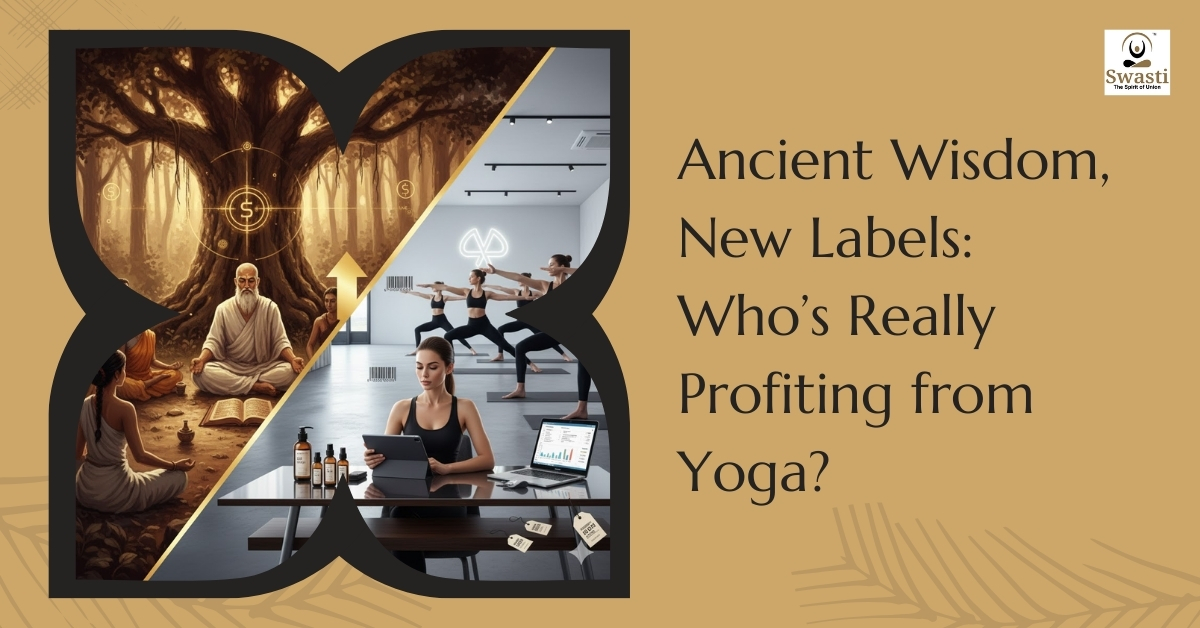
Ancient Wisdom, New Labels Whoโ€™s Really Profiting from Yoga

Ancient Wisdom, New Labels: Whoโ€™s Really Profiting from Yoga?

Across the global wellness economy, a familiar pattern keeps repeating. An ancient Indian yogic practice is stripped of its context, renamed with technical or fashionable language, marketed as a breakthrough, and sold at a premium. The origin is quietly erased; the price tag is loudly amplified. Jala Neti becomes โ€œhypertonic saline irrigation.โ€Kapalabhati is reframed as a โ€œskull-shiningโ€ respiratory hack.Pranayama is reduced to โ€œbox breathing.โ€Nadi Shodhana is relabeled as โ€œenergy channel optimization.โ€Hatha Yoga, a disciplined system rooted in balance and preparation for higher awareness, is flattened into โ€œpower yoga.โ€ None of these practices are new. What is new is the business model. The Pattern: Rename, Repackage, Resell This cycle follows four predictable steps: Decontextualization โ€“ Sanskrit terminology, philosophy, and ethical grounding are removed. Western Validation โ€“ A scientific-sounding name or institutional endorsement is added. Commercial Amplification โ€“ Courses, apps, certifications, and tools are priced aggressively. Cultural Amnesia โ€“ The original lineage is omitted or treated as folklore rather than knowledge. The result is a multibillion-dollar wellness market that profits from yoga while distancing itself from yogaโ€™s civilizational roots. Why This Matters to Gen Z Gen Z is skeptical of hype, sensitive to authenticity, and alert to cultural appropriation. Yet wellness marketing often bypasses these values by presenting repackaged yoga as โ€œneutral scienceโ€ or โ€œmodern discovery.โ€ This is not about rejecting science. Yoga has always been empiricalโ€”developed through observation, repetition, and refinement across centuries. The issue is credit, context, and control. When ancient practices are rebranded without acknowledgment: Knowledge systems are fragmented. Learners lose access to safety principles and progression logic. Cultural ownership shifts from practitioners to platforms. Yoga Does Not Need External Permission to Be Valid One of the quiet harms of this trend is dependency on Western validationโ€”the idea that yoga becomes legitimate only after being renamed, peer-reviewed elsewhere, or endorsed by a foreign authority. Authentic yoga education does not oppose modern research; it integrates it without surrendering identity. The future lies in: Rigorous research using correct yogic terminology. Clinical studies that respect traditional methods rather than altering them to fit trends. Branding that is confident, transparent, and lineage-aware. Yoga should be positioned as a knowledge system, not a content genre. Reclaiming the Narrative: A Practical Path Forward For educators, institutions, and young practitioners, repositioning yoga requires discipline and clarity: Name practices correctly. Sanskrit is not decoration; it is technical language. Teach the โ€œwhy,โ€ not just the โ€œhow.โ€ Context prevents misuse and injury. Publish evidence without rebranding. Let research validate yoga, not rename it. Build institutions, not influencers. Longevity beats virality. Price with ethics. Accessibility is part of yogic responsibility. The Real Flex Is Integrity Yoga does not need to be made โ€œcool.โ€ It has survived thousands of years because it works. What Gen Z can do differently is refuse diluted versions, demand attribution, and support platforms that teach yoga as yoga, not as a borrowed technique with a new logo. The next evolution of global wellness will not come from louder marketing. It will come from quiet confidence, scholarly rigor, and cultural honesty. Yogaโ€™s future is not in being reinvented. It is in being understood properlyโ€”and practiced responsibly.

Read More ยป
Why Gen Z Should Care About Panini, Algorithms, and Yoga Philosophy?

Why Gen Z Should Care About Panini, Algorithms, and Yoga Philosophy?

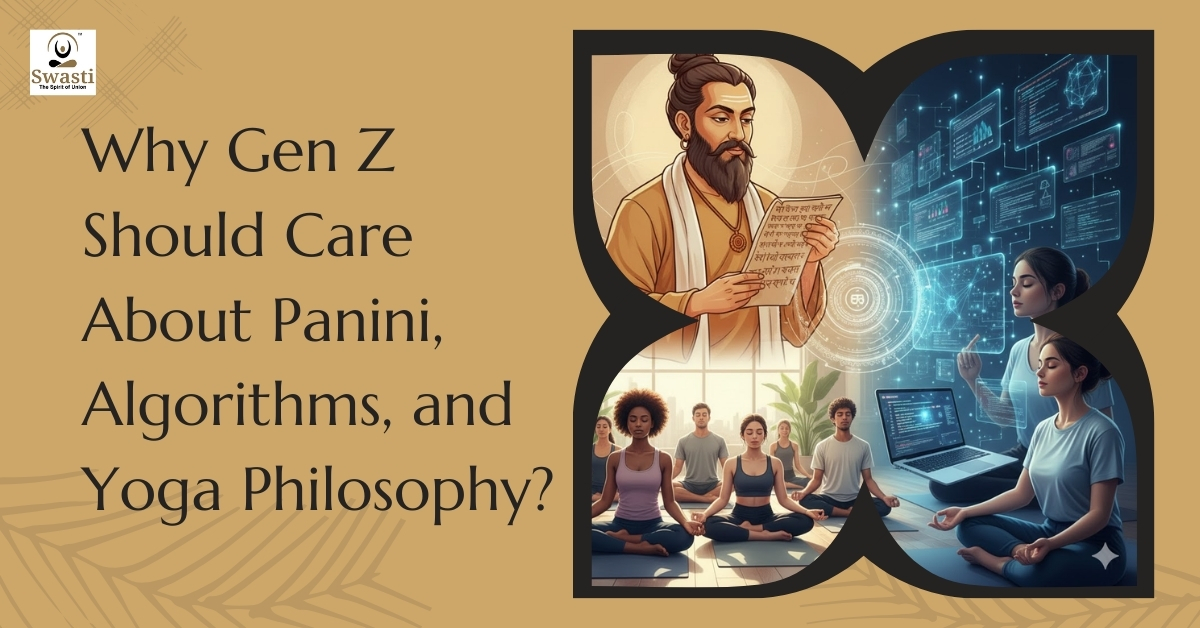
Before code, before keyboards, before AIโ€”there was Panini. And what he built over 2,000 years ago would today be called a perfect system. Yoga, like language and code, operates through precise, rule-based systems. Understanding the comparison between Paniniโ€™s Ashtadhyayi and Backusโ€“Naur Form (BNF) helps yoga professionals explain yoga philosophy more clearly, teach with greater structure, and communicate yoga as a science of transformation rather than a belief system. Who was Panini, and why is he relevant today? Panini (circa 5th century BCE) authored the Ashtadhyayi, a system of nearly 4,000 concise rules that generate correct Sanskrit. Importantly, Panini did not merely describe languageโ€”he designed a generative system capable of producing infinite valid expressions from finite rules. Modern linguists and computer scientists often note that Paniniโ€™s work anticipated core ideas of: Algorithms Formal grammars Rule-based systems Deterministic logic For yoga professionals, Paniniโ€™s method mirrors how classical yoga texts operate: clear inputs, disciplined process, predictable outcomes. What is Backusโ€“Naur Form (BNF)? Backusโ€“Naur Form was developed in the 1950s by John Backus to formally describe the syntax of programming languages such as ALGOL. BNF provides a notation system that defines: What structures are valid in a language How symbols can be combined BNF is foundational to computer science education and compiler design. However, it is important to note that BNF describes structureโ€”it does not itself generate or execute language. Panini vs BNF: A clear comparison Purpose and function Panini: Builds a working engine that generates language BNF: Provides a blueprint describing language structure In modern terms:Panini is closer to an executable program, while BNF resembles technical documentation. Rule behavior Paniniโ€™s rules are: Sequential Conditional Context-sensitive BNF rules are: Declarative Static Largely context-free This makes Paniniโ€™s system more dynamic and adaptableโ€”qualities essential in both living languages and human-centered disciplines like yoga. Hereโ€™s why this matters to Gen Z. You live in systems.Algorithms decide what you watch, buy, learn, and scroll past. Yoga philosophy was born in the same mindsetโ€”not belief, not blind faith, but how systems shape the mind. The Yoga Sutras work exactly like Paniniโ€™s grammar: Input: attention, habits, emotions Process: practice and clarity Output: steadiness, insight, freedom Yoga is not โ€œstretching.โ€It is mental engineering. When Patanjali says โ€œyoga is the calming of mental noiseโ€, he is defining a function. When he lists obstacles and solutions, he is mapping failure states and recovery paths. When he speaks of practice and letting go, he is describing iterative optimization. This is not mystical language.It is system design for human consciousness. Panini proved that complexity can be mastered through structure.Yoga philosophy applies that same truth to life. Teaching advantage for modern GenZ yoga educators By understanding and referencing Panini vs BNF, yoga professionals can: Explain yoga as a scientific, rule-based discipline Communicate effectively with engineers, researchers, and Gen Z learners Position yoga alongside modern systems like AI, psychology, and neuroscience Strengthen credibility in academic and professional environments Yoga, like Sanskrit, survives because it is precise, repeatable, and adaptable. Conclusion: Yoga as a living algorithm, not a belief BNF teaches us how modern systems are described.Panini teaches us how living systems are designed to work. Yoga philosophy belongs firmly in the Paninian traditionโ€”a structured, time-tested methodology for inner transformation. For yoga professionals, this understanding is not academic trivia.It is a powerful way to present yoga as what it truly is:a science of self-engineering for the modern world.

Read More ยป
The Yoga Sutras, Vedanta & Upanishads โ€” A Unified Path Explained

The Yoga Sutras, Vedanta & Upanishads โ€” A Unified Path Explained

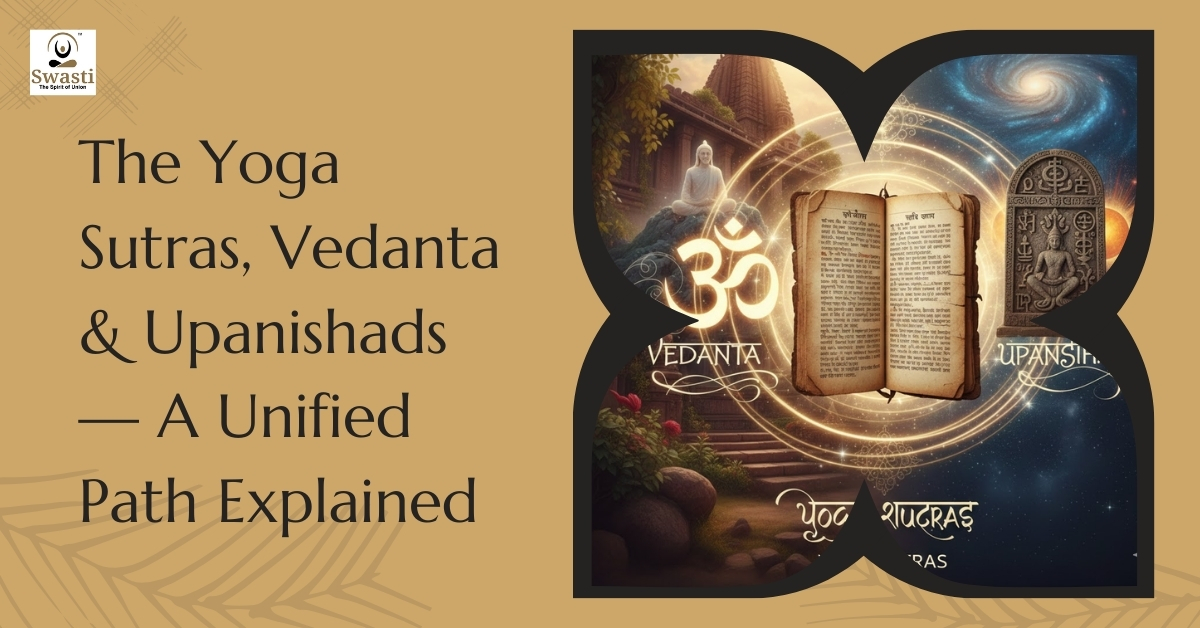
Most people first meet yoga on a mat learning postures, feeling their muscles stretch, enjoying the breath slowing down. Itโ€™s a beautiful beginning. But the deeper you go, the more you realize something profound: Yoga isnโ€™t only about what the body can do.Yoga is about discovering who you are. That realization takes us to the three great pillars of yogic wisdom:The Upanishads โ€ข The Yoga Sutras โ€ข Vedanta They are not separate streams.They form one continuous river flowing toward inner freedom. The Upanishads โ€” Where the Search Begins If yoga is a journey, the Upanishads are the first whisper of adventure.Thousands of years ago, sages sat in forests and caves asking the boldest questions: Who am I?What is the purpose of life?Is there something eternal within me? Their answers werenโ€™t blind beliefs โ€” they came from direct experience.The Upanishads declare: The true Self (Atman) is limitless and divine.Happiness isnโ€™t outside; it is our deepest nature. This isnโ€™t philosophy for intellectuals. Itโ€™s a spark meant to ignite inquiry within anyone who wonders: There must be more to life than survival and stressโ€ฆ right? Patanjaliโ€™s Yoga Sutras โ€” The Training to Realize Truth Once this spark awakens, Patanjali steps in like a skillful guide. He knew a restless mind cannot recognize truth, no matter how beautiful the teachings are.So he gave a clear, practical structure โ€” the Eight Limbs of Yoga: Ethics โ€ข Discipline โ€ข Posture โ€ข Breath โ€ข Sense Withdrawal โ€ข Focus โ€ข Meditation โ€ข Absorption Through practice, the inner noise settles.And when the mind becomes still โ€” even for a moment โ€” something breathtaking is revealed: The one who watches the thoughtsis not the thoughts. Yoga becomes a lived experience, not an idea. Vedanta โ€” The Clarity of Oneness Vedanta arrives like a sunrise after a long night.It explains in clear terms what glimpses in meditation really mean: The Self (Atman) is pure consciousness This consciousness is the essence of everything (Brahman) Real freedom is recognizing this oneness Vedanta says enlightenment is not a goal somewhere in the distant future โ€”It is a shift in understanding right now: I am not the body.I am not the mind.I am the awareness behind both. How They Perfectly Connect โ€” The Unified Path Stage Scriptureโ€™s Role Experience 1. Inquiry Upanishads โ€œThere is a higher truth. What is it?โ€ 2. Practice Yoga Sutras Focus, discipline, purification 3. Realization Vedanta Inner freedom, Self-knowledge One beautifully flows into the other.Itโ€™s like head โ†’ hands โ†’ heart working together for awakening. Real Stories: When Yoga Meets Scriptural Wisdom Aarav โ€” The Engineer Who Found Silence Aarav joined yoga during a stressful phase in his IT job. At first, he rushed through asanas like tasks on a checklist.During a Yoga Sutras session, he came across one line:โ€œYogaแธฅ cittavแน›tti nirodhaแธฅโ€ โ€” Yoga is cessation of mental fluctuations.For the first time, he understood yoga wasnโ€™t about achieving the perfect pose โ€” but about achieving inner stillness. He started practicing breath awareness and short meditation daily.Two months later, he told his teacher: โ€œI still have the same jobโ€ฆ but now the job doesnโ€™t have me.โ€His anxiety softened. His decisions became clearer. He smiles more โ€” and itโ€™s real. One Path, Three Expressions Think of it this way: Upanishads plant the question: Who am I? Yoga Sutras teach how to remove everything false Vedanta reveals the truth that remains Inquiry โ†’ Practice โ†’ RealizationHead โ†’ Heart โ†’ Self This is the unified path of yogaโ€™s origin. Why This Matters Today? The world is full of anxiety, ambition, comparison and noise.People bend their bodies in yoga classโ€ฆ yet feel broken inside. When yoga reconnects with the wisdom of these scriptures: Asana becomes meditation in motionBreath becomes a doorway to inner peaceLife becomes spiritual practice Yoga stops being a performance โ€”and becomes a remembrance. You donโ€™t become a โ€œbetter version of yourself.โ€You discover the truth of yourself. A Personal Invitation If youโ€™ve ever felt yoga calling you deeperโ€ฆfollow that feeling. Explore a verse of the Upanishads.Reflect on a Yoga Sutra each morning.Sit in silence with Vedantic guidance. Not to collect knowledge โ€”but to return home to the Self that never left. Yoga begins on the mat.But it blossoms in the heart of awareness.

Read More ยป
How Cave Meditation Helps You Reset from Digital Burnout

How Cave Meditation Helps You Reset from Digital Burnout?

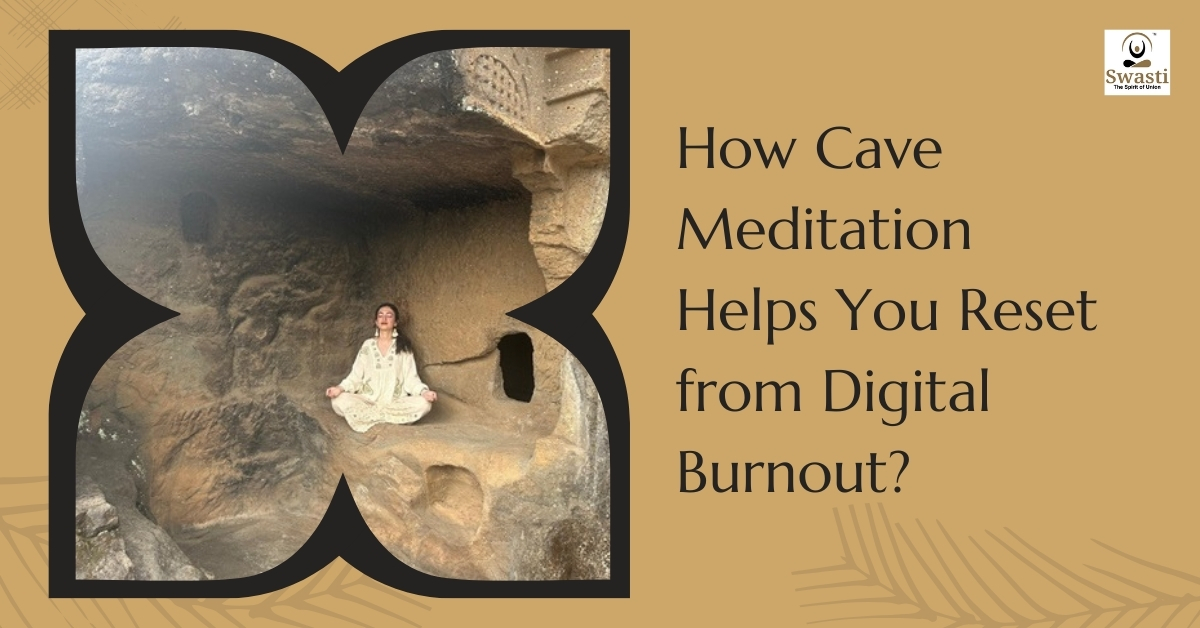
You wake up, reach for your phone. Notifications. DMs. News. Emails. Within minutes, youโ€™re plugged into a swirl of digital noise that hardly lets up until bedtime. Now, imagine instead: you step into an ancient cave carved out of rock centuries ago. The air is cool, the walls echo only your breath, and the only light is soft, natural โ€” maybe filtered through a crevice. Your phone is tucked away. No notifications. No screen glare. Just silence. In that silence, something shifts. Your mind slows. Your breath deepens. And you begin to feel โ€” realigned. Thatโ€™s the power of cave meditation โ€” a sacred, sensory reset that offers what our digital lives seldom give: stillness, presence, reconnection. Digital Burnout โ€” The Invisible Drain In an age where many of us are โ€œalways on,โ€ digital burnout has become a common modern malaise. Constant connection โ€” work emails, social media, news feeds โ€” wears down our ability to focus, drains emotional energy, and blurs the boundaries between work & rest. Research suggests that stepping away from screens โ€” a โ€œdigital detoxโ€ โ€” helps. People report lower depression symptoms and improved emotional balance when they take breaks from their devices. But detoxing alone is only part of the answer. What many experience as โ€œempty timeโ€ can โ€” in the right setting โ€” transform into deep restorative time. Thatโ€™s where the environment matters. Why Meditation in Caves Is Especially Powerful? Caves naturally provide all the elements our stressed brains crave: 1๏ธโƒฃ Complete Silence Not the โ€œcity silenceโ€ full of background noise โ€” real, sacred silence. The kind where your breath becomes music. 2๏ธโƒฃ Darkness That Feels Safe When visual input reduces, the mind unclutters. You hear your heartbeat. You meet yourself again. 3๏ธโƒฃ Stone That Grounds You Sitting against an ancient rock feels like leaning into Earthโ€™s memory โ€” stable, strong, protective. 4๏ธโƒฃ Nature Without Distractions Birdsong instead of ringtones. Wind instead of Wi-Fi. Suddenly, life slows to a rhythm our nervous system understands. Inside a cave, meditation becomes easier. Thoughts settle quicker. The mind finds clarity without effort โ€” as if the place itself teaches us how to be still. What do You Experience During Cave Meditation? Your breath deepens โ€” stress begins to melt Shoulders release long-held tension Time stretches โ€” the mind stops rushing Inner noise fades โ€” silence becomes healing Awareness expands โ€” creativity returns Many people describe feeling reset, renewed, and mentally lighter within just 20โ€“30 minutes. Itโ€™s a profound shift we rarely get from ordinary breaks. Global Relevance โ€” Why It Resonates with Wellness Travelers In our hyper-connected world, people everywhere โ€” across continents, cultures, professions โ€” are experiencing digital fatigue. The appeal of a โ€œreal resetโ€ is universal. Cave meditation offers: A break from technology in a beautiful, historic, natural setting An authentic journey inward โ€” away from external pressures A chance to reconnect with earth, silence, and self โ€” something many modern retreats gloss over Whether youโ€™re a busy professional in New York, a creative in London, or a wellness enthusiast in Pune, the cave offers a timeless sanctuary. Practical Tips: How to Try Cave Meditation Safely & Meaningfully Choose caves known for meditation or heritage value Go with local guides who honor the site Carry a small mat, water, and a light shawl Keep devices switched off โ€” fully unplug Begin with breathing and short silence sessions Respect the sacredness โ€” leave no trace Pairing your cave meditation with hiking, yoga, or mindful tourism adds purpose and adventure to the inner journey. Final Thoughts โ€” A Reset Worth Experiencing In the cacophony of 21st-century life โ€” screens blinking, notifications buzzing, time slipping โ€” silence has become rare. Cave meditation offers that silence back. It gives you a chance to pause, breathe, and reconnect โ€” not just with yourself, but with something deeper: stillness, nature, and inner clarity. For the weary soul, overworked mind, or anyone seeking a meaningful reset โ€” the cave may not just be a retreat; it may be a doorway.

Read More ยป
Why your Next Vacation Should Be a Healing Retreat

Why Your Next Vacation Should Be a Healing Retreat?

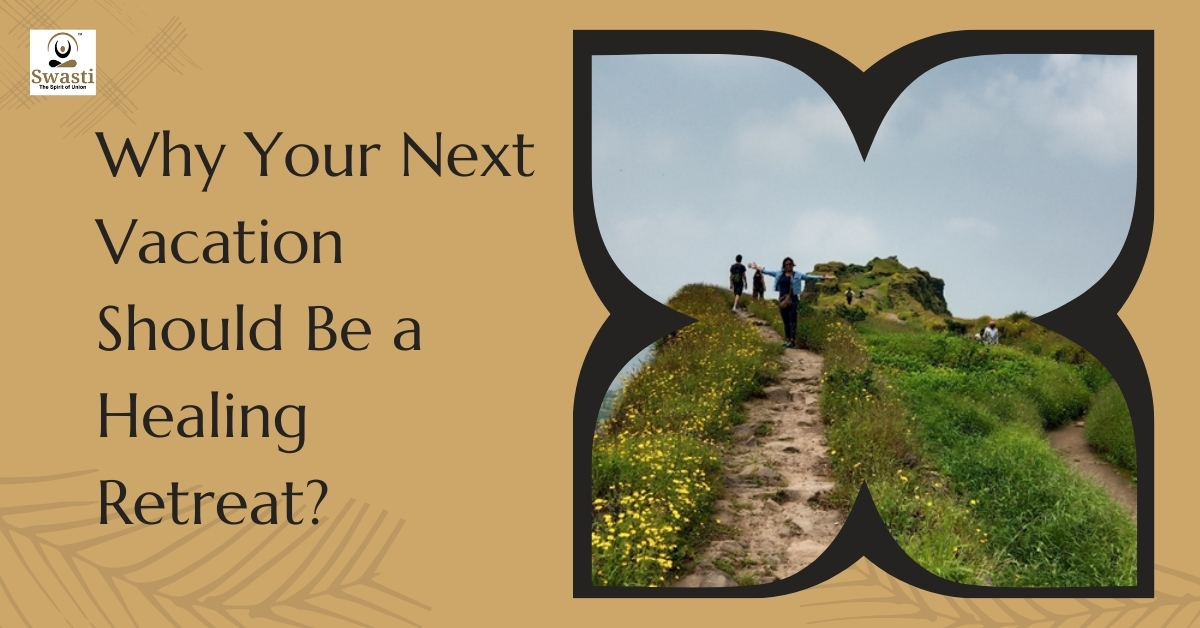
Travel is no longer just about seeing new places โ€” itโ€™s about feeling something deeper. In todayโ€™s fast-paced world, conscious travelers are seeking experiences that slow them down, heal their hearts, and reconnect them with purpose. A healing retreat offers exactly that: a sacred pause where rest meets transformation. Whether youโ€™re a solo woman traveler, a yoga practitioner, or someone craving spiritual nourishment, your next vacation deserves to be more than a break โ€” it should be a rebirth. โœจ 1. Because Youโ€™re Not Just Tired โ€” Youโ€™re Soul-Tired Traditional vacations distract you with bucket list of activities; healing retreats restore you. Retreats allow you to step away from noise and return to your natural state of calm through: Yoga, breathwork & meditation Nature immersion Silence practices Traditional rituals Community circles This isnโ€™t running away โ€” this is coming home to yourself. โœจ 2. Because Wellness Travel Is Becoming the New Conscious Movement More people worldwide are choosing mindful tourism over commercial travel. They long for wellbeing, authenticity, and spiritual depth โ€” the essence of a healing retreat. Expect experiences that elevate your mind and nourish your spirit: Yogic lifestyle workshops Ayurveda-inspired living Mindful eating and detox rituals Sustainable and eco-friendly practices You leave feeling aligned and empowered. โœจ 3. Because Healing Retreats Connect You with Local Culture & Human Values A healing retreat, especially in countries like India, offers a rare gift โ€” the chance to learn directly from local communities rooted in ancient culture, compassion, and spiritual wisdom. You experience:๐ŸŒผ Family systems that thrive on love, respect & togetherness๐ŸŒผ Minimalism as a way of life โ€” living with less yet feeling abundant๐ŸŒผ Sustainability woven into daily habits๐ŸŒผ Bhakti traditions that open the heart๐ŸŒผ Kirtan & bhajans that teach surrender to divinity through music๐ŸŒผ The happiness found in sharing, not consuming๐ŸŒผ Love and reverence for cows, animals & all living beings๐ŸŒผ The joy of offering โ€˜sevaโ€™ โ€” selfless service๐ŸŒผ Free community meals (langar/prasadam) symbolizing equality, generosity & unity These experiences arenโ€™t just culturalโ€”they become spiritual lessons that stay with you forever. โœจ 4. Because Genuine Connections Are Hard to Find โ€” But Easy on Retreats Retreats create safe, soulful spaces where strangers become family.For women and solo travelers, this sense of belonging is invaluable. You connect with: Teachers who guide you with wisdom Travelers who mirror your journey Locals who share stories, heritage & traditions These connections open your heart in ways regular travel never can. โœจ 5. Because Nature Is the Healer Youโ€™ve Been Missing Most retreats are set in pristine, serene natural environments โ€” mountains, beaches, forests, ashrams. Nature silently resets you. Morning sun salutations, river-side meditations, organic farm meals, barefoot walks โ€” a healing retreat lets you breathe in peace and breathe out stress. โœจ 6. Because You Return with Lifelong Tools for Inner Peace Unlike vacations that end when you return home, retreats give you skills you can carry with you forever: Daily yoga and breathwork rituals Meditation practices to calm the mind Ayurveda-inspired routines Gratitude, minimalism & mindful living A deeper spiritual outlook on life You return not just refreshed, but transformed. ๐ŸŒบ Final Thought: Travel That Heals the World Begins by Healing You A healing retreat isnโ€™t just a trip โ€” itโ€™s a journey inward.A journey into culture, spirituality, simplicity, and the joy of being human. Itโ€™s where you learn that true happiness is found not in luxury, but in:โœจ communityโœจ compassionโœจ sharingโœจ surrenderโœจ connectionโœจ and conscious living Your next vacation can be the moment you rediscover yourself. Are you ready to travel not just to a place โ€” but to your own heart?

Read More ยป
Saree Draping as a Yogic Ritual Six Yards of Culture, Mindfulness, and Feminine Wisdom

Saree Draping as a Yogic Ritual: Six Yards of Culture, Mindfulness, and Feminine Wisdom

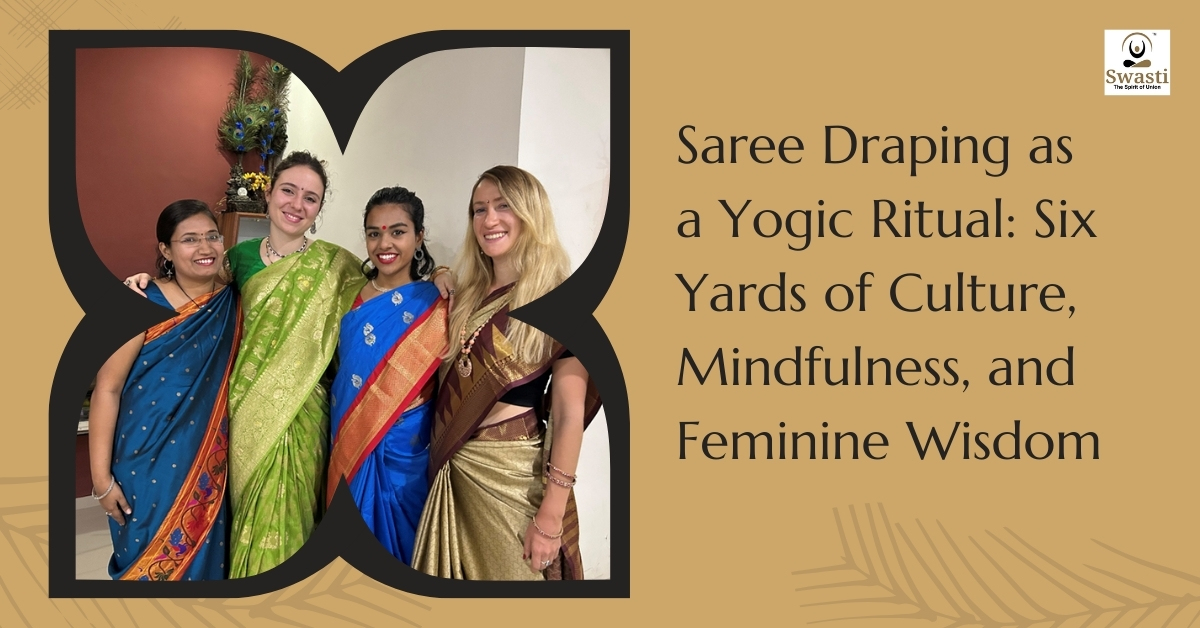
For many global yoga students, visiting India is a journey into the heart of a living, breathing cultureโ€”one where tradition and philosophy seamlessly blend into everyday life. While most come seeking deeper knowledge of asanas, pranayama, and meditation, they often discover that yoga extends far beyond the mat. One of the most surprising and transformative cultural experiences for international students is learning how to drape a saree. The sareeโ€”six yards of elegant, unstitched fabricโ€”is more than a garment. In India, it is a symbol of identity, modesty, beauty, and resilience. For centuries, women across regions have draped sarees in countless styles, each reflecting local traditions, climate, and heritage. But for yoga practitioners, the saree holds a deeper truth: it becomes a yogic ritual that cultivates awareness, patience, and inner grace. The Saree as a Practice of Mindfulness Draping a saree is a slow, deliberate process. There is a rhythm to lifting the fabric, making neat pleats, securing the pallu, and adjusting the folds. For foreign students unfamiliar with this traditional attire, the experience becomes a lesson in presence. Every movement demands focus. Every pleat requires precision. In a world accustomed to fast fashion and instant clothing, the saree invites students to slow down. It draws them into the present moment, much like a meditation practice. Many students describe the experience as an unexpected mindfulness exerciseโ€”one that teaches them how to be patient with themselves, breathe through frustration, and enjoy the process rather than rush to the outcome. This is the essence of yoga. A Cultural Window Into Indiaโ€™s Yogic Values Beyond its aesthetics, the saree embodies the Indian principles of simplicity (saucha), modesty, and harmony. When foreign yoga students drape a saree, they are not just wearing a garmentโ€”they are experiencing a key element of Indiaโ€™s cultural consciousness. They learn: The beauty of handwoven textiles created by artisans rooted in generations of tradition. The significance of color, where red symbolizes prosperity, yellow represents wisdom, and white conveys purity. The role of tradition, especially during festivals, ceremonies, and rituals. The connection to the divine feminine, as the saree is often associated with Goddess energyโ€”Shakti. For many, wearing the saree becomes a cultural initiation into Indian life, enhancing their understanding of yoga as a holistic way of being. Embodying Grace and Groundedness Physical alignment is central to both yoga and saree draping. A well-draped saree encourages upright posture, mindful walking, and a grounded presence. Students often find that wearing a saree subtly transforms their body languageโ€”they move with more awareness, stability, and softness. This conscious movement mirrors yogic principles such as: Sthira (steadiness) Sukha (ease) Prayatna Shaithilya (effortlessness in effort) The saree becomes an extension of the body, a reminder to remain centered and poised. A Shared Experience That Builds Community At institutions like Swasti Yoga Center, saree draping workshops create joyful cultural exchanges. Students laugh as they try to make their first pleats, help each other adjust the pallus, and click selfies capturing the transformation. What starts as a cultural activity often becomes a cherished memory of connection. These workshops also honor Indiaโ€™s hospitalityโ€”offering guests not just knowledge of yoga but a holistic experience of Indian life, food, arts, and traditions. A Living Ritual Connecting the Past and Present In the end, saree draping is more than a skillโ€”it is a ritual that connects yoga students to an ancient cultural lineage. Just as yoga has been passed down through generations, so has the saree. Both are timeless, adaptable, and deeply rooted in conscious living. For global yoga students, learning to drape a saree becomes an embodiment of yogic values: mindfulness, patience, gratitude, and respect for tradition. It transforms six yards of fabric into a spiritual experienceโ€”one that stays with them long after they return home. In an age where yoga is often reduced to fitness, the saree reminds us that true yoga is lived, felt, and woven into every layer of life

Read More ยป
Understanding Indian Wedding Ceremonies Through the Lens of Yoga Philosophy

Understanding Indian Wedding Ceremonies Through the Lens of Yoga Philosophy

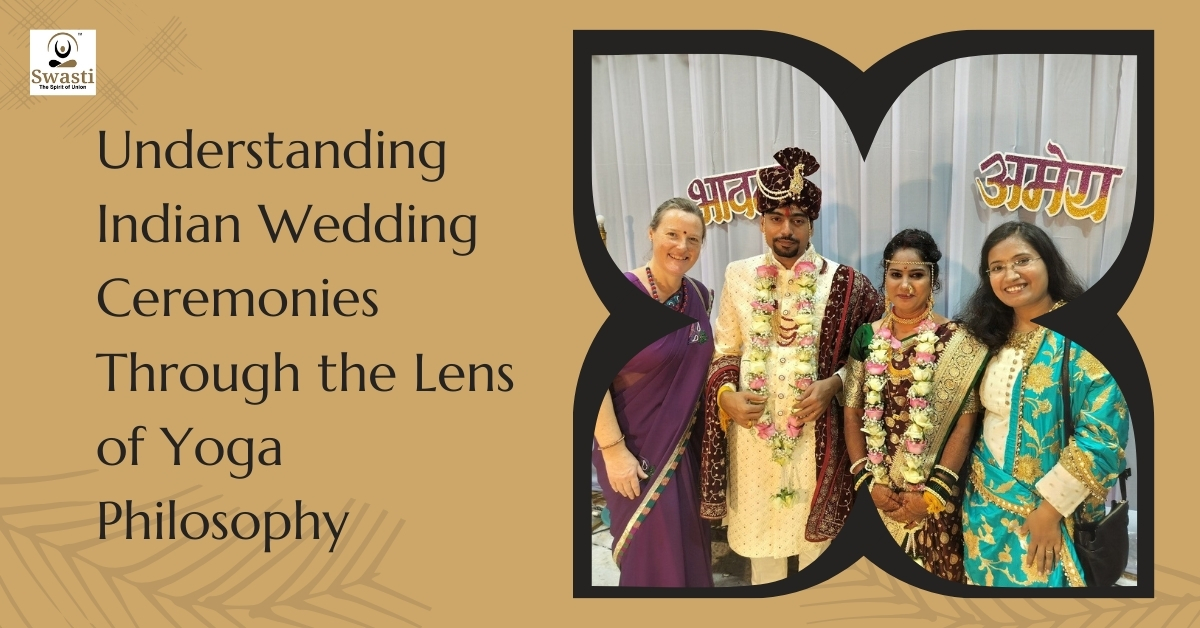
A Yogic Guide to Rituals, Symbolism, Dharma & Cultural Wisdom for Global Yoga Travelers For many global yoga students, traveling to India is more than a journeyโ€”itโ€™s a pilgrimage. Itโ€™s a chance to learn authentic yoga, experience ancient wisdom, and immerse in the cultural heartbeat that shaped yogic philosophy. And among all Indian traditions, the Indian wedding ceremony is one of the most profound, symbolic, and spiritually rich experiences one can witness. If youโ€™re a yoga enthusiast, a solo traveler, or a participant in a Yoga Teacher Training (TTC) in India, attending an Indian wedding offers something extraordinary:A living, breathing expression of yoga in action, where rituals reflect deep spiritual values, cosmic principles, and timeless Indian philosophy. This article explores Indian weddings through the yogic lensโ€”highlighting the meanings of samskara, agni, mantras, dharma, the seven vows, and the many lessons India offers to the modern world. Marriage as a Samskara: A Sacred Rite of Passage In yogic and Vedic traditions, life is divided into key milestones known as samskarasโ€”ceremonies that purify and elevate the individual.Marriage (Vivaha) is one of the most important samskaras because it signifies: Union of two souls (atma-samyoga) Union of families and communities Union of karmas and dharma paths Unlike many modern interpretations of marriage as a mere emotional choice, the yogic perspective treats marriage as a spiritual partnership where each partner supports the otherโ€™s dharma (life purpose), artha (prosperity), kama (joy), and moksha (liberation). For yoga travelers, this offers an inspiring lens: relationships are not only about loveโ€”they are vehicles for growth, discipline, compassion, service, and self-awareness. ๐Ÿ”ฅ Agni (Fire Ceremony): The Yogic Heart of the Wedding Ritual At the center of every Indian wedding is a sacred fire, Agni, representing purity, illumination, and divine witness. Fire plays a crucial role in yoga philosophyโ€”from Agni Sara kriya to the inner digestive fire (jatharagni) that fuels transformation. Why Fire? The Yogic Science Behind It In Vedic science: Fire is a purifier, destroying impurities at physical, mental, and energetic levels. It symbolizes tejas, the fiery force of clarity, courage, and transformation. Fire is a witness to vows, ensuring they are not merely social but cosmic commitments. Modern research supports the calming effect of watching a controlled flame, showing it reduces cortisol, improves attention, and elevates feelings of safetyโ€”similar to meditation. For yogis, the wedding fire is a reminder:Transformation requires heatโ€”discipline, tapas, and intention. ๐Ÿ“ฟ The Power of Mantras: Sound as a Tool for Sacred Union Indian weddings are filled with Sanskrit mantras recited by the priest. These are not merely chants; they are vibrational tools that align consciousness. Why mantras matter (evidence-based perspective): Studies show that mantra chanting activates regions of the brain linked to emotional regulation, calmness, and concentration. Sanskrit syllables are phonetically structured to produce healing vibrations, similar to Bhramari and Om chanting. Chanting regulates the breath, helping participants enter a state of parasympathetic relaxation. In weddings, mantras represent: Invoking blessings from nature and cosmic forces Harmonizing the coupleโ€™s energies Strengthening intention and mindful presence For yogis, hearing wedding mantras feels like attending a sacred sound meditationโ€”deep, grounding, and spiritually elevating. ๐Ÿ•‰๏ธ The Seven Vows: How They Reflect Yamas & Niyamas One of the most beautiful moments in an Indian wedding is the Saptapadi, the seven steps the couple walks around the fire. Each step represents a vow that mirrors the ethical foundation of yoga. Hereโ€™s how: Nourishment & Stability โ†’ Ahimsa & SauchaRespecting each otherโ€™s well-being with purity and non-harm. Strength & Resilience โ†’ TapasSupporting each other through discipline and challenges. Prosperity & Contentment โ†’ SantoshaBuilding a life of gratitude and simplicity. Togetherness & Family โ†’ AparigrahaPracticing non-possessiveness and healthy attachment. Health & Divine Blessings โ†’ Isvara PranidhanaSurrendering to the divine in all situations. Compassion & Trust โ†’ SatyaHonesty, transparency, and emotional integrity. Friendship & Lifelong Partnership โ†’ Asteya & BrahmacharyaMutual respect, loyalty, and wise use of energy. For yoga students, witnessing these vows is a powerful reminder that yoga is not confined to the matโ€”It is a way of living, loving, and relating. ๐ŸŒฟ Sustainability in Indian Weddings: Ancient Wisdom Meets Modern Values Many Indian wedding traditions are inherently sustainable: Use of flowers, turmeric, rice, and plant-based dyes instead of synthetic dรฉcor Community-based cookingโ€”reducing food waste Handmade gifts and local artisan crafts Rituals performed with biodegradable materials Clothing crafted from natural fabrics like cotton and silk These traditions emphasize simple living (aparigraha) and respect for nature. Many Indian families are also adopting eco-friendly wedding initiatives:solar lighting, plastic-free ceremonies, locally sourced meals, and donation-based gifting. For global travelers passionate about yoga and sustainability, this cultural wisdom aligns perfectly with modern eco-conscious living. ๐Ÿ’› Indian Values: The Spirit of Love, Community & Dharma Indian weddings beautifully demonstrate values that are central to yoga: Seva (selfless service): Families serve guests wholeheartedly. Atithi Devo Bhava: Guests are treated as divine. Community over individuality: Weddings strengthen social bonds. Dharma: Marriage is a commitment to shared responsibility and growth. Shraddha: Faith in rituals, family, and universal harmony. These values are emotionally moving for international travelers, especially those seeking deeper connection and belonging. ๐ŸŒ Lessons the West Can Learn from Indian Weddings Relationships thrive on shared purpose (dharma), not just emotions. Rituals create mindful transitions, reducing anxiety around life changes. Community support strengthens marital bonds. Slow, meaningful ceremonies create deeper connection. Sustainability can be woven naturally into celebrations. Love is not an isolated eventโ€”it is part of a web of relationships. Indian weddings are a reminder that love is sacred, and marriage is a spiritual practice that requires presence, patience, devotion, and awarenessโ€”much like yoga itself. Why Yoga Travelers Should Experience an Indian Wedding Attending an Indian wedding during your yoga journey in India offers: A profound understanding of yogic values Cultural immersion beyond tourism Inspiration for mindful relationships Experience of mantras, rituals & symbolism A sense of belonging to Indiaโ€™s warm community life A living example of yoga philosophy woven into daily life For yoga practitioners, witnessing these ceremonies is like watching ancient wisdom come aliveโ€”a reminder that yoga

Read More ยป
The Joy of Mehendi What Henna Art Means Spiritually and Culturally for Visitors

The Joy of Mehendi: What Henna Art Means Spiritually and Culturally for Visitors

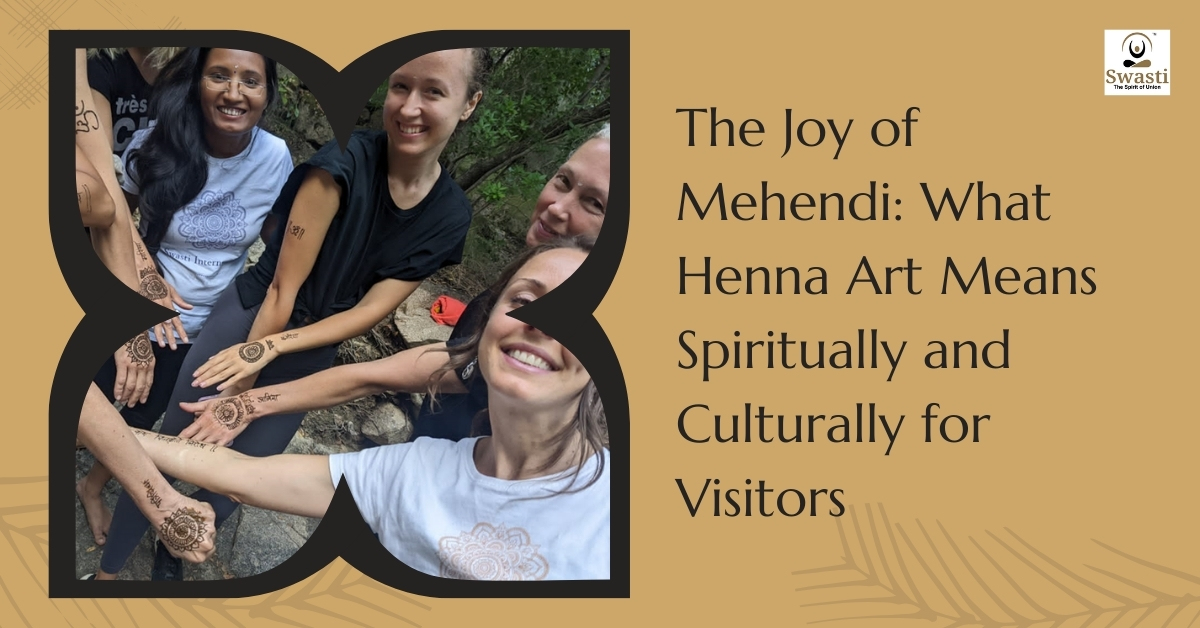
For global yoga students and solo travelers exploring India, few cultural experiences feel as magical and heartwarming as Mehendiโ€”the ancient art of adorning hands and feet with henna. Whether you’re attending an Indian wedding during your Yoga Teacher Training (TTC) or simply immersing yourself in local traditions, Mehendi offers a beautiful blend of creativity, spirituality, and community connection. A Brief History of Mehendi: A Timeless Tradition Mehendi (henna) has been part of Indian, Middle Eastern, and African culture for over 5,000 years. Historical evidence shows its use in ancient Egypt, where henna was cherished for its cooling effect and symbolic beauty. In India, henna gradually evolved into a ceremonial art form, especially in weddings and festivals. Traditionally, Mehendi symbolized joy, auspiciousness, love, and protection. Women applied it before ceremonies to invite blessings, celebrate transitions, and connect with inner femininity. Today, it remains a cherished ritual that bridges generations and culturesโ€”welcoming international visitors into Indiaโ€™s vibrant heritage. The Spiritual Meaning Behind Henna Art For yoga practitioners, Mehendi resonates deeply with yogic values. The process is not just decorative; it carries energetic and symbolic meaning: 1. Connection with the Elements Henna is a natural plant dyeโ€”cooling, earthy, grounding. Applying it is like offering gratitude to Prithvi (earth element). Many yogis describe the experience as calming and meditative. 2. Activation of Energy Points The palms and feet hold important marma points and energy channels. Traditional patterns like mandalas, lotus petals, and spirals symbolically activate these subtle energies, helping one feel centered and connected. 3. A Ritual of Presence Sitting still for 20โ€“30 minutes while the henna dries naturally becomes a form of mindfulness practice. It encourages patience, relaxation, and conscious breathingโ€”values aligned with yogic living. 4. Blessings, Beauty & Protection In Indian culture, henna represents shagunโ€”an auspicious blessing. The darker the stain, the more positive the symbolism. For travelers, it becomes a mark of celebration, belonging, and acceptance into the host culture. Decoding Mehendi Designs: Symbols With Meaning Henna patterns are deeply symbolic, each telling a story. Some of the most common include: Lotus โ€“ purity, spiritual growth, and awakening Mandala โ€“ wholeness, harmony, balance Peacock โ€“ beauty, joy, celebration Vines & Leaves โ€“ devotion, vitality, connection Sun & Moon โ€“ divine energy, duality, cosmic balance For global yoga students, these motifs beautifully mirror yogic concepts like unity, transformation, and inner light. How Yoga Students & Solo Travelers Can Enjoy Mehendi Whether you’re invited to a wedding in India or exploring local markets, Mehendi is an experience you shouldnโ€™t miss. Hereโ€™s how to make the most of it: 1. Try It During Festivals or Weddings Most TTC students get invited to Indian weddingsโ€”perfect moments to enjoy Mehendi. It blends seamlessly with sangeet, haldi, and pre-wedding celebrations, letting foreigners participate in cultural rituals with joy. 2. Choose Simple or Traditional Designs If youโ€™re new, start with a minimalist mandala on the palm or a vine on the wrist. Itโ€™s elegant, meaningful, and dries quickly. 3. Use Natural Henna Only Look for chemical-free, organic henna. Pure henna is earthy green when applied and stains orange to deep brown. Avoid โ€œblack henna,โ€ which may contain harmful dyes. 4. Treat It as Meditation As the artist applies Mehendi, stay present. Observe the sensation, breathe deeply, and enjoy the stillness. Many yogis say this becomes a beautiful pause in their TTC journey. 5. Capture Memories Mehendi looks stunning in photographsโ€”perfect for Instagram travel moments. Itโ€™s a symbol of your time in India, blending yoga, culture, and celebration. Why Mehendi Is a Must-Try for Every Yoga Traveler Mehendi isnโ€™t just body artโ€”itโ€™s a cultural blessing, a sensory ritual, and a spiritual expression. For global visitors, it offers a unique way to connect with Indian traditions, deepen cultural understanding, and celebrate lifeโ€™s joyful moments. Whether youโ€™re a yogi seeking grounding or a traveler exploring new cultures, Mehendi becomes a beautiful reminder of your Indian journeyโ€”one that stays on your skin and in your heart.

Read More ยป
How to Find Affordable Yoga Wellness Retreats in India

How to Find Affordable Yoga Wellness Retreats in India

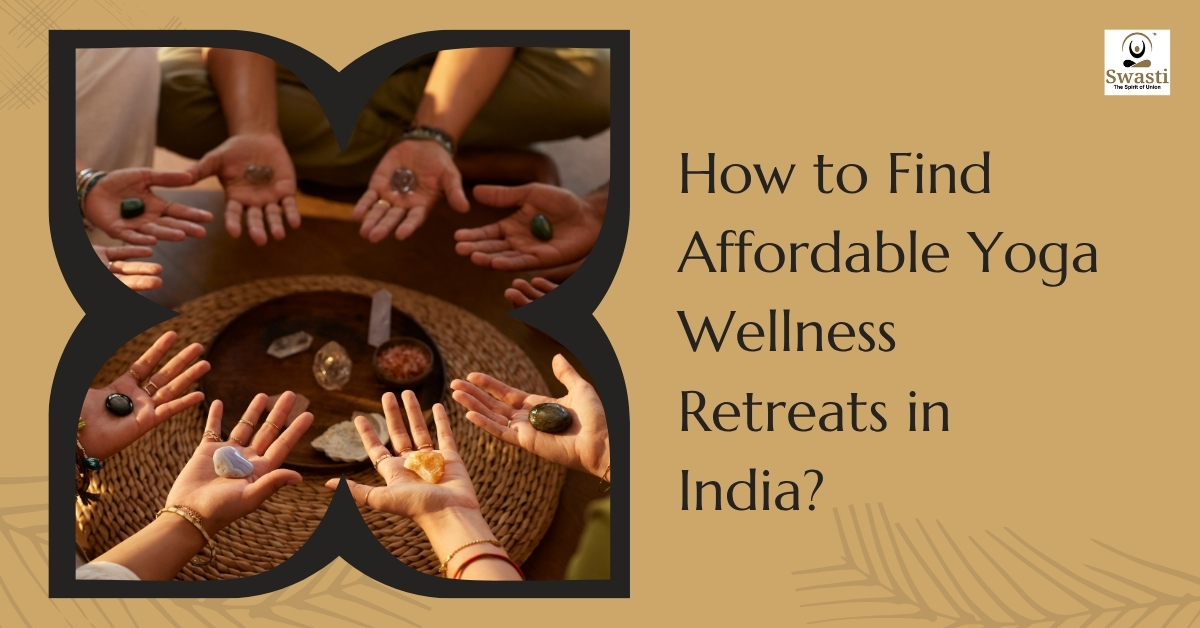
India remains one of the worldโ€™s top destinations for yoga and spirituality, but many travelers worry that wellness retreats will strain their budget. The truth is that the birthplace of yoga offers meaningful, authentic, and affordable retreats that provide transformation without luxury price tags. Solo adventurers, digital nomads, wellness seekers, and conscious travelers can enjoy immersive yoga programs, homemade Indian cuisine, sustainable living, and vibrant cultural diversity. This guide shares practical strategies to keep your yoga journey cost-effective, authentic, and deeply enriching. Why Choose India for a Budget Yoga Retreat? Global hub for traditional Yoga and Ayurveda Lower cost of living supports longer stays Rich diversity in culture, food, and landscapes Community-style living fosters belonging and shared growth Availability of ashrams, eco-stays, homestays, and wellness hostels India makes transformation accessible to everyone, not only luxury wellness travelers. Top Tips to Find Budget Yoga & Wellness Retreats 1. Explore Ashrams and Yoga Schools with Shared Accommodation Community stays reduce expenses and increase learning opportunities. Many recognized yoga institutes offer: Dormitory or simple room options Karma yoga opportunities Donation-based retreats Popular regions include Rishikesh, Dharamshala, Mysuru, Goa, and Pune. 2. Choose Retreats with All-Inclusive Meals Wellness travel can get expensive if meals are not included. Look for: Satvik vegetarian, ayurveda based food Home-cooked meals with seasonal ingredients Family-style dining that encourages connection Healthy food supports your inner journey without extra spending. 3. Look for YCB or Government-Accredited Training Centers Certified centers often provide: Affordable structured programs Transparent pricing Evidence-based yoga and Ayurveda guidance Accreditation ensures trustworthy training without inflated costs. 4. Travel Off-Season for Lower Prices Indiaโ€™s off-season months: Monsoon (June to September) Late winter (January to February in some regions) Retreat and flight prices drop considerably during these times. 5. Prefer Smaller Towns Over Tourist Hotspots Costs skyrocket in the most popular beaches and cities. Consider: Rural eco-villages near nature Regional cultural destinations and spiritual centers Local festivals and folklore interactions You gain authentic experiences at a fraction of luxury destination pricing. 6. Join Long-Stay Programs for Better Value Many centers offer: Monthly yoga training programs at lower daily cost Internship or volunteering options Work-accommodation exchange for digital nomads Longer stays help integrate yoga into your lifestyle. 7. Use Budget Travel Platforms and Local Networks Search on: Trusted yoga retreat aggregators Backpacker forums and hostel communities WhatsApp and Instagram groups of wellness travelers Direct booking with organizers usually results in discounted rates. 8. Check What Is Included in the Price Avoid hidden costs by reconfirming: Accommodation type Full daily schedule Excursions, therapies, or airport transfers Group size and safety protocol Transparency protects both your wallet and peace of mind. ย Smart Budget Checklist for Yoga Travelers Criteria Why it Matters Certified instructors and therapists Ensures safe and effective practice Meals and stay included Major expense saver Local cultural activities Authentic travel value Community environment Ideal for solo and student travelers Flexible booking or volunteering Supports longer stays Safe region with good connectivity Peaceful, stress-free travel Tick before you book to avoid unpleasant surprises. Travel Smart, Live Mindfully Budget does not require compromise in experience quality. Many of the most transformative yogic learnings come from: Simple living Conscious eating Community engagement Nature immersion Cultural exchange These elements bring the essence of Indian hospitality and yogic values to life. Backpackers, students, digital nomads, and curious explorers can find their perfect match in Indiaโ€™s diverse wellness ecosystem, whether in the Himalayas, Western Ghats, or heritage cities. Experience India beyond the typical tourist trail.

Read More ยป
Choosing the Right Yoga & Wellness Retreat in India

Choosing the Right Yoga & Wellness Retreat in India

Top 10 Essentials for a Truly Transformative, Culturally Immersive Experience India has always been a sanctuary for seekers. From Himalayan ashrams to coastal wellness sanctuaries, every yoga retreat promises โ€œtransformation.โ€ The challenge arises when travelers, especially solo travelers, women, couples, and conscious explorers, must choose the right retreat that feels authentic, safe, and aligned with their personal growth journey. This guide outlines the Top 10 Things to Check before booking a yoga wellness retreat in India, ensuring that the experience goes beyond tourism and invites true inner connection and cultural immersion. Top 10 Factors to Evaluate Before Booking 1. Authentic Yoga Lineage and Credentials Seek centers with qualified yoga therapists, experienced faculty, or recognized accreditations such as: YCB (Yoga Certification Board), Ministry of AYUSH Ashram-based lineage or MD doctors in yoga and AyurvedaThis ensures scientific, safe, and traditional instruction. 2. Focus on Transformation, Not Just Tourism A genuine retreat includes: Daily yoga and meditation Mindfulness and self-reflection time Inner work for mental and emotional well-beingTransformation is the real souvenir. 3. Cultural Immersion and Indian Family Values Travelers often crave belonging, not isolation. Look for: Family-style dining Regional rituals and community activities Traditional Indian hospitalityThese elements foster warmth and deeper cultural understanding. 4. Safety and Comfort for Women and Solo Travelers Verify: Secure residential premises Assistance with local travel Female-friendly facilities and trained staffSafety promotes confidence and presence in the practice. 5. Ayurveda Consultations and Personalized Wellness Plans Traditional healing unlocks deeper rejuvenation. Confirm if retreats offer: AYUSH-certified Ayurveda doctors Body constitution (Prakriti) analysis Tailored diet and therapies 6. Sustainable and Conscious Travel Values Environmentally mindful choices reflect yogic ethics. Ask: What eco-practices are followed? Are local artisans and farmers supported? Are digital detox or minimal waste policies encouraged? 7. Food Philosophy and Dietary Needs The kitchen is the heart of Indian retreat experiences. Check for: Satvik, vegetarian, organic meals Seasonal and mindful eating practices Cooking rituals led by local home chefs 8. Meaningful Excursions Over Sightseeing Choose retreats offering: Village walks and temple visits Art and handicraft workshops Nature immersion and traditional ritualsExperiences that enrich the soul, not overcrowded tourist spots. 9. Group Size and Facilitator Attention Small cohorts ensure: Personal corrections during asanas Safe modifications based on health conditions Social bonding among participants 10. Honest Reviews and Transparent Communication Evaluate: Videos, testimonials, and alumni references Well-detailed daily schedule and inclusions No hidden fees or unrealistic promises A retreat should feel like a supportive community, not a commercial wellness package. ๐Ÿงณ Pre-Booking Checklist for Travelers Checklist Item Yes No Verified yoga credentials and wellness license โ˜ โ˜ Women/solo travel safety protocols โ˜ โ˜ Personalized Ayurveda/therapy support โ˜ โ˜ Cultural immersion and local authenticity โ˜ โ˜ Transparent pricing with inclusions โ˜ โ˜ Community and family-style atmosphere โ˜ โ˜ Sustainable practices in place โ˜ โ˜ Healthy local cuisine aligned with yogic principles โ˜ โ˜ Purpose-driven itinerary (not touristy) โ˜ โ˜ Alumni testimonials and accessible faculty โ˜ โ˜ Tick before you book. What You Should Feel After Reading a Retreat Brochure? A sense of trust A spark of inspiration A gentle inner calling that says,โ€œThis feels like home.โ€ If the retreat does not evoke that inner resonance, continue exploring. Experience India like family, not a tourist. Conclusion Choosing a yoga retreat in India is not only a travel decision. It is a spiritual investment. When you select a center rooted in authenticity, care, and cultural values, your journey becomes a catalyst for long-lasting transformation. Whether you are a first-time visitor, a conscious traveler, or a yogic explorer seeking deeper self-awareness, India offers a retreat meant for you.

Read More ยป

Add Yoga To Retain The Beauty Of Body And Mind

Vitae aliquam porta sed augue consectetuer. Parturient posuere sed habitasse quisque malesuada platea. Dis suspendisse integer ut facilisis maximus mus.