๐Ÿ‡ฎ๐Ÿ‡ณ India | ๐Ÿ‡บ๐Ÿ‡ธ USA | ๐Ÿ‡ซ๐Ÿ‡ท France | ๐Ÿ‡ฒ๐Ÿ‡ฝ Mexico | ๐Ÿ‡ฆ๐Ÿ‡ช UAE

๐Ÿ‡ฎ๐Ÿ‡ณ India | ๐Ÿ‡บ๐Ÿ‡ธ USA | ๐Ÿ‡ซ๐Ÿ‡ท France | ๐Ÿ‡ฒ๐Ÿ‡ฝ Mexico | ๐Ÿ‡ฆ๐Ÿ‡ช UAE

Blog

News & Articles

Why a Wellness Retreat Is the Most Thoughtful New Year Gift for Your Parents

Gift Health, Not Things: Why a Wellness Retreat Is the Most Thoughtful New Year Gift for Your Parents

In my clinical and wellness practice, I often hear a familiar hesitation: โ€œI would love to go for a retreat, but it feels selfish.โ€ This belief is deeply ingrainedโ€”especially among professionals, caregivers, parents, and socially responsible individuals. Yet, from both a medical and wellness perspective, this belief is not only inaccurate; it is counterproductive. A solo wellness retreat is not an escape from responsibility. It is a strategic pause for restoration, regulation, and recalibration. The Medical Cost of Constant Availability Modern lifestyles reward availability and productivity but rarely account for physiological limits. Chronic stress, poor sleep, digestive disturbances, hormonal imbalance, anxiety, and burnout are no longer exceptions; they are the norm. In medicine, we understand that the nervous system cannot remain in a prolonged โ€œonโ€ state without consequences. When stress becomes chronic, the body shifts into survival mode: Digestion weakens Immunity drops Inflammation increases Emotional resilience declines A solo retreat interrupts this pattern. By removing external demands like social roles, expectations, and digital noise, the body is finally given the conditions required for repair. Why โ€œSoloโ€ Matters Group retreats and vacations have their value. However, solitude serves a different therapeutic function. When you are alone yet safely guided and supported, you are no longer performing, explaining, adjusting, or accommodating. The mind settles faster. Emotional processing becomes honest. Awareness deepens. From a yogic and medical lens, this is when the parasympathetic nervous system (the healing response) becomes dominant. This is also when clarity emerges. Rest Is Not Indulgence; It Is Preventive Care We readily accept preventive health check-ups, yet we hesitate to practice preventive rest. A solo wellness retreat often helps individuals: Recognize early signs of burnout Correct lifestyle patterns before disease manifests Re-establish healthy sleepโ€“wake rhythms Reconnect with hunger, satiety, and breath Regulate emotions without suppression In clinical terms, this is early intervention. In yogic terms, it is pratyaharaโ€”withdrawing energy from external overload and bringing it back to the self. Why Many People Delay it and Why They Shouldnโ€™t Most people wait until exhaustion forces them to stop. Unfortunately, by then, recovery takes longer. A solo retreat taken before collapse is an act of intelligent investment, not luxury. A Quiet but Powerful Reset A true wellness retreat is not about doing more. It is about doing less but consciously. Fewer conversations. Fewer choices. Fewer distractions. In that simplicity, the system resets. As both a medical doctor and wellness practitioner, I can state this clearly: Solitude, when structured and intentional, is therapeutic. Silence or mauna can be diagnostic and curative. Final Reflection If your body is asking for rest, clarity, or space, it is not weakness but wisdom. A solo wellness retreat is not stepping away from life. It is learning how to return to it fully present, grounded, and well. Sometimes, the most responsible thing you can do for yourself is to PAUSE. Ready for a Quiet Reset in India? If this reflection speaks to you, it may be time to step away from routine and travel with intention. At Swasti Yoga Center, wellness retreats are created for people who want real rest, not crowded schedules. Set in a calm, nature-connected space, the retreats support your body and mind to slow down, regulate, and reset โ€” especially helpful if youโ€™re traveling solo. You can choose a 5 days wellness retreat for a gentle pause and nervous-system recovery, or an 8 days wellness retreat for deeper, personalized care and inner recalibration. Sometimes the most meaningful journey is not outward, but inward. If youโ€™re already planning to travel, let it become a return to balance.
Read More ยป
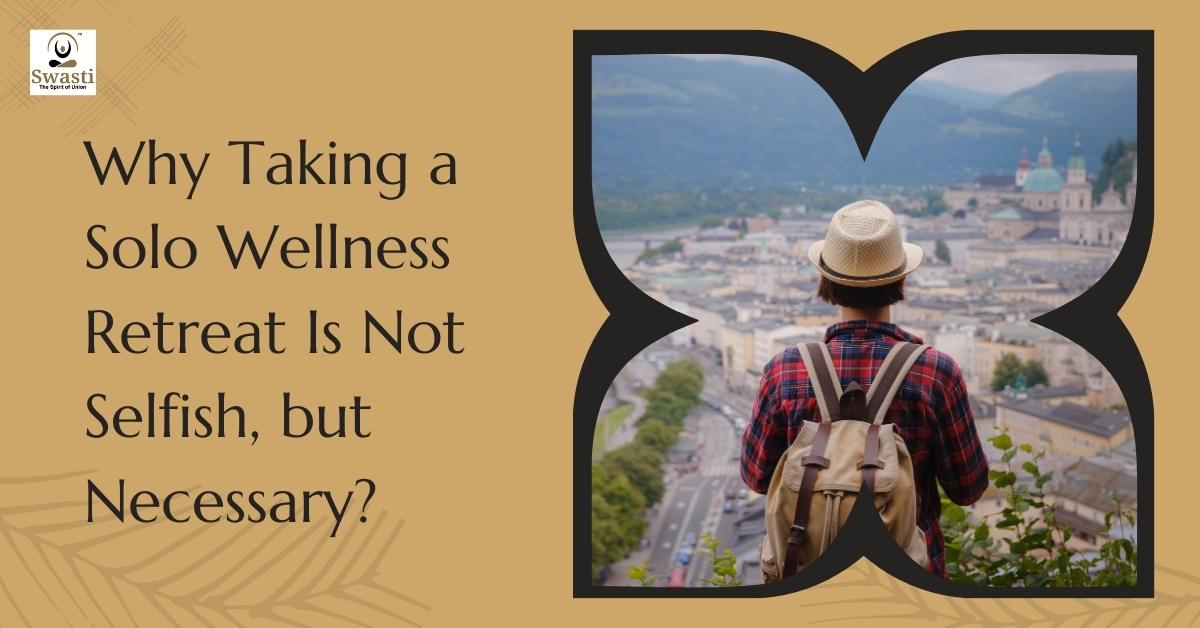
Why Taking a Solo Wellness Retreat Is Not Selfish, but Necessary?

Why Taking a Solo Wellness Retreat Is Not Selfish, but Necessary?

In my clinical and wellness practice, I often hear a familiar hesitation: โ€œI would love to go for a retreat, but it feels selfish.โ€ This belief is deeply ingrainedโ€”especially among professionals, caregivers, parents, and socially responsible individuals. Yet, from both a medical and wellness perspective, this belief is not only inaccurate; it is counterproductive. A solo wellness retreat is not an escape from responsibility. It is a strategic pause for restoration, regulation, and recalibration. The Medical Cost of Constant Availability Modern lifestyles reward availability and productivity but rarely account for physiological limits. Chronic stress, poor sleep, digestive disturbances, hormonal imbalance, anxiety, and burnout are no longer exceptions; they are the norm. In medicine, we understand that the nervous system cannot remain in a prolonged โ€œonโ€ state without consequences. When stress becomes chronic, the body shifts into survival mode: Digestion weakens Immunity drops Inflammation increases Emotional resilience declines A solo retreat interrupts this pattern. By removing external demands like social roles, expectations, and digital noise, the body is finally given the conditions required for repair. Why โ€œSoloโ€ Matters Group retreats and vacations have their value. However, solitude serves a different therapeutic function. When you are alone yet safely guided and supported, you are no longer performing, explaining, adjusting, or accommodating. The mind settles faster. Emotional processing becomes honest. Awareness deepens. From a yogic and medical lens, this is when the parasympathetic nervous system (the healing response) becomes dominant. This is also when clarity emerges. Rest Is Not Indulgence; It Is Preventive Care We readily accept preventive health check-ups, yet we hesitate to practice preventive rest. A solo wellness retreat often helps individuals: Recognize early signs of burnout Correct lifestyle patterns before disease manifests Re-establish healthy sleepโ€“wake rhythms Reconnect with hunger, satiety, and breath Regulate emotions without suppression In clinical terms, this is early intervention. In yogic terms, it is pratyaharaโ€”withdrawing energy from external overload and bringing it back to the self. Why Many People Delay it and Why They Shouldnโ€™t Most people wait until exhaustion forces them to stop. Unfortunately, by then, recovery takes longer. A solo retreat taken before collapse is an act of intelligent investment, not luxury. A Quiet but Powerful Reset A true wellness retreat is not about doing more. It is about doing less but consciously. Fewer conversations. Fewer choices. Fewer distractions. In that simplicity, the system resets. As both a medical doctor and wellness practitioner, I can state this clearly:Solitude, when structured and intentional, is therapeutic. Silence or mauna can be diagnostic and curative. Final Reflection If your body is asking for rest, clarity, or space, it is not weakness but wisdom. A solo wellness retreat is not stepping away from life. It is learning how to return to it fully present, grounded, and well. Sometimes, the most responsible thing you can do for yourself is to PAUSE. Ready for a Quiet Reset in India? If this reflection speaks to you, it may be time to step away from routine and travel with intention. At Swasti Yoga Center, wellness retreats are created for people who want real rest, not crowded schedules. Set in a calm, nature-connected space, the retreats support your body and mind to slow down, regulate, and reset โ€” especially helpful if youโ€™re traveling solo. You can choose a 5 days wellness retreat for a gentle pause and nervous-system recovery, or an 8 days wellness retreat for deeper, personalized care and inner recalibration. Sometimes the most meaningful journey is not outward, but inward. If youโ€™re already planning to travel, let it become a return to balance.
Read More ยป
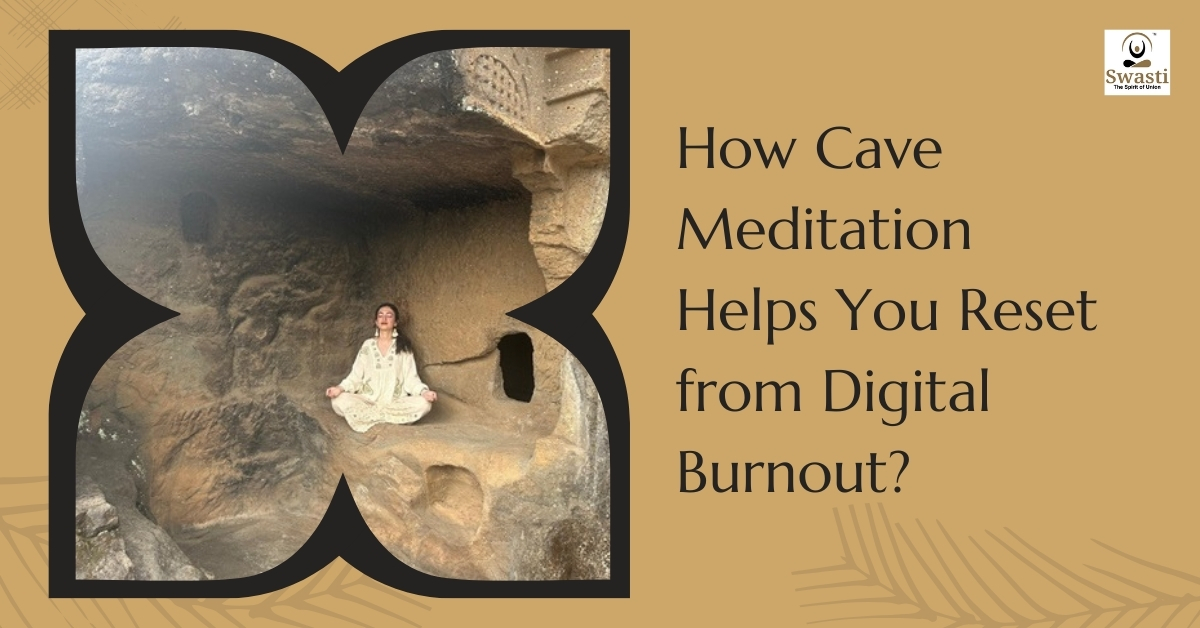
How Cave Meditation Helps You Reset from Digital Burnout

How Cave Meditation Helps You Reset from Digital Burnout?

You wake up, reach for your phone. Notifications. DMs. News. Emails. Within minutes, youโ€™re plugged into a swirl of digital noise that hardly lets up until bedtime. Now, imagine instead: you step into an ancient cave carved out of rock centuries ago. The air is cool, the walls echo only your breath, and the only light is soft, natural โ€” maybe filtered through a crevice. Your phone is tucked away. No notifications. No screen glare. Just silence. In that silence, something shifts. Your mind slows. Your breath deepens. And you begin to feel โ€” realigned. Thatโ€™s the power of cave meditation โ€” a sacred, sensory reset that offers what our digital lives seldom give: stillness, presence, reconnection. Digital Burnout โ€” The Invisible Drain In an age where many of us are โ€œalways on,โ€ digital burnout has become a common modern malaise. Constant connection โ€” work emails, social media, news feeds โ€” wears down our ability to focus, drains emotional energy, and blurs the boundaries between work & rest. Research suggests that stepping away from screens โ€” a โ€œdigital detoxโ€ โ€” helps. People report lower depression symptoms and improved emotional balance when they take breaks from their devices. But detoxing alone is only part of the answer. What many experience as โ€œempty timeโ€ can โ€” in the right setting โ€” transform into deep restorative time. Thatโ€™s where the environment matters. Why Meditation in Caves Is Especially Powerful? Caves naturally provide all the elements our stressed brains crave: 1๏ธโƒฃ Complete Silence Not the โ€œcity silenceโ€ full of background noise โ€” real, sacred silence. The kind where your breath becomes music. 2๏ธโƒฃ Darkness That Feels Safe When visual input reduces, the mind unclutters. You hear your heartbeat. You meet yourself again. 3๏ธโƒฃ Stone That Grounds You Sitting against an ancient rock feels like leaning into Earthโ€™s memory โ€” stable, strong, protective. 4๏ธโƒฃ Nature Without Distractions Birdsong instead of ringtones. Wind instead of Wi-Fi. Suddenly, life slows to a rhythm our nervous system understands. Inside a cave, meditation becomes easier. Thoughts settle quicker. The mind finds clarity without effort โ€” as if the place itself teaches us how to be still. What do You Experience During Cave Meditation? Your breath deepens โ€” stress begins to melt Shoulders release long-held tension Time stretches โ€” the mind stops rushing Inner noise fades โ€” silence becomes healing Awareness expands โ€” creativity returns Many people describe feeling reset, renewed, and mentally lighter within just 20โ€“30 minutes. Itโ€™s a profound shift we rarely get from ordinary breaks. Global Relevance โ€” Why It Resonates with Wellness Travelers In our hyper-connected world, people everywhere โ€” across continents, cultures, professions โ€” are experiencing digital fatigue. The appeal of a โ€œreal resetโ€ is universal. Cave meditation offers: A break from technology in a beautiful, historic, natural setting An authentic journey inward โ€” away from external pressures A chance to reconnect with earth, silence, and self โ€” something many modern retreats gloss over Whether youโ€™re a busy professional in New York, a creative in London, or a wellness enthusiast in Pune, the cave offers a timeless sanctuary. Practical Tips: How to Try Cave Meditation Safely & Meaningfully Choose caves known for meditation or heritage value Go with local guides who honor the site Carry a small mat, water, and a light shawl Keep devices switched off โ€” fully unplug Begin with breathing and short silence sessions Respect the sacredness โ€” leave no trace Pairing your cave meditation with hiking, yoga, or mindful tourism adds purpose and adventure to the inner journey. Final Thoughts โ€” A Reset Worth Experiencing In the cacophony of 21st-century life โ€” screens blinking, notifications buzzing, time slipping โ€” silence has become rare. Cave meditation offers that silence back. It gives you a chance to pause, breathe, and reconnect โ€” not just with yourself, but with something deeper: stillness, nature, and inner clarity. For the weary soul, overworked mind, or anyone seeking a meaningful reset โ€” the cave may not just be a retreat; it may be a doorway.

Read More ยป
Why your Next Vacation Should Be a Healing Retreat

Why Your Next Vacation Should Be a Healing Retreat?

Travel is no longer just about seeing new places โ€” itโ€™s about feeling something deeper. In todayโ€™s fast-paced world, conscious travelers are seeking experiences that slow them down, heal their hearts, and reconnect them with purpose. A healing retreat offers exactly that: a sacred pause where rest meets transformation. Whether youโ€™re a solo woman traveler, a yoga practitioner, or someone craving spiritual nourishment, your next vacation deserves to be more than a break โ€” it should be a rebirth. โœจ 1. Because Youโ€™re Not Just Tired โ€” Youโ€™re Soul-Tired Traditional vacations distract you with bucket list of activities; healing retreats restore you. Retreats allow you to step away from noise and return to your natural state of calm through: Yoga, breathwork & meditation Nature immersion Silence practices Traditional rituals Community circles This isnโ€™t running away โ€” this is coming home to yourself. โœจ 2. Because Wellness Travel Is Becoming the New Conscious Movement More people worldwide are choosing mindful tourism over commercial travel. They long for wellbeing, authenticity, and spiritual depth โ€” the essence of a healing retreat. Expect experiences that elevate your mind and nourish your spirit: Yogic lifestyle workshops Ayurveda-inspired living Mindful eating and detox rituals Sustainable and eco-friendly practices You leave feeling aligned and empowered. โœจ 3. Because Healing Retreats Connect You with Local Culture & Human Values A healing retreat, especially in countries like India, offers a rare gift โ€” the chance to learn directly from local communities rooted in ancient culture, compassion, and spiritual wisdom. You experience:๐ŸŒผ Family systems that thrive on love, respect & togetherness๐ŸŒผ Minimalism as a way of life โ€” living with less yet feeling abundant๐ŸŒผ Sustainability woven into daily habits๐ŸŒผ Bhakti traditions that open the heart๐ŸŒผ Kirtan & bhajans that teach surrender to divinity through music๐ŸŒผ The happiness found in sharing, not consuming๐ŸŒผ Love and reverence for cows, animals & all living beings๐ŸŒผ The joy of offering โ€˜sevaโ€™ โ€” selfless service๐ŸŒผ Free community meals (langar/prasadam) symbolizing equality, generosity & unity These experiences arenโ€™t just culturalโ€”they become spiritual lessons that stay with you forever. โœจ 4. Because Genuine Connections Are Hard to Find โ€” But Easy on Retreats Retreats create safe, soulful spaces where strangers become family.For women and solo travelers, this sense of belonging is invaluable. You connect with: Teachers who guide you with wisdom Travelers who mirror your journey Locals who share stories, heritage & traditions These connections open your heart in ways regular travel never can. โœจ 5. Because Nature Is the Healer Youโ€™ve Been Missing Most retreats are set in pristine, serene natural environments โ€” mountains, beaches, forests, ashrams. Nature silently resets you. Morning sun salutations, river-side meditations, organic farm meals, barefoot walks โ€” a healing retreat lets you breathe in peace and breathe out stress. โœจ 6. Because You Return with Lifelong Tools for Inner Peace Unlike vacations that end when you return home, retreats give you skills you can carry with you forever: Daily yoga and breathwork rituals Meditation practices to calm the mind Ayurveda-inspired routines Gratitude, minimalism & mindful living A deeper spiritual outlook on life You return not just refreshed, but transformed. ๐ŸŒบ Final Thought: Travel That Heals the World Begins by Healing You A healing retreat isnโ€™t just a trip โ€” itโ€™s a journey inward.A journey into culture, spirituality, simplicity, and the joy of being human. Itโ€™s where you learn that true happiness is found not in luxury, but in:โœจ communityโœจ compassionโœจ sharingโœจ surrenderโœจ connectionโœจ and conscious living Your next vacation can be the moment you rediscover yourself. Are you ready to travel not just to a place โ€” but to your own heart?

Read More ยป
Choosing the Right Yoga & Wellness Retreat in India

Choosing the Right Yoga & Wellness Retreat in India

Top 10 Essentials for a Truly Transformative, Culturally Immersive Experience India has always been a sanctuary for seekers. From Himalayan ashrams to coastal wellness sanctuaries, every yoga retreat promises โ€œtransformation.โ€ The challenge arises when travelers, especially solo travelers, women, couples, and conscious explorers, must choose the right retreat that feels authentic, safe, and aligned with their personal growth journey. This guide outlines the Top 10 Things to Check before booking a yoga wellness retreat in India, ensuring that the experience goes beyond tourism and invites true inner connection and cultural immersion. Top 10 Factors to Evaluate Before Booking 1. Authentic Yoga Lineage and Credentials Seek centers with qualified yoga therapists, experienced faculty, or recognized accreditations such as: YCB (Yoga Certification Board), Ministry of AYUSH Ashram-based lineage or MD doctors in yoga and AyurvedaThis ensures scientific, safe, and traditional instruction. 2. Focus on Transformation, Not Just Tourism A genuine retreat includes: Daily yoga and meditation Mindfulness and self-reflection time Inner work for mental and emotional well-beingTransformation is the real souvenir. 3. Cultural Immersion and Indian Family Values Travelers often crave belonging, not isolation. Look for: Family-style dining Regional rituals and community activities Traditional Indian hospitalityThese elements foster warmth and deeper cultural understanding. 4. Safety and Comfort for Women and Solo Travelers Verify: Secure residential premises Assistance with local travel Female-friendly facilities and trained staffSafety promotes confidence and presence in the practice. 5. Ayurveda Consultations and Personalized Wellness Plans Traditional healing unlocks deeper rejuvenation. Confirm if retreats offer: AYUSH-certified Ayurveda doctors Body constitution (Prakriti) analysis Tailored diet and therapies 6. Sustainable and Conscious Travel Values Environmentally mindful choices reflect yogic ethics. Ask: What eco-practices are followed? Are local artisans and farmers supported? Are digital detox or minimal waste policies encouraged? 7. Food Philosophy and Dietary Needs The kitchen is the heart of Indian retreat experiences. Check for: Satvik, vegetarian, organic meals Seasonal and mindful eating practices Cooking rituals led by local home chefs 8. Meaningful Excursions Over Sightseeing Choose retreats offering: Village walks and temple visits Art and handicraft workshops Nature immersion and traditional ritualsExperiences that enrich the soul, not overcrowded tourist spots. 9. Group Size and Facilitator Attention Small cohorts ensure: Personal corrections during asanas Safe modifications based on health conditions Social bonding among participants 10. Honest Reviews and Transparent Communication Evaluate: Videos, testimonials, and alumni references Well-detailed daily schedule and inclusions No hidden fees or unrealistic promises A retreat should feel like a supportive community, not a commercial wellness package. ๐Ÿงณ Pre-Booking Checklist for Travelers Checklist Item Yes No Verified yoga credentials and wellness license โ˜ โ˜ Women/solo travel safety protocols โ˜ โ˜ Personalized Ayurveda/therapy support โ˜ โ˜ Cultural immersion and local authenticity โ˜ โ˜ Transparent pricing with inclusions โ˜ โ˜ Community and family-style atmosphere โ˜ โ˜ Sustainable practices in place โ˜ โ˜ Healthy local cuisine aligned with yogic principles โ˜ โ˜ Purpose-driven itinerary (not touristy) โ˜ โ˜ Alumni testimonials and accessible faculty โ˜ โ˜ Tick before you book. What You Should Feel After Reading a Retreat Brochure? A sense of trust A spark of inspiration A gentle inner calling that says,โ€œThis feels like home.โ€ If the retreat does not evoke that inner resonance, continue exploring. Experience India like family, not a tourist. Conclusion Choosing a yoga retreat in India is not only a travel decision. It is a spiritual investment. When you select a center rooted in authenticity, care, and cultural values, your journey becomes a catalyst for long-lasting transformation. Whether you are a first-time visitor, a conscious traveler, or a yogic explorer seeking deeper self-awareness, India offers a retreat meant for you.

Read More ยป
From Chaos to Calm: Ancient Wisdom Meets Modern Science in Managing Anxiety

From Chaos to Calm: Ancient Wisdom Meets Modern Science in Managing Anxiety

Anxiety is now recognized as one of the most pressing global health concerns, affecting over 300 million people worldwide (WHO, 2023). While modern medicine explains anxiety through overactive amygdala pathways, excessive cortisol secretion, and imbalanced neurotransmitters such as serotonin and GABA, ancient traditions framed it as a disturbance of inner harmony. Today, combining ancient wisdom with the modern science of anxiety offers a holistic approach to restore calm. Ancient Wisdom for Inner Peace In yoga and Ayurveda, anxiety (chittodvega) is linked to imbalances in prana and the nervous system. Practices such as meditation, mantra chanting, pranayama, and mindful rituals were prescribed to stabilize the mind. Similarly, Buddhist mindfulness emphasized non-reactivity to thoughts, while Traditional Chinese Medicine used Qi-regulating practices like Tai Chi and acupuncture to reduce inner turbulence. Science of Anxiety Relief Modern research validates these ancient practices: Yoga and Meditation: A 2018 meta-analysis in Depression and Anxiety found yoga significantly reduced symptoms of generalized anxiety disorder (GAD). Pranayama Breathwork: Slow diaphragmatic breathing increases vagal tone, activates the parasympathetic nervous system, and improves heart rate variability (HRV), a key marker of stress resilience (Frontiers in Human Neuroscience, 2020). Mindfulness: Randomized controlled trials published in JAMA Psychiatry (2022) show mindfulness-based interventions are as effective as escitalopram, a common anti-anxiety medication, for mild to moderate anxiety. Mechanisms of Action Neurobiological:ย  Meditation reduces hyperactivity of the amygdala, the brainโ€™s fear center, while enhancing prefrontal cortex regulation. Hormonal: Yoga and pranayama lower cortisol and adrenaline, balancing the HPA (hypothalamic-pituitary-adrenal) axis. Neurochemical: Mind-body practices boost serotonin, GABA, and dopamine, neurotransmitters linked with calm and well-being. Holistic Management When ancient wisdom meets modern evidence, we gain not only symptom relief but also long-term resilience. Integrating yoga, breathwork, and mindfulness into daily routinesโ€”alongside healthy lifestyle choicesโ€”creates a holistic management strategy for anxiety. This union of science and tradition helps us truly move from chaos to calm. Author: Dr Shwetambari Chothe

Read More ยป
Yoga for Anxiety Science-Backed Poses and Breathwork to Restore Calm

Yoga for Anxiety: Science-Backed Poses and Breathwork to Restore Calm

Anxiety is one of the most common mental health challenges worldwide, affecting millions of people every day. While modern medicine offers solutions, many are turning to yoga for anxiety as a safe, holistic, and evidence-based practice. Scientific studies increasingly support what yogis have known for centuries: mindful movement and conscious breathing can restore calm, reduce stress hormones, and create resilience. Why Yoga Works for Anxiety? Yoga combines poses, breathwork, and relaxation techniques that influence both the body and the mind. Research shows that yoga lowers cortisol (the stress hormone), activates the parasympathetic nervous system, and balances heart rate variabilityโ€”all key markers of stress relief. Beyond the science, yoga provides a sense of grounding, helping individuals shift from anxious thoughts to embodied presence. Poses for Stress Relief Gentle, restorative postures are particularly effective. Childโ€™s Pose (Balasana): Creates a sense of safety and grounding. Legs-Up-the-Wall (Viparita Karani): Promotes circulation, reduces fatigue, and soothes the nervous system. Seated Forward Fold (Paschimottanasana): Encourages introspection and relaxation. Each posture should be held with slow, mindful breathing to deepen its calming effect. Breathwork for Calm Breath is the bridge between the mind and body. Techniques such as Alternate Nostril Breathing (Nadi Shodhana) and Box Breathing have been scientifically proven to reduce anxiety by regulating the autonomic nervous system. Practicing these daily, even for just five minutes, can create lasting change. A Tool for Everyone Whether you are a yoga professional guiding students or someone seeking personal relief, yoga offers practical, accessible tools for anxiety management. With consistent practice, these poses and breathwork techniques not only ease anxious moments but also build long-term resilienceโ€”helping us move from chaos to calm.

Read More ยป
Beyond Leggings and Lattes Reviving the Yoga Weโ€™ve Forgotten

Beyond Leggings and Lattes: Rediscovering the Yoga We Forgot

Walk into a yoga studio in any big city today, and you might see something that feels more like a lifestyle brand launch than a spiritual practice. Designer leggings, juice bars, curated playlists, and Instagram stories dominate the scene. For many, yoga has become synonymous with fitness, fashion, and photo ops. But yoga was never designed for display. It was created for discipline, self-awareness, and transformation. What we see today is only one fragment of its whole, a focus on asanas (postures) without the philosophy that gives them meaning. The Yoga Weโ€™ve Lost Sight Of The word yoga itself means โ€œunionโ€, the integration of body, mind, and spirit. Ancient teachers didnโ€™t see it as a workout routine; they saw it as a way of living with harmony and awareness. The foundational values of yog, ahimsa (non-violence), satya (truthfulness), aparigraha (non-possessiveness), and karuna (compassion), were intended to shape how we treat ourselves, others, and the planet. In a world facing climate change, consumerism, and constant stress, these values feel less like old philosophy and more like urgent survival tools. Imagine if minimalism replaced overconsumption, if forgiveness took precedence over ego battles, and if mindfulness became our default mode instead of distraction. That is the yoga weโ€™ve forgotten and the one we desperately need. Why Poses Arenโ€™t the Whole Story Asanas are important. They strengthen, heal, and prepare the body for stillness. But theyโ€™re only one of the eight limbs of yoga described in Patanjaliโ€™s Yoga Sutras. Breathwork (pranayama), meditation (dhyana), self-study (svadhyaya), and ethical living are just as crucial. When practice stops at the physical, yoga becomes incomplete a performance rather than a path. The real transformation happens when the lessons of yoga leave the mat. How we respond to stress, how we treat people, how we consume resources that is the living proof of practice. Bringing Back Authentic Yoga So, how do we revive the essence? It begins with teachers who integrate philosophy with movement and students willing to explore beyond the sweat. Classes that include moments of reflection, silence, or discussion about yogic principles create practitioners who are not just flexible but also centered and compassionate. Studios too can play a role. Instead of selling merchandise or pushing diets, they can become spaces of genuine learning, inclusion, and growth. In fact, the more yoga aligns with its original purpose, the more relevant it becomes to modern life. Red Flags: Spotting a โ€œPlasticโ€ Yoga Guru Not every yoga teacher or studio is authentic. Here are a few clear signs of when yoga is being sold more than taught: Looks over learning: Classes revolve around selfies and aesthetics instead of real practice. No philosophy: You sweat, but you donโ€™t learn. Over-commercialization: More products and diet plans than self-discovery. Ego-driven presence: The teacher creates dependency rather than empowerment. Exclusivity: Any yoga that judges, excludes, or divides isnโ€™t yoga at all. The Shift We Need Yogaโ€™s future doesnโ€™t depend on how many studios open or how many followers a teacher has. It depends on whether we, as practitioners, bring the philosophy into our daily lives. Choosing teachers who inspire transformation over transaction, and choosing paths that cultivate awareness instead of vanity, is where it begins. Because at its heart, yoga is not about the mat. Itโ€™s about life. Itโ€™s about the conversations we have, the choices we make, and the kindness we extend. If we can bring yoga back from leggings and lattes to living and loving, it can become what it was always meant to be a path to inner freedom and collective harmony.

Read More ยป
Top 7 Yoga Poses to Support Diabetes Management Naturally

Top 7 Yoga Poses to Support Diabetes Management Naturally

Living with diabetes, or walking the line just outside of it, can feel overwhelming. But hereโ€™s something that might actually surprise you: a 2025 report from India shows that people who practice yoga regularly may reduce their risk of developing Type 2 diabetes by around 40 percent, especially if they were already predisposed to it. Even more encouraging? For individuals already managing diabetes, real-world studies are showing notable shifts in blood sugar markers. One analysis of mindโ€“body practices found yoga alone can reduce HbA1c, the long-term blood sugar measure, by about 1 percent, almost matching what metformin delivers. Thatโ€™s not small change; it means better overall control and potentially fewer pills. Let those findings sink in for a moment. Yoga is casually slipping into the medical conversation, not as a replacement, but as a meaningful addition. And the best part? Itโ€™s accessible, gentle, healing. With that in mind, letโ€™s explore 7 yoga poses that make sense for everyday life and support diabetes management naturally. Why Yoga Helps with Diabetes? Before we get into the poses, it is worth understanding why yoga works for diabetes. Improves insulin sensitivity by encouraging better blood flow and metabolism ย  Reduces stress hormones, which otherwise spike cortisol and raise blood sugar ย  Boosts circulation, which helps manage complications in the legs and feet ย  Supports weight management over time through gentle but consistent activity In simple terms, yoga supports the body, calms the mind, and helps keep blood sugar swings under control. The Best Yoga Poses for Diabetes Here are seven of the most effective and practical yoga poses that support diabetes management. You do not need to be super flexible to do them. Just start slow, listen to your body, and be consistent. 1. Vajrasana (Thunderbolt Pose) This pose is often done after meals and is great for digestion. Better digestion means better blood sugar regulation. How to do it: Sit on your heels with your knees together Place your palms on your thighs, keep your back straight, and relax your shoulders Stay in this position for 5 to 10 minutes after eating Why it helps: It improves digestion, reduces bloating, and encourages stable sugar levels after meals. 2. Balasana (Childโ€™s Pose) Childโ€™s Pose is a deeply calming posture that helps reduce stress and tension, two hidden triggers for unstable blood sugar. How to do it: Kneel and sit on your heels Bend forward so your chest rests on your thighs Stretch your arms forward or rest them by your sides Breathe slowly and stay for a few minutes Why it helps: It lowers stress, calms the nervous system, and helps regulate hormonal balance. 3. Bhujangasana (Cobra Pose) This pose gently stretches the abdomen and stimulates the pancreas, which is responsible for insulin production. How to do it: Lie on your stomach, legs extended Place your palms under your shoulders Inhale and lift your chest off the ground, keeping elbows slightly bent Hold for 15 to 20 seconds, then exhale and relax Why it helps: It strengthens the spine, improves blood circulation, and stimulates abdominal organs, including the pancreas. 4. Dhanurasana (Bow Pose) This is a slightly advanced pose, but it is excellent for activating abdominal organs and boosting energy. How to do it: Lie on your stomach, bend your knees, and hold your ankles Inhale and lift your chest and legs upward, creating a bow shape Hold for 10 to 15 seconds, then slowly release Why it helps: It massages internal organs, especially the pancreas and liver, supporting better glucose metabolism. 5. Ardha Matsyendrasana (Seated Spinal Twist) This twisting posture helps massage the abdominal region and supports digestion. How to do it: Sit with your legs extended Bend your right knee and place your foot beside your left thigh Place your right hand behind you and your left elbow on the outside of your right knee Twist your torso gently and hold for 15 to 20 seconds Repeat on the other side Why it helps: It supports digestion, improves circulation, and stimulates abdominal organs. 6. Shavasana (Corpse Pose) Do not underestimate this pose. It is one of the most powerful for diabetes management because it reduces stress and balances the mind. How to do it: Lie flat on your back with arms relaxed at your sides Close your eyes and breathe naturally Stay in this position for 5 to 10 minutes Why it helps: It lowers stress hormones, improves sleep, and restores balance in the body. 7. Setu Bandhasana (Bridge Pose) The Bridge Pose is great for stimulating the abdominal organs and improving circulation. How to do it: Lie on your back with knees bent and feet hip-width apart Press your feet into the ground and lift your hips upward Clasp your hands under your back if possible Hold for 15 to 20 seconds, then slowly lower down Why it helps: It stimulates the pancreas, strengthens the spine, and reduces fatigue while supporting hormone balance. Breathing Practices (Pranayama) for Diabetes Yoga is not just about poses. Breathing techniques, or pranayama, are equally important. Kapalabhati (Skull Shining Breath): Energizes the body, stimulates abdominal organs, and improves metabolism Anulom Vilom (Alternate Nostril Breathing): Calms the nervous system and reduces stress Bhramari (Bee Breath): Relaxes the mind and helps prevent stress-related sugar spikes Just 10 to 15 minutes of pranayama daily can significantly support diabetes management. Tips for Practicing Yoga Safely with Diabetes Check your blood sugar levels before starting Keep some water and a light snack nearby in case of low sugar Start slow and gradually increase duration Avoid overexertion. Yoga is about balance, not competition Practice under the guidance of a trained yoga teacher if you are new Lifestyle Add-ons That Work Well with Yoga Eat a balanced diet with whole grains, veggies, and fiber-rich foods Walk daily, especially after meals, to help manage glucose spikes Prioritize good sleep because poor sleep directly affects blood sugar Stay hydrated throughout the day Yoga plus these habits creates a strong foundation for better diabetes control.

Read More ยป
What Are the Elements of Yoga A Guide to the 8 Steps

What Are the Elements of Yoga? A Guide to the 8 Steps

When someone says yoga, what picture comes to mind? For many, itโ€™s a room full of people flowing through postures, or maybe a calm breathing session. While those are part of yoga, they are only a fraction of what this ancient science really is. Yoga, as described by Sage Patanjali in the Yoga Sutras, is a complete framework for living a conscious life. It is built on 8 interconnected elements that guide a person from the basics of daily discipline to the highest states of awareness. What makes them remarkable is their timeless relevance. Even in todayโ€™s fast-moving, distracted world, these elements can anchor us and give meaning to how we live, work, and connect. Letโ€™s walk through each element, not as abstract philosophy, but as practical steps you can integrate into modern life. 1. Yama: The Foundation of Relationships Yama deals with how we interact with the world. It is the ethical base of yoga and includes five principles: Ahimsa (Non-violence): Choosing compassion in words, thoughts, and actions. Satya (Truthfulness): Aligning speech and actions with honesty. Asteya (Non-stealing): Respecting othersโ€™ time, energy, and resources. Brahmacharya (Moderation): Channeling energy wisely instead of overindulging. Aparigraha (Non-possessiveness): Letting go of greed and unnecessary attachment. In practical terms, this could be as simple as being mindful not to snap at a colleague when stressed, respecting boundaries in relationships, or resisting the pull of consumerism. Yama sets the ground for peaceful coexistence with others. 2. Niyama: The Discipline of Self If yama is about the outer world, niyama focuses on the inner. It helps us develop discipline and self-awareness. The five niyamas are: Shaucha (Cleanliness): Keeping both body and mind free of toxins. Santosha (Contentment): Finding joy in what you already have. Tapas (Discipline): Building resilience through committed practice. Svadhyaya (Self-study): Reflecting on oneโ€™s thoughts, or studying sacred texts. Ishvar Pranidhana (Surrender): Trusting the flow of life or a higher reality. For example, keeping your digital space uncluttered, practicing gratitude daily, and showing up for your yoga practice even when you donโ€™t feel like it, all of these reflect niyama in action. 3. Asana: Harmony Through the Body Asana, the physical postures, are often mistaken for the entirety of yoga. In truth, they are one limb of eight. Patanjali defined asana as โ€œa steady, comfortable posture.โ€ The aim was not to perform acrobatics, but to prepare the body for meditation by building strength, flexibility, and endurance. Think of asana as the doorway to presence. When you hold a posture with awareness of your breath and body, your restless mind naturally begins to calm down. This is why yoga classes often leave you feeling more centered than a gym workout. 4. Pranayama: Breathing Life Into Practice Prana means life force, and pranayama is the art of directing it through breath. Breath is more than oxygen; itโ€™s directly linked to how you feel and think. Notice how your breathing becomes shallow when anxious, and deep when relaxed. Simple practices such as alternate nostril breathing or deep belly breathing can balance your nervous system, sharpen focus, and even help regulate emotions. By learning pranayama, you donโ€™t just control your breath; you learn to influence your mind. 5. Pratyahara: Managing the Senses Pratyahara is often overlooked, but itโ€™s one of the most powerful tools for our age of distraction. It is the withdrawal of the senses, the conscious choice to step back from external noise. Imagine scrolling endlessly on your phone, feeling drained without realizing it. Practicing pratyahara might mean unplugging for an hour, closing your eyes, and turning attention inward. Itโ€™s not about rejecting the world but learning not to be controlled by it. ย  6. Dharana: Building Mental Focus Dharana is the concentration, the ability to hold the mind steady on one object. In a world of constant notifications and multitasking, this element feels more relevant than ever. It could be as simple as focusing on your breath for a few minutes without letting your mind wander, or staying fully engaged in a task without switching tabs. Over time, this mental training enhances not only meditation but also daily productivity and clarity. 7. Dhyana: The Art of Meditation When concentration flows seamlessly, it transforms into dhyana or meditation. Unlike dharana, which requires effort, dhyana is effortless awareness. Itโ€™s a state of being where youโ€™re fully present, not pulled between past and future. Meditation has countless benefits supported by modern research, from lowering stress to improving emotional health. But beyond benefits, dhyana is the space where you meet yourself most honestly. 8. Samadhi: The Union The final element, samadhi, is the culmination of all practice. It is often described as union or complete absorption. In samadhi, the sense of separation dissolves you no longer feel like an isolated individual but part of a greater whole. This doesnโ€™t necessarily mean a permanent mystical state. Even small glimpses of moments of deep stillness in nature, or feeling completely absorbed in a creative flow, are samadhi in everyday life. Why These Eight Elements Still Matter? Patanjaliโ€™s eight elements may be centuries old, but theyโ€™re surprisingly practical today. Ethical living (yama and niyama) creates harmony in relationships and within yourself. Body and breath practices (asana and pranayama) keep you strong, calm, and energized. Mind training (pratyahara, dharana, dhyana) gives clarity in a noisy world. Samadhi offers a reminder of something larger than daily strugglesโ€”a taste of inner peace. Rather than a ladder, these elements are like interconnected threads. You donโ€™t need to master one before starting another. You can begin anywhere and grow step by step. Living the Elements of Yoga Yoga is not about escape; itโ€™s about living more fully. Each element invites you to bring awareness into ordinary life: in the way you speak, the way you breathe, the way you focus, and the way you connect with others. Begin with one element that speaks to you. Maybe itโ€™s practicing gratitude, maybe itโ€™s mindful breathing, maybe itโ€™s simply sitting in silence for a few minutes each day. The

Read More ยป

Add Yoga To Retain The Beauty Of Body And Mind

Vitae aliquam porta sed augue consectetuer. Parturient posuere sed habitasse quisque malesuada platea. Dis suspendisse integer ut facilisis maximus mus.