
๐Ÿ‡ฎ๐Ÿ‡ณ India | ๐Ÿ‡บ๐Ÿ‡ธ USA | ๐Ÿ‡ซ๐Ÿ‡ท France | ๐Ÿ‡ฒ๐Ÿ‡ฝ Mexico | ๐Ÿ‡ฆ๐Ÿ‡ช UAE

๐Ÿ‡ฎ๐Ÿ‡ณ India | ๐Ÿ‡บ๐Ÿ‡ธ USA | ๐Ÿ‡ซ๐Ÿ‡ท France | ๐Ÿ‡ฒ๐Ÿ‡ฝ Mexico | ๐Ÿ‡ฆ๐Ÿ‡ช UAE

Blog

News & Articles

Top 10 Yoga Niches Perfect for Tech Professionals Build a Career in Wellness

Top 10 Yoga Niches Perfect for Tech Professionals: Build a Career in Wellness

The tech world is fast-paced, stressful, and often sedentary. Many IT professionals experience burnout, back and neck pain, eye strain, and emotional fatigue. While the industry offers high salaries, it often lacks fulfillment and personal wellness. Yoga offers a meaningful alternativeโ€”a career that combines health, purpose, and flexibility. And for IT professionals, the skills honed in technologyโ€”analytical thinking, discipline, and digital proficiencyโ€”translate seamlessly into successful yoga careers. Specializing in a niche area of yoga helps new teachers stand out, gain credibility, and create a sustainable career. Here are top 10 yoga niches ideal for tech professionals looking to grow in wellness. 1. Corporate Yoga IT professionals understand office stress, long hours, and tight deadlines. Corporate yoga programs allow you to design practices that reduce burnout, improve posture, and boost productivityโ€”directly connecting your work experience with client needs. 2. Yoga for Stress and Anxiety Having firsthand experience of workplace stress gives tech professionals a unique empathy. You can teach mindfulness, breathing techniques, and therapeutic yoga practices that help clients manage anxiety and restore balance. 3. Kids Yoga + Mindful Tech Habits As technology shapes childhood, kids often face digital overload. IT professionals can create programs that combine fun yoga practices with mindful tech habits, helping children develop healthy routines from an early age. 4. Prenatal and Postnatal Yoga There is a growing demand for certified teachers in prenatal and postnatal yoga. Understanding anatomy and structured sequencing makes tech professionals ideal candidates to guide mothers safely during pregnancy and recovery. 5. Yoga Therapy for Back and Neck Pain Years of coding and long screen time cause musculoskeletal issues. With proper training, IT professionals can teach therapeutic yoga targeting common tech-related injuries, helping clients regain mobility and reduce chronic pain. 6. Chair Yoga for Seniors Structured and methodical teaching suits the logical mindset of IT professionals. Chair yoga allows older adults to gain flexibility, strength, and balance safelyโ€”a niche that is growing rapidly in corporate wellness and community programs. 7. Yoga for Chronic Pain Analytical skills help tech professionals approach chronic pain scientifically. Evidence-based yoga therapy and therapeutic sequences provide measurable results for clients dealing with long-term conditions. 8. Beginner Yoga Teaching beginners requires patience, clarity, and logical structuring of sequencesโ€”all qualities IT professionals often possess. This niche allows you to guide students confidently while building your reputation. 9. Online Yoga Coaching With tech comfort comes the ability to reach a global audience. Online yoga coaching, virtual workshops, and hybrid teaching models are perfect for IT professionals who want location-independent careers. 10. Wellness Retreats and Digital Detox Programs Tech professionals understand the challenges of digital overload. Designing retreats and digital detox programs combines your insight into tech stress with wellness solutions, offering transformative experiences for clients. Why Specialization Matters? Specializing in a yoga niche helps you: Stand out in a competitive market Build expertise and credibility Command higher earning potential Align your career with personal strengths and interests Your Path to a Successful Yoga Career Tech professionals have a unique advantage in the wellness industry. By combining analytical skills, discipline, and tech-savviness with YCB-certified yoga training from an AYUSH accredited institute, you can create a fulfilling career that blends purpose and professionalism. Explore our certified diploma programs today to gain hands-on expertise in these niches, start teaching from day one, and build a rewarding career in yoga and wellness.
Read More ยป
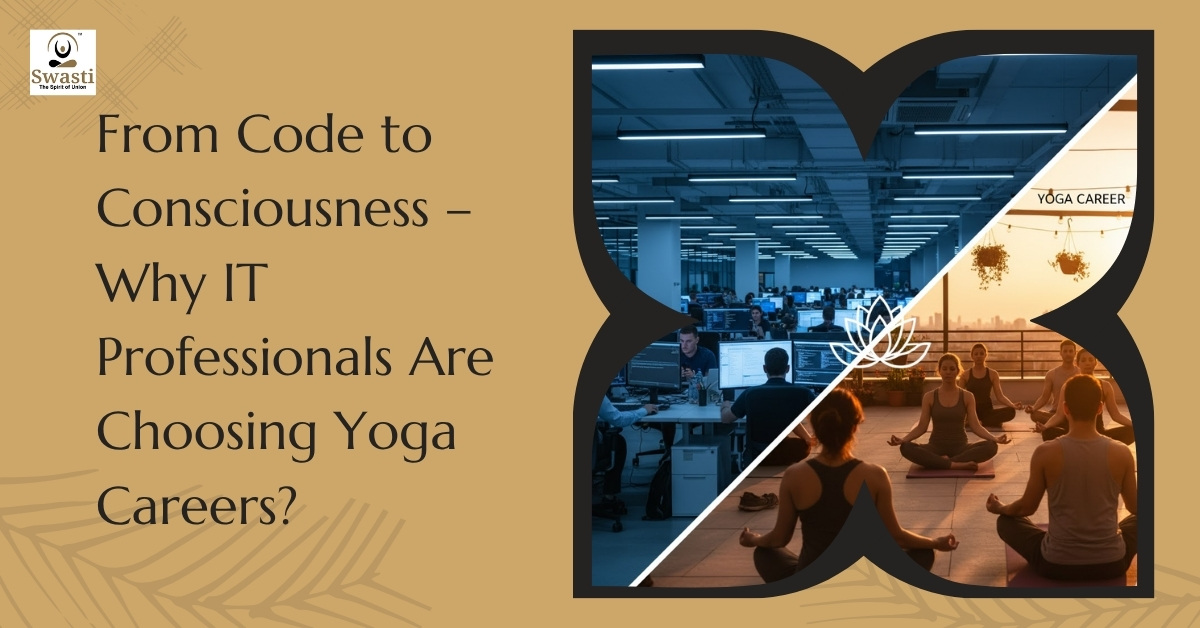
From Code to Consciousness โ€“ Why IT Professionals Are Choosing Yoga Careers

From Code to Consciousness โ€“ Why IT Professionals Are Choosing Yoga Careers?

Feeling Stressed, Overworked, or Facing Layoffs? Yoga Could Be Your Next Career The technology sector is evolving at lightning speed. While this brings innovation, it also brings pressure. Layoffs, tight deadlines, and long hours at the desk are leaving IT professionals exhausted, anxious, and often disconnected from their own wellbeing. If youโ€™ve been feeling burnt out or uncertain about your career, you are not alone. Increasingly, IT professionals are discovering yogaโ€”not just as a personal practice but as a meaningful, sustainable career path. Yoga offers a unique combination: a way to heal yourself while creating a fulfilling profession that aligns with your values. Why IT Professionals Are Transitioning to Yoga Careers? 1. Use Your Analytical Skills for Mindful Teaching Working in IT trains you to think logically, solve complex problems, and manage processes. These same skills are highly valuable in yoga, whether youโ€™re teaching anatomy, designing sequences, or guiding students safely through therapeutic practices. 2. Heal Your Body While Building Your Career Years of sitting, staring at screens, and tight deadlines often lead to: Back, neck, and shoulder pain Eye strain and headaches Stress, anxiety, and sleep disruption Yoga allows you to address these issues personally while empowering others to prevent or manage them. Transitioning into a yoga career can be a pathway to health, balance, and purpose. 3. Find Meaning and Flexibility in Your Work Unlike high-pressure IT roles, yoga offers flexibility, personal growth, and fulfillment. You can: Teach in corporates or wellness studios Conduct online classes for global students Create specialized programs like prenatal yoga, kids yoga, or chair yoga Run retreats and workshops This makes yoga an attractive career for IT employees seeking both stability and life satisfaction. Opportunities for YCB-AYUSH Certified Yoga Professionals The global wellness industry is booming. Certified yoga teachers are in high demand in: Corporate wellness programs to reduce stress Hospitals and clinics offering yoga therapy Schools promoting mindfulness and physical activity Retreats and wellness tourism for holistic experiences Online teaching platforms reaching international clients With the right training, yoga can become both a stable income source and a purpose-driven career. Common Myths About Switching from IT to Yoga Myth Reality Yoga is only for flexible people Yoga is a gradual practice; beginners of all body types can learn and excel Yoga doesnโ€™t pay well Certified yoga professionals, especially in corporate wellness and therapy, often earn more than entry-level IT roles You need to be spiritual to teach yoga Yoga is rooted in science, anatomy, and mental health, not just spirituality Career change is risky Many IT professionals start part-time and transition once they feel confident in teaching and earnings Why Accredited Training Matters? To thrive as a yoga professional, certification matters. Programs accredited by the Yoga Certification Board (YCB) ensure: Evidence-based learning in anatomy, physiology, and yoga therapy Safety protocols and injury prevention strategies Professional credibility recognized nationally and internationally Institutes run by doctors and experienced yoga examiners provide a robust foundation to help you succeed. You may like to read: How to Check If a Yoga Institute Is Truly YCB Certified? How to Begin Your Transition? Start with daily self-practice to understand your body and mind Attend workshops and weekend classes to gain practical exposure Begin teaching friends, family, or colleagues part-time Enroll in a YCB-certified Level 1 or diploma course Explore niche areas like corporate yoga, prenatal yoga, or online coaching With structured learning and gradual exposure, you can transition smoothly from IT to a sustainable yoga career. From Stress to Purpose: Your Next Step A layoff or burnout is not the endโ€”itโ€™s an opportunity to rethink your career and wellbeing. Yoga offers a path to transform stress into purpose, fatigue into energy, and uncertainty into a meaningful profession. Take the first step today: Explore certified yoga programs in India designed for IT professionals who want to create a fulfilling career while improving their own health and wellbeing.

Read More ยป
How to Choose the Right Yoga Course for a Long-Term Career in Yoga?

How to Choose the Right Yoga Course for a Long-Term Career in Yoga?

Yoga is more than a practice โ€” itโ€™s a lifelong journey of learning, teaching, and transformation. With yogaโ€™s global popularity and recognition as a wellness profession, choosing the right yoga course can define your future path โ€” whether you dream of teaching, healing, or simply deepening your own sadhana. At Swasti Yoga Center, we often meet aspiring teachers who ask, โ€œWhich course should I do next?โ€ or โ€œShould I study online or offline?โ€ Letโ€™s decode how to choose your next step wisely for a fulfilling and sustainable yoga career. ๐ŸŒฑ Step 1: Build a Strong Foundation โ€” Start with Level 1 Before exploring advanced specializations, itโ€™s essential to master the fundamentals. The Level 1 โ€“ Yoga Protocol Instructor course lays the foundation of yoga philosophy, asanas, pranayama, meditation, and teaching methodology. This course prepares you to teach basic yoga practices safely and effectively while understanding the essence of yoga beyond physical postures. โžก๏ธ Ideal for: Beginners, enthusiasts, or anyone planning a yoga teaching journey. ๐ŸŒฟ Step 2: Deepen Your Knowledge โ€” Move to Level 2, 3 Once your base is strong, go deeper. Level 2 โ€“ Yoga Wellness Instructor: Focuses on yoga for health promotion and preventive care. Youโ€™ll learn how to adapt yoga for different populations and lifestyles. โžก๏ธ Best for: Aspiring professional instructors, wellness coaches, and yoga entrepreneurs. Level 3 โ€“ Yoga Teacher & Evaluator: A prestigious certification for experienced teachers who wish to assess and mentor others. โžก๏ธ Best for: Senior instructors, teacher trainers, and yoga school leaders. ๐ŸŒธ Step 3: Attain Mastery โ€” Level 4 and Beyond For those aspiring to the highest level of yogic competence, the Level 4 โ€“ Yoga Master TTC helps you integrate yoga philosophy, therapy, research, and leadership. Itโ€™s where your practice becomes your dharma โ€” teaching others the complete path of yoga. โžก๏ธ Best for: Advanced teachers, yoga researchers, and those seeking global recognition. ๐Ÿ’š Step 4: Explore Specializations โ€” Choose Your Yogic Calling After completing foundational level 1, you can specialize based on your interests and professional goals: Yoga Therapy TTC (Level 1 & 2): Learn therapeutic applications of yoga for lifestyle diseases, stress management, and holistic healing. Kids Yoga TTC: Train to nurture mindfulness, creativity, and discipline in children. Pregnancy Yoga TTC: Empower expectant mothers through safe and mindful yoga practices. Green Yoga Instructor Program: A unique Swasti initiative integrating yoga, sustainability, and environmental consciousness โ€” ideal for modern yogapreneurs. ๐ŸŒ Step 5: Choose the Right Mode of Learning โ€” Online vs Offline, Live vs Self-Paced โœ… Offline (In-person) Best for those who love personal interaction, hands-on adjustments, and traditional gurukul-style learning. Youโ€™ll experience community energy and a deeper connection with teachers. โœ… Online (Live Classes) Great for busy professionals and international students. Interactive, flexible, and guided โ€” you get real-time feedback and mentorship from Swastiโ€™s expert faculty. โœ… Online (Self-Paced) Perfect for independent learners who prefer studying anytime, anywhere. Combine it with live Q&A sessions to stay engaged and supported. Pro Tip: Many Swasti students begin with online Level 1 and later visit India for advanced or therapeutic training โ€” blending flexibility with authenticity. ๐Ÿ™ Take the Next Step Today Whether youโ€™re starting your yoga journey or ready to specialize, Swasti Yoga Center will guide you with clarity, authenticity, and care. ๐ŸŒ Explore upcoming batches: www.swastiyogacenter.com ๐Ÿ“ฉ Connect with us: info@swastiyogacenter.com Begin your yogic journey today โ€” grow from student to master, and let yoga become your lifelong path.

Read More ยป
Before You Enroll How to Check If a Yoga Institute Is Truly YCB Certified

Before You Enroll: How to Check If a Yoga Institute Is Truly YCB Certified?

Yoga teacher training has become one of the most trusted ways to build a career rooted in wellness and purpose. With the Yoga Certification Board (YCB) under the Ministry of AYUSH setting national standards, thousands of students are now seeking certified courses that hold real value in India and abroad. But hereโ€™s what most people donโ€™t realize. Many institutes across India are claiming to offer โ€œYCB-certifiedโ€ courses without any genuine approval. The names look official, the certificates look authentic, and the trainers sound convincing. Yet when students apply for jobs, higher studies, or international visas, their certificates are rejected because the institute was never on the official YCB accreditation list. Itโ€™s a quiet crisis thatโ€™s growing fast, and itโ€™s costing students time, money, and trust. This guide will help you understand how fake YCB yoga institutes operate, how to verify the real ones, and how to make sure your certification truly supports your future. Whatโ€™s Really Happening? The Yoga Certification Board (YCB) was established to bring structure, credibility, and accountability to yoga education in India. Its purpose is simple: to ensure that every certified yoga teacher meets national standards of knowledge, ethics, and practice. But that credibility is now being misused. Some institutes have started using the YCB name and logo without any official approval. They promote โ€œYCB-certifiedโ€ courses, collect fees, and even issue certificates that look legitimate. Students, trusting these claims, join in good faith and spend months training. Only later do they discover that their institute was never listed on the official YCB website and that their certification holds no real value. The damage goes beyond individual disappointment. It undermines the hard work of genuine YCB-accredited institutions that follow every rule and maintain the quality yoga education deserves. The consequences for students are severe: Wasted investment: Months of training and significant fees lost to worthless certification Career delays: Having to repeat the entire course with a genuine institute Visa rejections: International opportunities lost due to unrecognized credentials Lost confidence: Emotional toll of discovering you’ve been deceived Legal complications: Some students face issues when employers discover fraudulent certifications The most troubling aspect is that many victims only discover the fraud months or even years later, when they attempt to use their certification professionally. How to Identify a Fake YCB Institute? Understanding how these fraudulent institutes operate helps you avoid becoming their next victim. Here are the most common deceptive practices: Red Flags That Should Alert You Immediately Invisible on Official Records The institute prominently displays “YCB Certified” or “YCB Approved” on their website and marketing materials, but their name doesn’t appear on the official YCB accreditation list. This is the single biggest warning sign. Unverified Trainers The institute’s trainers lack YCB Examiner status or empanelment. Genuine YCB training must be conducted by officially recognized lead examiners whose credentials can be verified on the YCB website. No Examination History. When asked about their track record, these institutes cannot provide clear evidence of conducting official YCB examinations. Legitimate centers have documented histories of multiple successful exam cycles. Unrealistic Guarantees Claims like “100% pass guarantee” or “instant certification” should raise immediate suspicion. YCB certification is a rigorous process with standardized evaluation criteriaโ€”no legitimate institute can guarantee results. Missing Alumni Evidence Fake institutes often display testimonials with stock photos, generic praise, or unverifiable claims. They cannot connect you with real alumni working in the field or provide transparent placement records. Misused Logos and Language Look carefully at how they describe their affiliation. Phrases like “affiliated with YCB-style training” or “YCB-equivalent certification” are red flags. Either an institute is officially accredited or it isn’tโ€”there’s no middle ground. High-Pressure Sales Tactics Fraudulent institutes often create artificial urgency: “Last 3 seats available!” or “Special discount expires tomorrow!” Legitimate training centers focus on educational value, not aggressive sales tactics. What do Genuine YCB Institutes Always Have? Now, hereโ€™s what an authentic, accredited yoga center looks like. The instituteโ€™s name appears clearly on the YCB official accreditation list. Trainers are empanelled YCB lead examiners โ€” real people you can verify online. The center has a track record of conducting YCB exams and supporting students through the entire process. Youโ€™ll find visible, authentic alumni stories with real career outcomes. Their course structure feels professional, with strong practical training and ethical guidelines. These are small but crucial signals of credibility. Three Questions Every Student Should Ask Before enrolling, take a minute to ask these: Is this institute officially accredited by YCB under the Ministry of AYUSH? Are the trainers recognized as YCB Lead Examiners, and how long have they been certified? How many YCB exams has this institute conducted as a lead examiner? If they hesitate to answer or canโ€™t show proof, thatโ€™s your answer. How to Verify It Yourself? Visit the official Yoga Certification Board website: https://yogacertificationboard.nic.in/, and under menu navigation, you will find YCB Certified -> Accredited Yoga Institution. Confirm the instituteโ€™s name under the list of accredited centers and examiners before enrolling. It takes two minutes and can save you from months of regret. Why Choose Swasti Yoga Center? If youโ€™re looking for a trusted, government-recognized, and medically backed institute, Swasti Yoga Center stands among the most respected YCB-accredited yoga teacher training centers in India. Hereโ€™s why: Doctor-led yoga teacher training backed by medical science. Officially recognized by the Yoga Certification Board, Ministry of AYUSH, Government of India. 8+ years of experience as YCB Lead Examiners with 5,000+ students assessed. Advanced anatomy learning through real medical college visits and dissections. Global exposure via international study tours and yoga conferences. Courses aligned with the WHO Traditional Medicine Strategy for holistic learning. Safety-first training, including CPR and emergency care modules. Worldwide career and visa recognition through genuine YCB certification. Flexible online and offline course options. A strong global community of 3,000+ certified alumni from 35+ countries. At Swasti Yoga Center, your certification is not just a paper โ€” itโ€™s a passport to real, recognized opportunities in teaching, therapy, and holistic health worldwide. Conclusion The rise of fake YCB

Read More ยป
Crack the YCB Yoga Teacher Exam Pathway to Certification, Credibility & Career Growth

Crack the YCB Yoga Teacher Exam: Pathway to Certification, Credibility & Career Growth

Anxiety is now recognized as one of the most pressing global health concerns, affecting over 300 million people worldwide (WHO, 2023). While modern medicine explains anxiety through overactive amygdala pathways, excessive cortisol secretion, and imbalanced neurotransmitters such as serotonin and GABA, ancient traditions framed it as a disturbance of inner harmony. Today, combining ancient wisdom with the modern science of anxiety offers a holistic approach to restore calm. Ancient Wisdom for Inner Peace In yoga and Ayurveda, anxiety (chittodvega) is linked to imbalances in prana and the nervous system. Practices such as meditation, mantra chanting, pranayama, and mindful rituals were prescribed to stabilize the mind. Similarly, Buddhist mindfulness emphasized non-reactivity to thoughts, while Traditional Chinese Medicine used Qi-regulating practices like Tai Chi and acupuncture to reduce inner turbulence. Science of Anxiety Relief Modern research validates these ancient practices: Yoga and Meditation: A 2018 meta-analysis in Depression and Anxiety found yoga significantly reduced symptoms of generalized anxiety disorder (GAD). Pranayama Breathwork: Slow diaphragmatic breathing increases vagal tone, activates the parasympathetic nervous system, and improves heart rate variability (HRV), a key marker of stress resilience (Frontiers in Human Neuroscience, 2020). Mindfulness: Randomized controlled trials published in JAMA Psychiatry (2022) show mindfulness-based interventions are as effective as escitalopram, a common anti-anxiety medication, for mild to moderate anxiety. Mechanisms of Action Neurobiological:ย  Meditation reduces hyperactivity of the amygdala, the brainโ€™s fear center, while enhancing prefrontal cortex regulation. Hormonal: Yoga and pranayama lower cortisol and adrenaline, balancing the HPA (hypothalamic-pituitary-adrenal) axis. Neurochemical: Mind-body practices boost serotonin, GABA, and dopamine, neurotransmitters linked with calm and well-being. Holistic Management When ancient wisdom meets modern evidence, we gain not only symptom relief but also long-term resilience. Integrating yoga, breathwork, and mindfulness into daily routinesโ€”alongside healthy lifestyle choicesโ€”creates a holistic management strategy for anxiety. This union of science and tradition helps us truly move from chaos to calm. Author: Dr Shwetambari Chothe

Read More ยป
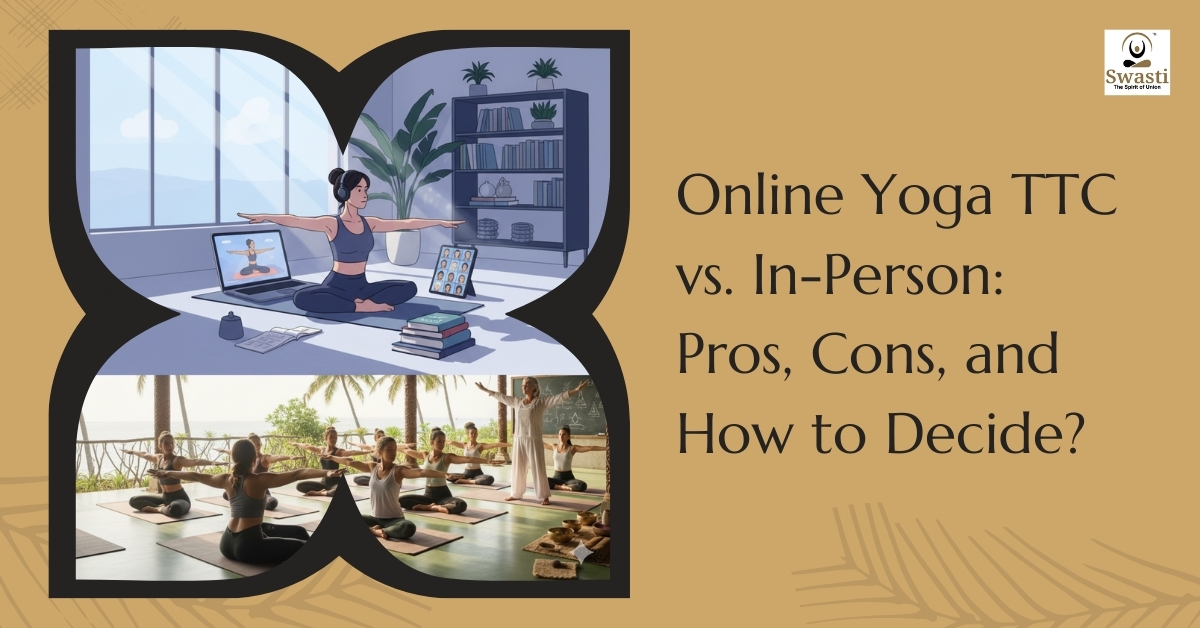
Online Yoga TTC vs. In-Person Pros, Cons, and How to Decide

Online Yoga TTC vs. In-Person: Pros, Cons, and How to Decide?

Deciding to become a yoga teacher is more than signing up for a courseโ€”itโ€™s a step into a lifelong practice of self-discovery, discipline, and service. But hereโ€™s the thing: todayโ€™s aspiring teachers often face a tough choice. Should you go for an online yoga teacher training course (TTC) from the comfort of your home, or take the leap and attend an in-person TTC in India? Both paths can lead you to the same certification, but the experience along the way can feel very different. Letโ€™s break it down. Online Yoga TTC: Flexibility Meets Accessibility Pros: Learn from anywhere: No travel required โ€” ideal for students balancing work, family, or remote locations. Self-paced study: Many online courses allow you to progress at your own speed. Affordable: Lower costs compared to in-person programs since travel and accommodation arenโ€™t needed. Cons: Limited hands-on guidance: Posture corrections and real-time adjustments can be challenging. Reduced community experience: You may miss the immersive environment and peer bonding found in in-person training. In-Person Yoga TTC in India: Immersion and Transformation Pros: Deep immersion: Daily practice, meditation, and philosophy sessions create a transformative experience. Direct mentorship: Teachers provide immediate corrections and guidance. Cultural and spiritual exposure: Training in India offers authentic insight into yoga traditions. Cons: Higher cost: Travel, accommodation, and living expenses add up. Fixed schedule: Less flexibility for those with work or personal commitments. How to Decide? Consider your learning style, lifestyle, and goals. If you thrive in structured, immersive environments and value authentic cultural exposure, an in-person yoga TTC in India may be ideal. If flexibility, convenience, and affordability are priorities, a yoga teacher training online program can still provide solid foundational knowledge and certification. Final Thoughts Thereโ€™s no one-size-fits-all answer. Both online and offline programs can lead you to a globally recognized certification and a rewarding teaching journey. What matters most is your commitment to the practice, your openness to learning, and the program you choose to trust with your transformation. If youโ€™re looking for authentic training, check out Swasti Yoga Centerโ€™s best yoga teacher training courses in India. Along with comprehensive online TTC programs, we also offer in-person TTC courses at our Pune branchโ€”ideal if you want that immersive experience while staying connected to Indiaโ€™s rich yoga tradition. Whichever path you choose, let it be one that aligns with your heart, your lifestyle, and your vision as a future yoga teacher.

Read More ยป
Why Global Exposure Matters for Modern Yoga Teachers?

Why Global Exposure Matters for Modern Yoga Teachers?

Yoga originated in India, yet it now thrives in almost every corner of the world. From small-town studios in Europe to corporate wellness retreats in Silicon Valley, yoga has transcended oceans and cultures, becoming a universal language of health and harmony. For yoga trainers working locallyโ€”whether in a community center, private studio, or even from homeโ€”the question naturally arises: Why does global exposure matter? Can it really change the way we teach and grow as professionals? The short answer is yes. For local yoga trainers, global exposure is not an optional โ€œnice-to-have.โ€ It is the single most powerful accelerator for professional credibility, career variety, income diversification, and real-world impact. ย Let us explore why. 1. Yoga Has Become a Global Profession Yoga is no longer confined to ashrams or exclusive spiritual circles. It is a $100+ billion global wellness industry, with millions of practitioners worldwide. Institutions like the United Nations now recognize International Day of Yoga, and universities across the globe offer yoga studies as part of academic curricula. For local yoga trainers, this means: Your career opportunities are not restricted to your city or region. The demand for authentic, certified teachers is rising worldwide. The standards of yoga education are being set at a global level, particularly by organizations like the Yoga Certification Board (YCB), Ministry of AYUSH (India), World Health Organization (WHO), and Yoga Alliance. If you remain limited to local exposure, you risk being left behind while other trainers, who bring global perspectives, advance more quickly in their careers. 2. Learning From Cultural Exchange Yoga is universal, but its expression changes depending on cultural context. For example: In Japan, yoga often integrates mindfulness and Zen simplicity. In the U.S., there is a strong focus on fitness and commercial studio models. In Europe, yoga is often tied with psychology, therapy, and scientific research. In Africa and Latin America, yoga is emerging as a tool for youth empowerment and community building. When Indian yoga trainers interact with global communities, they realize that yoga is not just about teaching asanasโ€”it is about meeting people where they are. This cultural sensitivity allows teachers to design programs that are not only authentic but also accessible and relatable to diverse audiences. A teacher who has taught yoga in both Pune and Paris, for example, will naturally gain a wider perspective on how to adapt yoga to corporate employees, children, athletes, or even trauma survivors. This adaptability is a hallmark of a modern yoga teacher. 3. Raising the Bar of Professional Standards Letโ€™s be honestโ€”yoga teaching in many local contexts is still informal. Some trainers work without certifications, structured curriculums, or scientific grounding. While passion is important, professional credibility matters in todayโ€™s global wellness marketplace. Global exposure helps local trainers by: Benchmarking quality: Seeing how studios and wellness centers abroad maintain high standards of safety, ethics, and professionalism. Understanding regulations: Many countries require yoga teachers to meet certain certifications, insurance policies, and liability standards. Improving communication: Exposure to international platforms improves English proficiency, presentation skills, and the ability to teach across cultural and linguistic barriers. When you come back home, these upgraded skills naturally set you apart from other local trainers. Parents trust you more with their children, companies prefer you for corporate wellness programs, and international students seek you for advanced training. 4. Bridging Tradition and Modern Science Yoga originated in India as a spiritual discipline, rooted in texts like the Yoga Sutras of Patanjali, Hatha Yoga Pradipika, and Bhagavad Gita. However, in todayโ€™s world, yoga is increasingly validated by modern medical research, neuroscience, and psychology. Global exposure provides opportunities to: Attend international conferences where researchers present studies on yogaโ€™s impact on stress, immunity, and mental health. Collaborate with universities, hospitals, and wellness centers abroad that integrate yoga into medical treatment. Learn new methodologies like yoga therapy protocols, trauma-informed yoga, aqua yoga, or chair yoga that are not always widely practiced locally. By blending traditional Indian wisdom with modern scientific validation, teachers position themselves as credible authorities capable of addressing diverse needsโ€”from managing diabetes to enhancing corporate productivity. 5. Building a Strong Personal Brand In the digital age, yoga teachers are not only trainers but also personal brands. Students choose teachers based on trust, authenticity, and global recognition. Global exposure helps you: Share stories of teaching yoga in different countries on social media. Build an international following through collaborations, podcasts, or guest teaching. Attract students from across the world for online classes, retreats, and TTCs. For example, a teacher who participates in a yoga festival in Bali or leads workshops in Dubai can showcase this on their website and social platforms. Such achievements boost credibility, attract students, and even open doors to sponsorships or partnerships. 6. Career pathways unlocked by global exposure Here are the concrete career opportunities that open when you step beyond local practice โ€” and how global experiences make them reachable. International teaching roles โ€” studios, resorts, and yoga festivals around the world hire visiting teachers for short residencies, seasonal contracts, and long-term posts. A teacher who has taught a few international workshops or led a study tour is far more likely to be invited back, or hired by a retreat operator. Corporate wellness consultant โ€” corporates hire providers who can combine practical classes with outcome metrics (reduced stress, improved wellbeing scores). Teachers with exposure to international corporate programs and measurement frameworks are higher value. Fortune Business Insights Yoga therapy and clinical integration โ€” collaborating with hospitals, rehabilitation centers and mental health services requires both training and a demonstrated ability to apply yoga to clinical populations; global conferences and collaborations often create the bridge to clinical partners. Lippincott Journals Retreat design and wellness tourism โ€” destination retreats, boutique hotels and wellness tourism operators recruit teachers who can deliver consistent, culturally-attuned programming to international guests. Teachers with study-tour or retreat leadership experience travel with groups and command premium fees. Vogue Business Academia, research and policy โ€” presenting papers and posters at international conferences, or collaborating on cross-border research, positions teachers for

Read More ยป
Hidden Connection Between Japanese Wisdom and Yoga A Path for Students

Discover the Hidden Connection Between Japanese Wisdom and Yoga: A Path for Students

As a student in Japan, youโ€™ve likely grown up hearing values like Ganbaru and Kaizenโ€”encouraging you to work hard, improve steadily, and stay true to yourself. But did you know that these powerful ideas also connect deeply with the ancient Indian philosophy of Yoga? Yoga is not just about stretching or meditationโ€”itโ€™s a complete lifestyle and way of thinking that helps you become a better version of yourself, both inside and out. Letโ€™s explore five well-known Japanese concepts and how they align beautifully with yogic philosophy, making your journey as a student more meaningful and balanced. 1. Ganbaru ร— Tapas / Samฤdhan (Perseverance & Focus) “Do your best, never give up!” This is the spirit of Ganbaru, something every student in Japan is taught from childhood. In Yoga, the same strength is called Tapasโ€”the fire of discipline and willpower. When you feel tired, stressed, or distracted, Samฤdhan reminds you to stay calm and focused. Both Ganbaru and Tapas teach you that growth comes from effort, not shortcuts. 2. Kaizen ร— Eka Tattva Abhyasa (Small Steps, Big Impact) Whether youโ€™re studying for exams or learning a new skill, Kaizenโ€”the idea of steady, daily improvementโ€”can take you far. Yoga supports this through Eka Tattva Abhyasa, which means sticking with one practice or goal and improving it each day. You donโ€™t have to be perfectโ€”just consistent. One mindful step each day adds up to big change. 3. Oubaitori ร— Ahimsa (No Comparison, Just You) In school or college, itโ€™s easy to fall into the trap of comparing yourself with others. But Oubaitori, a Japanese term inspired by four different blooming trees, reminds you that everyone grows in their way. In Yoga, this is called Ahimsa, or non-harmingโ€”including being kind to yourself. You donโ€™t need to compete with anyone; youโ€™re enough, just as you are. 4. Ikigai ร— Moksha / Swadharma (Find Your Purpose) Many students wonder: โ€œWhat is my purpose?โ€ The Japanese concept of Ikigaiโ€”a reason to wake up every dayโ€”helps you find meaning in what you love, what you’re good at, and what the world needs. In Yoga, this purpose is called Swadharma, your unique path. Moksha, ultimate fulfillment, happens when you live your truth with confidence and peace. 5. Keiken ร— Jnana Yoga (Learn by Living) Some lessons canโ€™t be learned from booksโ€”they must be lived. Thatโ€™s the idea of Keiken, or real-world experience. Yoga honors this through Jnana Yoga, the path of wisdom gained through observation, experience, and reflection. Every mistake, every success, every challenge is a teacherโ€”if youโ€™re open to learning. As a student, combining these Japanese values with Yogic philosophy can make your life more focused, peaceful, and fulfilling. You donโ€™t need to choose one or the otherโ€”they are two paths that lead to the same goal: a better, wiser you. So the next time you sit down to study, face a tough challenge, or feel lost about your future, rememberโ€”you already have the tools. From Ganbaru to Tapas, from Ikigai to Swadharma, your journey is sacred. Walk it with awareness, and the world will open before you. Namaste and Ganbatte! Start Your Yoga Path at Swasti Yoga Center Swasti Yoga Center invites students from Japan to experience authentic Indian yoga with guidance that respects your culture and learning style. Our yoga teacher training courses for Japanese students blend ancient yogic wisdom with values you already know, creating a meaningful and life-changing journey. You will receive complete study material in Japanese so you can learn with clarity and confidence. Join us in Pune, immerse yourself in the roots of yoga, and return home with both knowledge and certification that will inspire others.

Read More ยป
Why Yoga Should Be a Part of Every Nursing Studentโ€™s Life

Why Yoga Should Be a Part of Every Nursing Studentโ€™s Life?

In todayโ€™s hyper-connected, fast-paced corporate world, the greatest irony is that while professionals are chasing targets, deadlines, and success, theyโ€™re often losing their most precious asset: their health. Particularly alarming is the rise in cardiac diseases and hypertension among working professionals, often striking in their 30s and 40sโ€”an age once considered “too young” for heart problems. This rising trend is not a coincidence. It is directly tied to sedentary lifestyles, excessive stress, sleep disturbances, unhealthy eating, and addictions, which have become almost normalized in corporate culture. The Alarming Rise of Cardiac Risk in Corporate Lives The World Health Organization (WHO) identifies cardiovascular disease (CVD) as the leading cause of death globally. According to the Lancet Global Health, over 54% of deaths in India due to non-communicable diseases are from heart-related conditions, and much of this population includes urban, educated, working professionals. Key culprits: Sedentary lifestyle: Long hours at desks lead to reduced cardiovascular fitness and increased cholesterol levels. Mental stress: Chronic workplace stress increases cortisol, triggering hypertension and heart strain. Irregular sleep: Poor sleep disrupts blood pressure regulation and increases the risk of arrhythmias. Junk food and sugar: Convenience foods raise bad cholesterol (LDL) and triglycerides. Smoking and alcohol: Common stress busters in corporate settings are directly linked to arterial damage and high blood pressure. A recent study published in the Journal of the American College of Cardiology noted that prolonged stress and poor sleep alone can double the risk of heart attacks in professionals, even in those under 40. Yoga: A Science-Backed Solution for Heart and Mind In this chaotic background, Yoga emerges not just as exercise, but as a holistic lifestyle therapy. Yoga doesn’t just address physical inactivity; it targets the root causes of cardiac problems: stress, emotional imbalance, and unhealthy patterns of thought and behavior. Evidence-Based Benefits of Yoga on Cardiac Health: Reduces Blood Pressure: A 2022 meta-analysis in Hypertension Research found that yoga reduced systolic BP by 8โ€“10 mm Hg in hypertensive patients. Lowers Stress Hormones: Regular pranayama (breathing practices) and meditation significantly lower cortisol and adrenaline, reducing cardiac strain. Improves Heart Rate Variability (HRV): A key marker of heart health, HRV is improved through regular yoga and mindfulness. Reduces Bad Cholesterol (LDL): Lifestyle changes with yoga and sattvic diet showed reduced LDL and improved lipid profile in various clinical trials. Improves Endothelial Function: Asanas improve vascular elasticity and blood flow, essential for preventing atherosclerosis. A Yogic Lifestyle: More Than Just Exercise Yoga isnโ€™t limited to stretching or bending. Its deeper power lies in transforming oneโ€™s entire lifestyle and outlook. Corporate employees often carry invisible mental baggageโ€”pressure, deadlines, competition, and burnout. The philosophy of yoga offers tools to clear this clutter. Core Yogic Principles for a Healthy Heart: Ahimsa (Non-violence): Includes self-care and reducing internal stress. Aparigraha (Non-possessiveness): Helps detach from constant craving and comparison. Satya (Truth): Encourages authenticity and mental clarity. Sattvic living: Emphasizes balance, discipline, purity, and harmony in food, thoughts, and habits. These principles, when practiced, reshape your personality, reduce ego-driven stress, and promote peace. Small Steps for Busy Professionals You donโ€™t need to quit your job or move to an ashram to benefit from yoga. Even five minutes a day can begin the transformation. 5-Minute Heart-Friendly Yoga Practice: Tadasana + Deep Breathing โ€“ 1 min Releases tension from posture and calms the breath. Ardha Matsyendrasana (Spinal Twist) โ€“ 1 min Stimulates digestion and improves blood circulation. Bhramari Pranayama โ€“ 2 min Reduces blood pressure, calms the mind. Shavasana + Gratitude Awareness โ€“ 1 min Triggers the parasympathetic system (relaxation response). Consistency matters more than duration. You may like to read: Incredible Yoga Poses for a Healthy Heart Level 1 Yoga Training: The Next Step At Swasti Yoga Center, our Level 1 Yoga Protocol Instructor Course is ideal for working professionals who want a deeper, scientifically structured understanding of yoga. The course includes: Scientific anatomy & physiology Therapeutic applications for lifestyle diseases Mental and emotional wellness training Philosophy for lasting lifestyle change It not only improves physical health but fosters a sattvic mindset, better discipline, emotional regulation, and inner peace. The Yogic Edge in Corporate Life With regular yoga practice, employees experience: Lower BP, improved sleep, and more energy Sharper decision-making and focus Better emotional balance and team collaboration Reduction in anxiety, depression, and burnout Prevention of long-term cardiac complications In essence, yoga empowers corporate professionals to be healthier, more peaceful, and productive human beings, not just better employees. Final Takeaway The corporate world may reward performance, but your body keeps the score. Cardiac diseases donโ€™t happen overnight, but with yoga, prevention can. By embracing small, conscious steps today, you pave the way for a vibrant, heart-healthy, and balanced life tomorrow. Yoga is not just a practice. It is your daily insurance against burnout, hypertension, and heartbreakโ€”literally and metaphorically. Start today. Breathe deeper. Live longer. Lead better.

Read More ยป
Yoga for Expats in Pune A Transformative Investment in Health, Culture & Inner Growth

Yoga for Expats in Pune: A Transformative Investment in Health, Culture & Inner Growth

Pune, known as Indiaโ€™s Oxford of the East and a spiritual heartland, is emerging as a powerful wellness destination for expats seeking purpose, balance, and authentic Indian living. For those living in India temporarily for work, education, or family, practicing traditional yoga is not just an activityโ€”itโ€™s a valuable investment in personal and family well-being. Why Yoga in Pune? While many think of Rishikesh or Goa for yoga, Pune offers something more grounded: a daily, integrated yogic lifestyle amidst vibrant urban and cultural life. With government-certified institutions like Swasti Yoga Center, expats can access genuine yogic education that blends ancient wisdom with modern needs, far beyond the commercialized offerings abroad. Here, yoga is not โ€œfitness with incenseโ€โ€”itโ€™s a science of living. You may like to read:ย  What Makes Pune the Perfect Place for a Certified Yoga TTC? Challenges Expats Face โ€“ and How Yoga Helps Being far from home, expats often struggle with: Cultural adjustment and loneliness Work-life imbalance Mental stress, sleep disorders Raising children in unfamiliar settings Limited social bonding Yoga addresses these challenges holistically: Asana & pranayama regulate the nervous system and improve sleep Mindfulness & meditation build emotional resilience Yogic parenting tools help raise grounded, calm children Group practice fosters genuine friendships across cultures Satvik diet & lifestyle improve digestion, immunity, and mood Removing Common Misconceptions About Yoga Many expats arrive with the impression that yoga is just physical exercise, or too religious. But in India, especially at centers like Swasti, yoga is: Non-religious and inclusive A blend of asana, breathwork, meditation, Ayurveda, OM Card Therapy, and philosophy A path of personal evolution and mental clarity An opportunity for certified global careers backed by the Indian Government (YCB โ€“ Yoga Certification Board) Yoga here nurtures the soul, not just the body. Yoga for Women, Children & Families Swasti Yoga Center emphasizes family-centered wellness: Mothers find relief from emotional burnout, PCOS, or hormonal issues through therapeutic yoga. Children are introduced to discipline, focus, and emotional intelligence through fun tools like OM Card Game and story-based yoga. Couples discover stronger bonds through joint practice and shared inner growth. Yoga becomes a common language of well-being at home, deepening connections in foreign soil. Invest in Your Future with a Certified TTC Many expats explore yoga as an alternative career or a valuable life skill. Swastiโ€™s 200-Hour and 400-Hour YCB-certified Teacher Training Courses are: Globally recognized Taught by experienced Indian masters Blending Ayurveda, lifestyle coaching, anatomy, and Vedic knowledge Affordable and high-value compared to Western TTCs Inclusive of cultural immersion, excursions, and mentorship Whether you’re looking to teach professionally or deepen your practice, this is one of the best investments you can make while in India. Cultural Immersion, Family Bonding Like No Other Learn Satvik cooking with Indian spices and herbs Participate in local festivals and village excursions Experience Indian family values, rituals, and sustainability practices Share chai, stories, and silence with a global yoga family Unlike short retreats, these experiences transform your inner landscape and worldview. Tips to Get Started as an Expat Choose a YCB-certified, culturally rooted school like Swasti Yoga Center. Join a short beginner course or attend a yoga event to ease in. Involve your spouse or childrenโ€”yoga is a beautiful bonding tool. Attend free workshops or satsangs to meet other expats. Donโ€™t let language or age hold you backโ€”yoga is for everybody. Conclusion: Yoga as Your Anchor in India As an expat in India, donโ€™t just be a visitorโ€”become a seeker. Yoga in Pune is not about trend or tourism; itโ€™s about truth, health, family, and purpose. Whether youโ€™re here for six months or six years, investing in authentic yoga will reward you for life, with clarity, strength, and a deep connection to yourself and the world around you. When in the land of yoga, why not learn it at its source?  

Read More ยป

Add Yoga To Retain The Beauty Of Body And Mind

Vitae aliquam porta sed augue consectetuer. Parturient posuere sed habitasse quisque malesuada platea. Dis suspendisse integer ut facilisis maximus mus.