๐Ÿ‡ฎ๐Ÿ‡ณ India | ๐Ÿ‡บ๐Ÿ‡ธ USA | ๐Ÿ‡ซ๐Ÿ‡ท France | ๐Ÿ‡ฒ๐Ÿ‡ฝ Mexico | ๐Ÿ‡ฆ๐Ÿ‡ช UAE

๐Ÿ‡ฎ๐Ÿ‡ณ India | ๐Ÿ‡บ๐Ÿ‡ธ USA | ๐Ÿ‡ซ๐Ÿ‡ท France | ๐Ÿ‡ฒ๐Ÿ‡ฝ Mexico | ๐Ÿ‡ฆ๐Ÿ‡ช UAE

Blog

News & Articles

Life After TTC How to Market Yourself as a Certified Yoga Teacher

Life After TTC: How to Market Yourself as a Certified Yoga Teacher

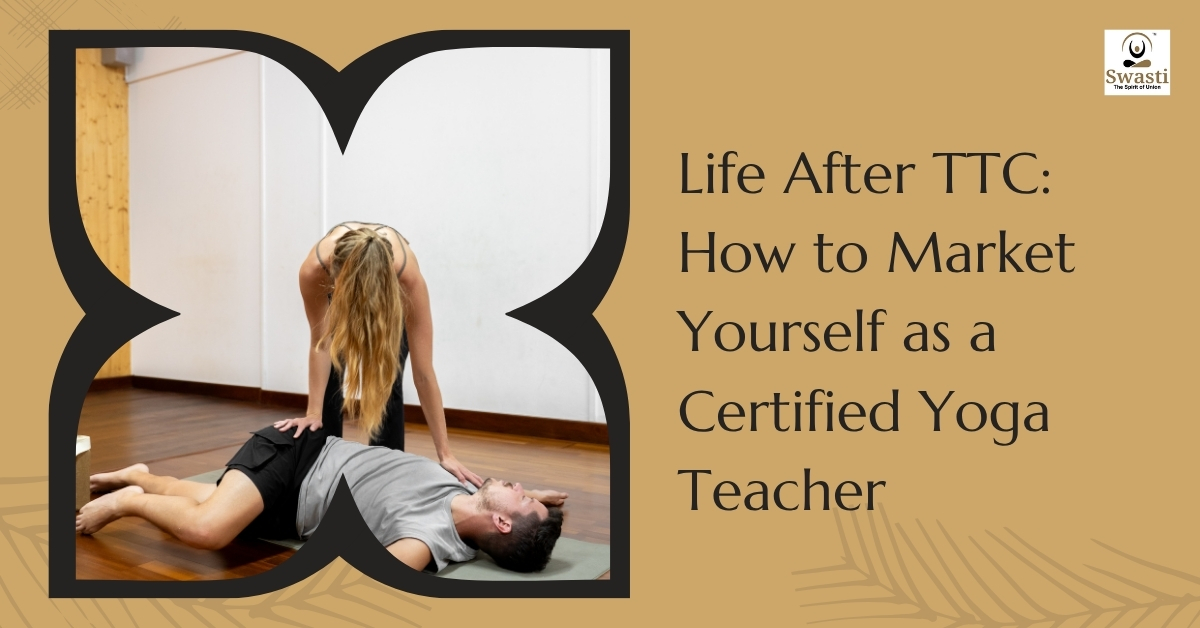
Becoming a certified yoga teacher is a life-transforming journey. Completing a Teacher Training Course (TTC), especially from a YCB-accredited yoga school, opens countless doors for a rewarding and sustainable career in the field of yoga and wellness. Yet, success after certification depends not only on your teaching skills but also on how effectively you position and market yourself. This guide offers a comprehensive roadmap for certified yoga teachers to build visibility, trust, and long-term career growth in India and globally. 1. Choose the Gold Standard โ€“ YCB Certification In todayโ€™s wellness industry, authentic certification matters. The Yoga Certification Board (YCB), established by the Ministry of AYUSH, Government of India, is recognized as the gold standard in yoga education.Graduates from YCB-accredited institutesย such asย Swasti Yoga Center enjoy international credibility, greaterย employability, and professional recognition. YCB-certified teachers are preferred by: International yoga studios and schools AYUSH-recognized institutions Wellness resorts and hospitals Corporate wellness programs When marketing yourself, highlight your YCB credential prominently on resumes, social media profiles, and websites. This single step instantly distinguishes you from unregulated or uncertified instructors. ย 2. Gain Practical Experience through Internships Before launching independent classes, gain hands-on experience by interning with: Senior yoga masters and lead YCB examiners Yoga therapy centers, hospitals, or schools Online community programs Such exposure deepens your understanding of teaching diverse age groups and health conditions. Many YCB schools, including Swasti Yoga Center, offer structured internships under expert supervision, allowing you to refine class design, therapeutic applications, and communication skills. 3. Build Your Personal Brand and Professional Identity Marketing in yoga does not mean aggressive selling; it means sharing your authentic journey and purpose. Start with: A professional teacher profile including credentials, specializations, and teaching philosophy High-quality photographs and short demonstration videos A consistent visual identity (logo, color palette, tone of communication) Use platforms such as Instagram, LinkedIn, and YouTube to showcase your teaching style, testimonials, and snippets of your classes. Authentic storytelling is your most powerful marketing tool. ย 4. Approach Communities, Corporates, and Wellness Spaces Proactively Do not wait for opportunitiesโ€”create them.Reach out to: Corporate HR and wellness departments to conduct employee wellness workshops Local schools for kids yoga and mindfulness programs Community centers, temples, and clubs to offer weekend classes or workshops Every collaboration enhances visibility and helps build local trust networks. Start small, deliver excellence, and let referrals do the talking. 5. Keep Learning: Upskill to Create Your Blue Ocean The most successful yoga professionals are lifelong learners. After your basic TTC, pursue specialized diploma programs such as: Kids Yoga TTC โ€“ for educators and child wellness specialists Prenatal and Postnatal Yoga TTC โ€“ for womenโ€™s health and maternity care Geriatric Yoga TTC โ€“ for senior citizens and therapeutic sessions Diploma in Yoga Therapy โ€“ for medical and rehabilitation applications By combining traditional wisdom with modern therapeutic approaches, you can differentiate yourself in a crowded market and create a โ€œblue oceanโ€ career with unique offerings that few can match. 6. Establish Your Online Presence A professional digital presence builds credibility and attracts global students. Begin with: A personal website (with a booking link and blog section) Consistent posting on social media platforms Testimonials, certifications, and teaching videos A simple email newsletter sharing yoga insights, events, and tips Invest in learning basic digital marketing skillsโ€”SEO, social media strategy, and video production. In todayโ€™s world, these are as essential as asanas. 7. Participate in International Conferences and Networking Events Expanding your professional network opens global opportunities. Attend: AYUSH or International Yoga Conferences to meet leaders and potential collaborators Poster or paper presentation sessions to share research and gain visibility Workshops and retreats abroad to experience different teaching traditions Such experiences help you evolve as a global ambassador of authentic Indian yoga and increase your credibility among international audiences. 8. Explore International Travel and Teaching Opportunities With YCB certification, you become eligible to teach in many countries that recognize AYUSH and WHO-aligned programs. Explore: Teaching residencies at yoga studios abroad Cultural exchange programs or wellness tourism collaborations Online international classes targeting regions like Europe, Japan, or the Middle East Your certification and Swastiโ€™s global alumni network can become a bridge to global recognition. 9. Share Knowledge: Write, Teach, and Inspire Writing enhances authority and attracts attention. Start by: Publishing articles on yoga, health, or philosophy Writing blogs for your website or reputed wellness magazines Creating short educational videos or online courses Eventually, authoring a book or research paper in your area of expertise Every piece of content builds your digital footprint and positions you as a thought leader. 10. Consistency is the Real Secret Building a thriving yoga career is not an overnight process. It requires discipline, patience, and consistency, just like your practice.Continue: Teaching regularly (even small classes) Learning new methods Updating your digital presence Staying aligned with yogic ethics and authenticity Your steady presence will inspire trustโ€”and trust brings students. Conclusion: Be the Change, Share the Light A YCB-certified yoga teacher carries the legacy of authentic Indian yoga, rooted in scientific understanding and ancient wisdom. By marketing yourself ethically, staying committed to learning, and sharing yogaโ€™s benefits with sincerity, you not only build a successful career but also contribute to a healthier, more conscious world. Ready to Start Your Gold Standard Yoga Career? Success in the global wellness industry begins with the right foundation. Choose Swasti Yoga Center, recognized as a trusted AYUSH Yoga TTC center in India, which provides the essential international credibility, expert mentorship, and specialized advanced courses you need. As a YCB-accredited institute, Swasti ensures your certification truly opens doors worldwide, allowing you to stop searching and confidently start teaching your authentic, high-standard yoga. Enroll in a YCB-Accredited TTC or Diploma Program at Swasti Yoga Center today.

Read More ยป
How to Choose the Right Yoga Course for a Long-Term Career in Yoga?

How to Choose the Right Yoga Course for a Long-Term Career in Yoga?

Yoga is more than a practice โ€” itโ€™s a lifelong journey of learning, teaching, and transformation. With yogaโ€™s global popularity and recognition as a wellness profession, choosing the right yoga course can define your future path โ€” whether you dream of teaching, healing, or simply deepening your own sadhana. At Swasti Yoga Center, we often meet aspiring teachers who ask, โ€œWhich course should I do next?โ€ or โ€œShould I study online or offline?โ€ Letโ€™s decode how to choose your next step wisely for a fulfilling and sustainable yoga career. ๐ŸŒฑ Step 1: Build a Strong Foundation โ€” Start with Level 1 Before exploring advanced specializations, itโ€™s essential to master the fundamentals. The Level 1 โ€“ Yoga Protocol Instructor course lays the foundation of yoga philosophy, asanas, pranayama, meditation, and teaching methodology. This course prepares you to teach basic yoga practices safely and effectively while understanding the essence of yoga beyond physical postures. โžก๏ธ Ideal for: Beginners, enthusiasts, or anyone planning a yoga teaching journey. ๐ŸŒฟ Step 2: Deepen Your Knowledge โ€” Move to Level 2, 3 Once your base is strong, go deeper. Level 2 โ€“ Yoga Wellness Instructor: Focuses on yoga for health promotion and preventive care. Youโ€™ll learn how to adapt yoga for different populations and lifestyles. โžก๏ธ Best for: Aspiring professional instructors, wellness coaches, and yoga entrepreneurs. Level 3 โ€“ Yoga Teacher & Evaluator: A prestigious certification for experienced teachers who wish to assess and mentor others. โžก๏ธ Best for: Senior instructors, teacher trainers, and yoga school leaders. ๐ŸŒธ Step 3: Attain Mastery โ€” Level 4 and Beyond For those aspiring to the highest level of yogic competence, the Level 4 โ€“ Yoga Master TTC helps you integrate yoga philosophy, therapy, research, and leadership. Itโ€™s where your practice becomes your dharma โ€” teaching others the complete path of yoga. โžก๏ธ Best for: Advanced teachers, yoga researchers, and those seeking global recognition. ๐Ÿ’š Step 4: Explore Specializations โ€” Choose Your Yogic Calling After completing foundational level 1, you can specialize based on your interests and professional goals: Yoga Therapy TTC (Level 1 & 2): Learn therapeutic applications of yoga for lifestyle diseases, stress management, and holistic healing. Kids Yoga TTC: Train to nurture mindfulness, creativity, and discipline in children. Pregnancy Yoga TTC: Empower expectant mothers through safe and mindful yoga practices. Green Yoga Instructor Program: A unique Swasti initiative integrating yoga, sustainability, and environmental consciousness โ€” ideal for modern yogapreneurs. ๐ŸŒ Step 5: Choose the Right Mode of Learning โ€” Online vs Offline, Live vs Self-Paced โœ… Offline (In-person) Best for those who love personal interaction, hands-on adjustments, and traditional gurukul-style learning. Youโ€™ll experience community energy and a deeper connection with teachers. โœ… Online (Live Classes) Great for busy professionals and international students. Interactive, flexible, and guided โ€” you get real-time feedback and mentorship from Swastiโ€™s expert faculty. โœ… Online (Self-Paced) Perfect for independent learners who prefer studying anytime, anywhere. Combine it with live Q&A sessions to stay engaged and supported. Pro Tip: Many Swasti students begin with online Level 1 and later visit India for advanced or therapeutic training โ€” blending flexibility with authenticity. ๐Ÿ™ Take the Next Step Today Whether youโ€™re starting your yoga journey or ready to specialize, Swasti Yoga Center will guide you with clarity, authenticity, and care. ๐ŸŒ Explore upcoming batches: www.swastiyogacenter.com ๐Ÿ“ฉ Connect with us: info@swastiyogacenter.com Begin your yogic journey today โ€” grow from student to master, and let yoga become your lifelong path.

Read More ยป
Before You Enroll How to Check If a Yoga Institute Is Truly YCB Certified

Before You Enroll: How to Check If a Yoga Institute Is Truly YCB Certified?

Yoga teacher training has become one of the most trusted ways to build a career rooted in wellness and purpose. With the Yoga Certification Board (YCB) under the Ministry of AYUSH setting national standards, thousands of students are now seeking certified courses that hold real value in India and abroad. But hereโ€™s what most people donโ€™t realize. Many institutes across India are claiming to offer โ€œYCB-certifiedโ€ courses without any genuine approval. The names look official, the certificates look authentic, and the trainers sound convincing. Yet when students apply for jobs, higher studies, or international visas, their certificates are rejected because the institute was never on the official YCB accreditation list. Itโ€™s a quiet crisis thatโ€™s growing fast, and itโ€™s costing students time, money, and trust. This guide will help you understand how fake YCB yoga institutes operate, how to verify the real ones, and how to make sure your certification truly supports your future. Whatโ€™s Really Happening? The Yoga Certification Board (YCB) was established to bring structure, credibility, and accountability to yoga education in India. Its purpose is simple: to ensure that every certified yoga teacher meets national standards of knowledge, ethics, and practice. But that credibility is now being misused. Some institutes have started using the YCB name and logo without any official approval. They promote โ€œYCB-certifiedโ€ courses, collect fees, and even issue certificates that look legitimate. Students, trusting these claims, join in good faith and spend months training. Only later do they discover that their institute was never listed on the official YCB website and that their certification holds no real value. The damage goes beyond individual disappointment. It undermines the hard work of genuine YCB-accredited institutions that follow every rule and maintain the quality yoga education deserves. The consequences for students are severe: Wasted investment: Months of training and significant fees lost to worthless certification Career delays: Having to repeat the entire course with a genuine institute Visa rejections: International opportunities lost due to unrecognized credentials Lost confidence: Emotional toll of discovering you’ve been deceived Legal complications: Some students face issues when employers discover fraudulent certifications The most troubling aspect is that many victims only discover the fraud months or even years later, when they attempt to use their certification professionally. How to Identify a Fake YCB Institute? Understanding how these fraudulent institutes operate helps you avoid becoming their next victim. Here are the most common deceptive practices: Red Flags That Should Alert You Immediately Invisible on Official Records The institute prominently displays “YCB Certified” or “YCB Approved” on their website and marketing materials, but their name doesn’t appear on the official YCB accreditation list. This is the single biggest warning sign. Unverified Trainers The institute’s trainers lack YCB Examiner status or empanelment. Genuine YCB training must be conducted by officially recognized lead examiners whose credentials can be verified on the YCB website. No Examination History. When asked about their track record, these institutes cannot provide clear evidence of conducting official YCB examinations. Legitimate centers have documented histories of multiple successful exam cycles. Unrealistic Guarantees Claims like “100% pass guarantee” or “instant certification” should raise immediate suspicion. YCB certification is a rigorous process with standardized evaluation criteriaโ€”no legitimate institute can guarantee results. Missing Alumni Evidence Fake institutes often display testimonials with stock photos, generic praise, or unverifiable claims. They cannot connect you with real alumni working in the field or provide transparent placement records. Misused Logos and Language Look carefully at how they describe their affiliation. Phrases like “affiliated with YCB-style training” or “YCB-equivalent certification” are red flags. Either an institute is officially accredited or it isn’tโ€”there’s no middle ground. High-Pressure Sales Tactics Fraudulent institutes often create artificial urgency: “Last 3 seats available!” or “Special discount expires tomorrow!” Legitimate training centers focus on educational value, not aggressive sales tactics. What do Genuine YCB Institutes Always Have? Now, hereโ€™s what an authentic, accredited yoga center looks like. The instituteโ€™s name appears clearly on the YCB official accreditation list. Trainers are empanelled YCB lead examiners โ€” real people you can verify online. The center has a track record of conducting YCB exams and supporting students through the entire process. Youโ€™ll find visible, authentic alumni stories with real career outcomes. Their course structure feels professional, with strong practical training and ethical guidelines. These are small but crucial signals of credibility. Three Questions Every Student Should Ask Before enrolling, take a minute to ask these: Is this institute officially accredited by YCB under the Ministry of AYUSH? Are the trainers recognized as YCB Lead Examiners, and how long have they been certified? How many YCB exams has this institute conducted as a lead examiner? If they hesitate to answer or canโ€™t show proof, thatโ€™s your answer. How to Verify It Yourself? Visit the official Yoga Certification Board website: https://yogacertificationboard.nic.in/, and under menu navigation, you will find YCB Certified -> Accredited Yoga Institution. Confirm the instituteโ€™s name under the list of accredited centers and examiners before enrolling. It takes two minutes and can save you from months of regret. Why Choose Swasti Yoga Center? If youโ€™re looking for a trusted, government-recognized, and medically backed institute, Swasti Yoga Center stands among the most respected YCB-accredited yoga teacher training centers in India. Hereโ€™s why: Doctor-led yoga teacher training backed by medical science. Officially recognized by the Yoga Certification Board, Ministry of AYUSH, Government of India. 8+ years of experience as YCB Lead Examiners with 5,000+ students assessed. Advanced anatomy learning through real medical college visits and dissections. Global exposure via international study tours and yoga conferences. Courses aligned with the WHO Traditional Medicine Strategy for holistic learning. Safety-first training, including CPR and emergency care modules. Worldwide career and visa recognition through genuine YCB certification. Flexible online and offline course options. A strong global community of 3,000+ certified alumni from 35+ countries. At Swasti Yoga Center, your certification is not just a paper โ€” itโ€™s a passport to real, recognized opportunities in teaching, therapy, and holistic health worldwide. Conclusion The rise of fake YCB

Read More ยป
Crack the YCB Yoga Teacher Exam Pathway to Certification, Credibility & Career Growth

Crack the YCB Yoga Teacher Exam: Pathway to Certification, Credibility & Career Growth

Anxiety is now recognized as one of the most pressing global health concerns, affecting over 300 million people worldwide (WHO, 2023). While modern medicine explains anxiety through overactive amygdala pathways, excessive cortisol secretion, and imbalanced neurotransmitters such as serotonin and GABA, ancient traditions framed it as a disturbance of inner harmony. Today, combining ancient wisdom with the modern science of anxiety offers a holistic approach to restore calm. Ancient Wisdom for Inner Peace In yoga and Ayurveda, anxiety (chittodvega) is linked to imbalances in prana and the nervous system. Practices such as meditation, mantra chanting, pranayama, and mindful rituals were prescribed to stabilize the mind. Similarly, Buddhist mindfulness emphasized non-reactivity to thoughts, while Traditional Chinese Medicine used Qi-regulating practices like Tai Chi and acupuncture to reduce inner turbulence. Science of Anxiety Relief Modern research validates these ancient practices: Yoga and Meditation: A 2018 meta-analysis in Depression and Anxiety found yoga significantly reduced symptoms of generalized anxiety disorder (GAD). Pranayama Breathwork: Slow diaphragmatic breathing increases vagal tone, activates the parasympathetic nervous system, and improves heart rate variability (HRV), a key marker of stress resilience (Frontiers in Human Neuroscience, 2020). Mindfulness: Randomized controlled trials published in JAMA Psychiatry (2022) show mindfulness-based interventions are as effective as escitalopram, a common anti-anxiety medication, for mild to moderate anxiety. Mechanisms of Action Neurobiological:ย  Meditation reduces hyperactivity of the amygdala, the brainโ€™s fear center, while enhancing prefrontal cortex regulation. Hormonal: Yoga and pranayama lower cortisol and adrenaline, balancing the HPA (hypothalamic-pituitary-adrenal) axis. Neurochemical: Mind-body practices boost serotonin, GABA, and dopamine, neurotransmitters linked with calm and well-being. Holistic Management When ancient wisdom meets modern evidence, we gain not only symptom relief but also long-term resilience. Integrating yoga, breathwork, and mindfulness into daily routinesโ€”alongside healthy lifestyle choicesโ€”creates a holistic management strategy for anxiety. This union of science and tradition helps us truly move from chaos to calm. Author: Dr Shwetambari Chothe

Read More ยป
What to Expect in a Yoga Teacher Training Course (TTC) A Step-by-Step Guide

What to Expect in a Yoga Teacher Training Course (TTC): A Step-by-Step Guide

Anxiety is now recognized as one of the most pressing global health concerns, affecting over 300 million people worldwide (WHO, 2023). While modern medicine explains anxiety through overactive amygdala pathways, excessive cortisol secretion, and imbalanced neurotransmitters such as serotonin and GABA, ancient traditions framed it as a disturbance of inner harmony. Today, combining ancient wisdom with the modern science of anxiety offers a holistic approach to restore calm. Ancient Wisdom for Inner Peace In yoga and Ayurveda, anxiety (chittodvega) is linked to imbalances in prana and the nervous system. Practices such as meditation, mantra chanting, pranayama, and mindful rituals were prescribed to stabilize the mind. Similarly, Buddhist mindfulness emphasized non-reactivity to thoughts, while Traditional Chinese Medicine used Qi-regulating practices like Tai Chi and acupuncture to reduce inner turbulence. Science of Anxiety Relief Modern research validates these ancient practices: Yoga and Meditation: A 2018 meta-analysis in Depression and Anxiety found yoga significantly reduced symptoms of generalized anxiety disorder (GAD). Pranayama Breathwork: Slow diaphragmatic breathing increases vagal tone, activates the parasympathetic nervous system, and improves heart rate variability (HRV), a key marker of stress resilience (Frontiers in Human Neuroscience, 2020). Mindfulness: Randomized controlled trials published in JAMA Psychiatry (2022) show mindfulness-based interventions are as effective as escitalopram, a common anti-anxiety medication, for mild to moderate anxiety. Mechanisms of Action Neurobiological:ย  Meditation reduces hyperactivity of the amygdala, the brainโ€™s fear center, while enhancing prefrontal cortex regulation. Hormonal: Yoga and pranayama lower cortisol and adrenaline, balancing the HPA (hypothalamic-pituitary-adrenal) axis. Neurochemical: Mind-body practices boost serotonin, GABA, and dopamine, neurotransmitters linked with calm and well-being. Holistic Management When ancient wisdom meets modern evidence, we gain not only symptom relief but also long-term resilience. Integrating yoga, breathwork, and mindfulness into daily routinesโ€”alongside healthy lifestyle choicesโ€”creates a holistic management strategy for anxiety. This union of science and tradition helps us truly move from chaos to calm. Author: Dr Shwetambari Chothe

Read More ยป
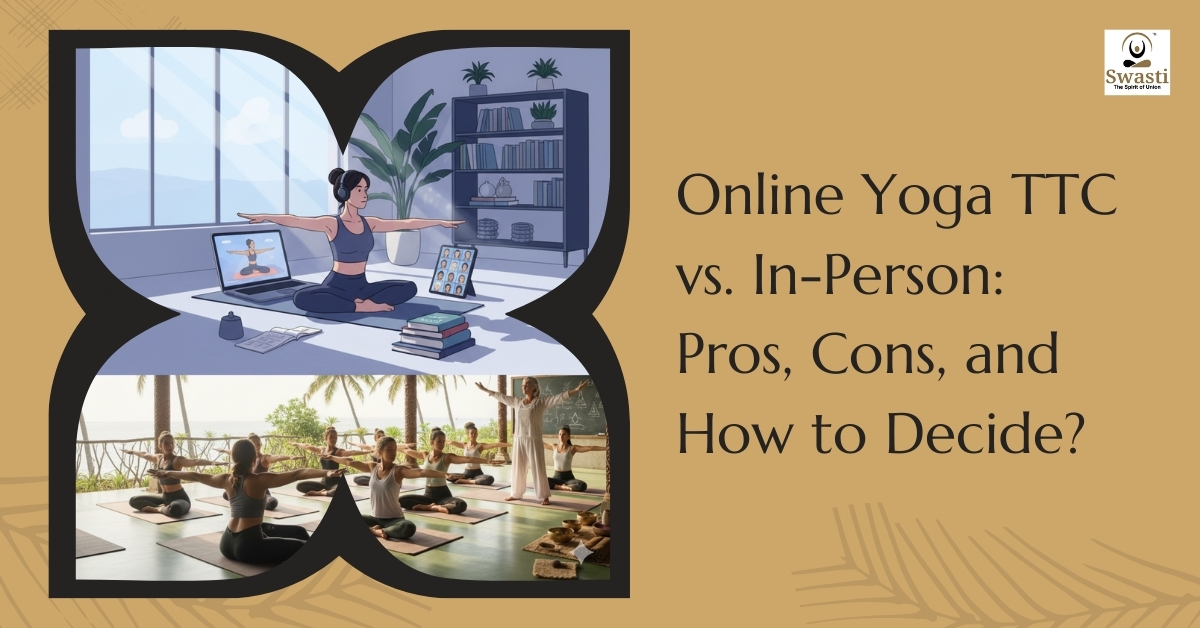
Online Yoga TTC vs. In-Person Pros, Cons, and How to Decide

Online Yoga TTC vs. In-Person: Pros, Cons, and How to Decide?

Deciding to become a yoga teacher is more than signing up for a courseโ€”itโ€™s a step into a lifelong practice of self-discovery, discipline, and service. But hereโ€™s the thing: todayโ€™s aspiring teachers often face a tough choice. Should you go for an online yoga teacher training course (TTC) from the comfort of your home, or take the leap and attend an in-person TTC in India? Both paths can lead you to the same certification, but the experience along the way can feel very different. Letโ€™s break it down. Online Yoga TTC: Flexibility Meets Accessibility Pros: Learn from anywhere: No travel required โ€” ideal for students balancing work, family, or remote locations. Self-paced study: Many online courses allow you to progress at your own speed. Affordable: Lower costs compared to in-person programs since travel and accommodation arenโ€™t needed. Cons: Limited hands-on guidance: Posture corrections and real-time adjustments can be challenging. Reduced community experience: You may miss the immersive environment and peer bonding found in in-person training. In-Person Yoga TTC in India: Immersion and Transformation Pros: Deep immersion: Daily practice, meditation, and philosophy sessions create a transformative experience. Direct mentorship: Teachers provide immediate corrections and guidance. Cultural and spiritual exposure: Training in India offers authentic insight into yoga traditions. Cons: Higher cost: Travel, accommodation, and living expenses add up. Fixed schedule: Less flexibility for those with work or personal commitments. How to Decide? Consider your learning style, lifestyle, and goals. If you thrive in structured, immersive environments and value authentic cultural exposure, an in-person yoga TTC in India may be ideal. If flexibility, convenience, and affordability are priorities, a yoga teacher training online program can still provide solid foundational knowledge and certification. Final Thoughts Thereโ€™s no one-size-fits-all answer. Both online and offline programs can lead you to a globally recognized certification and a rewarding teaching journey. What matters most is your commitment to the practice, your openness to learning, and the program you choose to trust with your transformation. If youโ€™re looking for authentic training, check out Swasti Yoga Centerโ€™s best yoga teacher training courses in India. Along with comprehensive online TTC programs, we also offer in-person TTC courses at our Pune branchโ€”ideal if you want that immersive experience while staying connected to Indiaโ€™s rich yoga tradition. Whichever path you choose, let it be one that aligns with your heart, your lifestyle, and your vision as a future yoga teacher.

Read More ยป
Hidden Connection Between Japanese Wisdom and Yoga A Path for Students

Discover the Hidden Connection Between Japanese Wisdom and Yoga: A Path for Students

As a student in Japan, youโ€™ve likely grown up hearing values like Ganbaru and Kaizenโ€”encouraging you to work hard, improve steadily, and stay true to yourself. But did you know that these powerful ideas also connect deeply with the ancient Indian philosophy of Yoga? Yoga is not just about stretching or meditationโ€”itโ€™s a complete lifestyle and way of thinking that helps you become a better version of yourself, both inside and out. Letโ€™s explore five well-known Japanese concepts and how they align beautifully with yogic philosophy, making your journey as a student more meaningful and balanced. 1. Ganbaru ร— Tapas / Samฤdhan (Perseverance & Focus) “Do your best, never give up!” This is the spirit of Ganbaru, something every student in Japan is taught from childhood. In Yoga, the same strength is called Tapasโ€”the fire of discipline and willpower. When you feel tired, stressed, or distracted, Samฤdhan reminds you to stay calm and focused. Both Ganbaru and Tapas teach you that growth comes from effort, not shortcuts. 2. Kaizen ร— Eka Tattva Abhyasa (Small Steps, Big Impact) Whether youโ€™re studying for exams or learning a new skill, Kaizenโ€”the idea of steady, daily improvementโ€”can take you far. Yoga supports this through Eka Tattva Abhyasa, which means sticking with one practice or goal and improving it each day. You donโ€™t have to be perfectโ€”just consistent. One mindful step each day adds up to big change. 3. Oubaitori ร— Ahimsa (No Comparison, Just You) In school or college, itโ€™s easy to fall into the trap of comparing yourself with others. But Oubaitori, a Japanese term inspired by four different blooming trees, reminds you that everyone grows in their way. In Yoga, this is called Ahimsa, or non-harmingโ€”including being kind to yourself. You donโ€™t need to compete with anyone; youโ€™re enough, just as you are. 4. Ikigai ร— Moksha / Swadharma (Find Your Purpose) Many students wonder: โ€œWhat is my purpose?โ€ The Japanese concept of Ikigaiโ€”a reason to wake up every dayโ€”helps you find meaning in what you love, what you’re good at, and what the world needs. In Yoga, this purpose is called Swadharma, your unique path. Moksha, ultimate fulfillment, happens when you live your truth with confidence and peace. 5. Keiken ร— Jnana Yoga (Learn by Living) Some lessons canโ€™t be learned from booksโ€”they must be lived. Thatโ€™s the idea of Keiken, or real-world experience. Yoga honors this through Jnana Yoga, the path of wisdom gained through observation, experience, and reflection. Every mistake, every success, every challenge is a teacherโ€”if youโ€™re open to learning. As a student, combining these Japanese values with Yogic philosophy can make your life more focused, peaceful, and fulfilling. You donโ€™t need to choose one or the otherโ€”they are two paths that lead to the same goal: a better, wiser you. So the next time you sit down to study, face a tough challenge, or feel lost about your future, rememberโ€”you already have the tools. From Ganbaru to Tapas, from Ikigai to Swadharma, your journey is sacred. Walk it with awareness, and the world will open before you. Namaste and Ganbatte! Start Your Yoga Path at Swasti Yoga Center Swasti Yoga Center invites students from Japan to experience authentic Indian yoga with guidance that respects your culture and learning style. Our yoga teacher training courses for Japanese students blend ancient yogic wisdom with values you already know, creating a meaningful and life-changing journey. You will receive complete study material in Japanese so you can learn with clarity and confidence. Join us in Pune, immerse yourself in the roots of yoga, and return home with both knowledge and certification that will inspire others.

Read More ยป
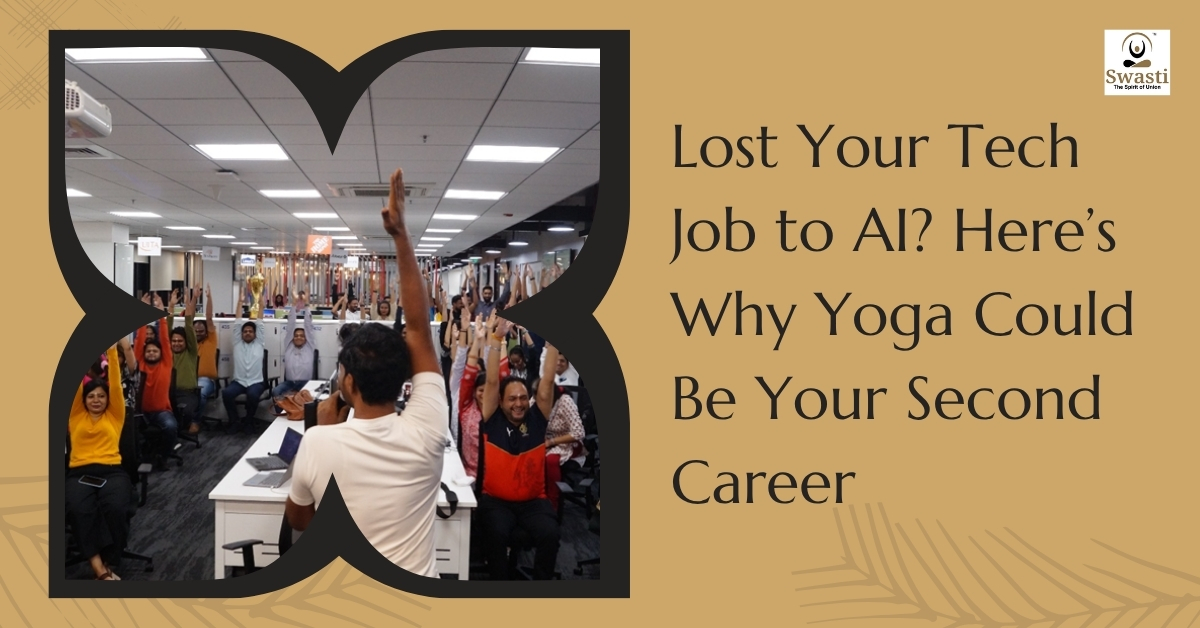
Lost Your Tech Job to AI Hereโ€™s Why Yoga Could Be Your Second Career

Lost Your Tech Job to AI? Hereโ€™s Why Yoga Could Be Your Second Career

In the past year, headlines have read like plotlines from a sci-fi dystopia:“Thousands of tech workers laid off.”“AI is replacing coders faster than ever.”“ChatGPT can now write entire apps as worldโ€™s top coders.” The software industry, once the holy grail of job security, innovation, and global relevance, is now experiencing a reality check. From Silicon Valley to Singapore, software professionals are waking up to the sobering truth: AI isnโ€™t just a tool โ€” itโ€™s competition. But here’s the good news: In every crisis lies a hidden opportunity. What if I told you that losing your job to AI could be the best thing that ever happened to you? And what if I told you that your next career move isnโ€™t another coding bootcamp or startup hustle… but Yoga? Yes, you read that right. ๐Ÿ“‰ The Tech Tumble: Whatโ€™s Really Happening? AI platforms like ChatGPT, GitHub Copilot, and other generative technologies are not just enhancing productivity โ€” theyโ€™re replacing the need for large development teams altogether. Companies are downsizing. Tech roles are being consolidated. Even entry-level jobs โ€” the traditional gateway into software โ€” are evaporating. The stress is real. Burnout is widespread. And despite your technical prowess, you might be feeling replaceable for the first time. So… what now? ๐Ÿง˜โ€โ™‚๏ธ From Burnout to Balance: Why Yoga Makes Sense Many tech professionals donโ€™t realize this, but Yoga is more than a physical exercise. Itโ€™s a lifestyle, a science of mental clarity, emotional stability, and holistic health. It offers what the tech world lacks: inner peace. Here’s why yoga could be your ideal second career: 1. Youโ€™re Already Wired for Learning Engineers are analytical thinkers. Yoga, when taught authentically, has layers of anatomy, philosophy, psychology, and energy science. Your intellectual mindset gives you an edge in understanding and teaching yoga deeply. 2. The World Needs AYUSH Certified Quality Yoga Teachers Post-COVID, the global demand for wellness experts has skyrocketed. Corporates, schools, hospitals, and wellness resorts are hiring certified yoga professionals. Remote work? Global travel? Impactful purpose? Check, check, and check. 3. Freedom, Flexibility, and Fulfillment Yoga offers location independence, low investment, and high personal reward. You’re not chasing product deadlines anymore. You’re transforming lives, including your own. ๐ŸŒ Meet the Game-Changer: Swasti Yoga Center, India If you’re thinking about this pivot seriously, you need more than casual YouTube yoga. You need world-class, traditional, and globally recognized training. Enter: Swasti Yoga Center, Pune, India โ€” a government-certified institution offering Yoga Teacher Training Courses (YTTC) approved by AYUSH Ministry and Yoga Certification Board (YCB), Government of India. Swasti Yoga is not just a school. Itโ€™s a movement, a place where doctors, engineers, and corporate leaders come to realign their lifeโ€™s direction. ๐Ÿ’ก Career Guidance: How to Make the Shift Hereโ€™s a practical blueprint for software engineers considering yoga as a career: โœ… Step 1: Assess Your Readiness Are you passionate about helping others? Do you crave more meaning and health in your life? If yes, you’re ready. โœ… Step 2: Start Learning Enroll in a certified YTTC โ€” ideally 200 or 400-hour programs โ€” that provide a deep foundation in yoga philosophy, anatomy, teaching methods, and therapeutic applications. โœ… Step 3: Get Certified Choose AYUSH/YCB-approved certifications that are globally valid. Swastiโ€™s programs meet international standards, enabling you to teach worldwide. โœ… Step 4: Explore Career Options Post-certification, you can: Teach yoga online or offline. Work with corporates on stress management. Open a boutique yoga studio. Offer specialized sessions in therapy, kids yoga, prenatal yoga, or wellness tourism. โœ… Step 5: Grow Your Brand As a techie, your digital skills will give you an edge in building your wellness brand. Swasti even provides career mentoring and exposure to global collaborations. ๐Ÿ™Œ Real Stories, Real Transformation โ€œI lost my job at a major IT firm during the layoffs. I joined Swasti Yogaโ€™s 200-hour teacher training as a way to cope with stress. Within months, I felt physically healthier, mentally stronger, and emotionally calm. Today, I run a thriving online yoga studio helping other professionals find balance.โ€โ€” Meera, Ex-Software Developer, now Yoga Coach ๐Ÿš€ Your AI-Proof Future Starts Now Letโ€™s face it โ€” the machines are only going to get smarter. But humans will always crave real connection, healing, and presence. Yoga is not just a profession โ€” itโ€™s a revolution of self-awareness. In a world driven by speed, yoga invites you to slow down, reflect, and rise with strength. So if your job was taken by AI, perhaps itโ€™s a cosmic nudge. Maybe itโ€™s time to upgrade not your skills, but your soul. And maybe, just maybeโ€ฆ your next big breakthrough is on a yoga mat, not a keyboard. ๐Ÿ”— Ready to Transform? ๐Ÿ‘‰ Learn more and enroll in internationally certified yoga teacher training programs at www.swastiyogacenter.com๐Ÿ“ฉ Or email us at info@swastiyogacenter.com to begin your second career in wellness today.

Read More ยป
7 Best Yoga Teacher Training Institutes in India

2026 Guide: 7 Best Yoga Teacher Training Institutes in India

India, the birthplace of yoga, continues to be a sought-after destination for individuals aspiring to deepen their practice and become certified yoga instructors. With many institutes offering diverse programs, choosing one that aligns with your goals and values is essential. This guide presents seven esteemed yoga teacher training institutes in India for 2026, providing insights into their offerings to help you make an informed decision. What Should You Consider When Choosing a Yoga Teacher Training Course in India? Accreditation and Certification: Ensure the program is accredited by recognized organizations like AYUSH and, Yoga Certification Board. Accreditation ensures that the curriculum meets specific educational standards, enhancing the credibility of your certification globally. Curriculum Content: Review the syllabus to confirm it covers essential aspects such as asanas (postures), pranayama (breathing techniques), meditation, anatomy, philosophy, and teaching methodology. A comprehensive curriculum ensures a well-rounded education in yoga. Experienced Faculty: Research the qualifications and experience of the instructors. Experienced teachers can provide deeper insights and personalized guidance, significantly impacting your learning experience. Yoga Style and Tradition: Identify the yoga style (e.g., Hatha, Ashtanga, Vinyasa) that resonates with you and ensure the program focuses on that tradition. Some schools offer multi-style training, providing exposure to different practices. Location and Environment: Consider the setting of the trainingโ€”be it the spiritual ambiance of Rishikesh, the tranquility of Kerala, the vibrant culture of Goa, or the growing yoga community in Puneโ€”and choose one that supports your learning journey. The environment can significantly influence your overall experience. Why is India a Preferred Destination for Yoga Teacher Training? Origin of Yoga and Authentic Learning – India is the birthplace of yoga, offering authentic teachings deeply rooted in ancient traditions and philosophies. Training here provides a direct connection to the source of yoga practices. Diverse Styles and Traditions – India offers access to a wide variety of yoga styles, Hatha, Ashtanga, Iyengar, Kundalini, and more allowing trainees to learn from different lineages and choose the path that suits them best. Experienced and Renowned Teachers – Many experienced masters and reputed yoga gurus teach in India, providing high-quality instruction and mentorship that enrich the learning experience. Spiritual and Cultural Environment – The serene natural surroundings and spiritual atmosphere of places like Rishikesh, Kerala, and Pune enhance self-discovery, meditation, and holistic growth during training. Affordable and Comprehensive Programs – Compared to many western countries, India offers a wide range of yoga teacher training courses that are cost-effective without compromising on quality, making yoga education accessible to a global audience. Here are the Top Yoga TTC Institutes in India 1. Swasti Yoga Center โ€“ Pune, Maharashtra Swasti Yoga Center, located in Pune, is a renowned institute recognized by the Yoga Certification Board (YCB) under the Ministry of AYUSH, Government of India. The center integrates traditional yoga practices with modern scientific approaches. It is one of the leading providers of yoga teacher training courses in India, offering a structured pathway for students at different levels of expertise. Courses Offered: Yoga Protocol Instructor (Level 1) Yoga Wellness Instructor (Level 2) Yoga Teacher and Evaluator (Level 3) Yoga Master and Yoga Therapist (Level 4) Benefits: Government-recognized certifications ISO 9001:2015 certified institute Experienced faculty with medical backgrounds Focus on yoga therapy and holistic wellness Price Range: Varies based on course level; contact the institute for detailed pricing. Website: swastiyogacenter.com 2. The Yoga Institute โ€“ Mumbai, Maharashtra Image credit: The Yoga Institute Established in 1918, The Yoga Institute in Mumbai is one of the oldest organized yoga centers globally. It offers structured programs focusing on integrating yoga into daily life, making it accessible to all. Courses Offered: 200-hour Yoga Teacher Training 300-hour Yoga Teacher Training Specialized courses for children, women, and senior citizens Benefits: Government-recognized certifications Emphasis on holistic living and self-development Experienced faculty and comprehensive curriculum Urban campus with modern facilities Price Range: Varies based on course; contact the institute for detailed pricing. Website: theyogainstitute.org 3. Rishikesh Yogkulam โ€“ Rishikesh, Uttarakhand Image credit: Rishikesh Yogkulam Situated in the yoga capital of the world, Rishikesh Yogkulam offers immersive teacher training programs that blend traditional teachings with modern methodologies. The serene environment enhances the learning experience, making it ideal for deepening one’s practice. Courses Offered: 100-hour Yoga Teacher Training 200-hour Yoga Teacher Training 300-hour Yoga Teacher Training 500-hour Yoga Teacher Training Ayurveda Yoga Teacher Training Online Yoga Teacher Training Benefits: Comprehensive curriculum covering asanas, pranayama, meditation, and philosophy Experienced instructors with deep yogic knowledge Affordable course fees Supportive community and personalized attention Price Range: Varies based on course level; contact the institute for detailed pricing. Website: yogkulam.org 4. Oceanic Yoga International โ€“ Goa Image credit: Oceanic Yoga International Oceanic Yoga International, located in the tranquil surroundings of Goa, offers a blend of traditional yoga teachings and modern practices. The institute emphasizes holistic development, integrating yoga with sound healing and meditation. Courses Offered: 100-hour Yoga Teacher Training 200-hour Yoga Teacher Training 300-hour Yoga Teacher Training Yoga Nidra & Meditation TTC Yin Yoga and Sound Healing TTC Online and Hybrid Yoga Teacher Training Benefits: Yoga Alliance-certified programs Experienced international faculty Scenic campus near Morjim Beach Emphasis on emotional and spiritual growth Price Range: Varies based on course level; contact the institute for detailed pricing. Website: oceanicyoga.com 5. Morarji Desai National Institute of Yoga (MDNIY) โ€“ New Delhi Image credit: MDNIY MDNIY, under the Ministry of AYUSH, is a premier institute offering academic and professional yoga education. Located in the heart of Delhi, it combines traditional knowledge with scientific research. Courses Offered: Diploma in Yoga Science Certificate Course in Yoga for Wellness Instructor Post Graduate Diploma in Yoga Therapy Benefits: Government-affiliated programs Focus on research and evidence-based practices Access to modern facilities and resources Opportunities for academic advancement Price Range: Varies based on course; contact the institute for detailed pricing. Website: yogamdniy.nic.in 6. Arhanta Yoga Ashram โ€“ Khajuraho, Madhya Pradesh Image credit: Arhanta Yoga Ashram Arhanta Yoga Ashram offers intensive teacher training programs rooted in classical Hatha Yoga. Situated near the historic temples of Khajuraho, the ashram provides a serene environment conducive

Read More ยป
Building a Career in Aqua Yoga A Growing Niche for Instructors

Building a Career in Aqua Yoga: A Growing Niche for Instructors

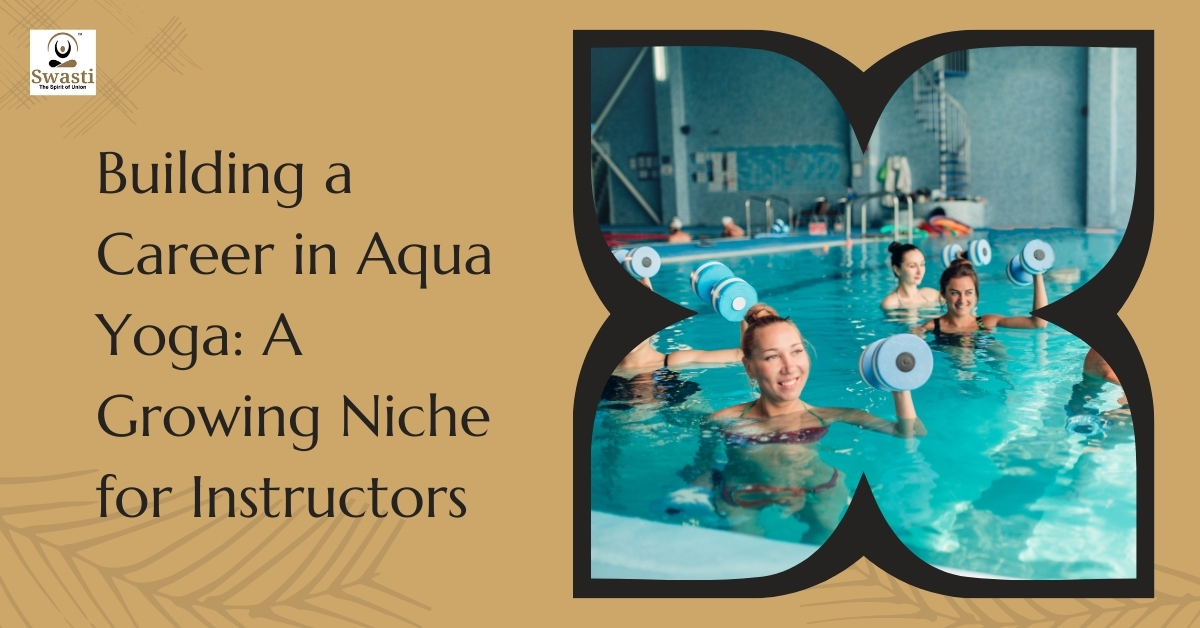
Floating in water or moving through a gentle yoga flow can bring a deep sense of peace and tranquility. Now, imagine combining these two calming experiences into one meaningful career. Aqua Yoga offers a beautiful blend of fluid movement, strength, relaxation, and mindfulness. If you love being in the water and have a deep appreciation for yoga, becoming an Aqua Yoga instructor could be your perfect calling. Letโ€™s dive deeper into how you can turn this passion into a professional journey. What is Aqua Yoga? Aqua Yoga is a practice where traditional yoga poses are adapted and performed in water, typically in a warm pool. The water provides natural resistance and support, making movements more fluid and less stressful on the joints. It is often described as a soothing, meditative experience that feels like a blend of yoga and hydrotherapy. Because water supports the bodyโ€™s weight, Aqua Yoga is accessible to people of all ages, body types, and fitness levels. It is especially beneficial for individuals dealing with injuries, arthritis, or mobility challenges. At the same time, it offers a full-body workout that strengthens muscles, improves flexibility, enhances balance, and promotes deep relaxation. Why is Aqua Yoga growing in Popularity? Over the past few years, Aqua Yoga has started gaining recognition not just among yoga enthusiasts but also among health and wellness professionals. More people are discovering the incredible physical and emotional benefits of practicing yoga in water. It is gentle on the body, yet deeply effective in building strength and promoting recovery. With wellness retreats, luxury resorts, rehabilitation centers, and fitness clubs looking for specialized programs to offer their clients, the demand for certified Aqua Yoga instructors is steadily rising. People are searching for new ways to stay healthy, heal from injuries, and connect with themselves, and Aqua Yoga beautifully meets all these needs. Who Should Consider Aqua Yoga TTC? Wondering if Aqua Yoga Teacher Training is right for you? Hereโ€™s who should consider it: Yoga instructors: Already teaching yoga? Expanding to Aqua Yoga helps you reach a wider audience and add a unique skill to your resume. Water enthusiasts: If you love being in water and practicing yoga, this training is your chance to blend both passions. Fitness professionals: Trainers, physiotherapists, or anyone in the fitness field looking for a niche skill can benefit from the Aqua Yoga certification. Beginners: No yoga experience? No problem! Aqua Yoga is beginner-friendly and a great entry point into the world of yoga. What Youโ€™ll Learn in Aqua Yoga Teacher Training? Aqua Yoga Teacher Training (TTC) isnโ€™t just about learning poses. Itโ€™s about understanding how to teach effectively in a water environment. Hereโ€™s a breakdown of what youโ€™ll learn: Water anatomy and physiology: Understand how the body moves in water and how Aqua Yoga can benefit it. Safety in the water: Learn important safety protocols to ensure you and your students are safe during class. Modifying poses for the water: Discover how to adjust traditional yoga poses to suit the aquatic environment. Breathing techniques: Master water-friendly breathing practices to enhance relaxation and connection during the practice. Class management skills: Learn how to lead and manage classes effectively, keeping the flow smooth and your students engaged. The training is designed to give you everything you need to confidently teach Aqua Yoga, whether in a private pool, wellness retreat, or a larger fitness center. The Benefits of Becoming an Aqua Yoga Instructor Becoming an Aqua Yoga instructor comes with unique advantages. Hereโ€™s why itโ€™s worth considering: Stand out from the crowd: Aqua Yoga is a specialized skill, making you an expert in a growing niche. Work in diverse settings: You can teach Aqua Yoga at wellness retreats, resorts, rehabilitation centers, or even private pools. Help people heal: Aqua Yoga isnโ€™t just a workoutโ€”itโ€™s a therapeutic experience that helps people recover from injuries and improve mobility. Personal growth: Teaching Aqua Yoga offers a chance for personal transformation as you connect deeply with students and water. The opportunities are endless, and the impact you can have on others is profound. How to Get Started with Aqua Yoga Teacher Training? Ready to become an Aqua Yoga instructor? Hereโ€™s how to get started: Research the right training: Look for a TTC that covers all the key areas, including water anatomy, safety protocols, and teaching techniques. Prepare mentally: While swimming experience isnโ€™t a requirement, comfort in water is important. If you’re not a swimmer, no worriesโ€”just make sure you feel confident in the water. Sign up and start learning: Once you’re enrolled, dive into the coursework. Focus on absorbing all the theoretical knowledge and practical techniques. Practice and teach: The more you practice, the more confident youโ€™ll become. Start teaching small classes or offer one-on-one sessions to build experience. With the right training, youโ€™ll be ready to lead your own Aqua Yoga classes in no time! Conclusion: A Career That Floats Your Boat Aqua Yoga offers a unique and rewarding career path for anyone passionate about water, yoga, and helping others. Whether youโ€™re looking to teach in luxury resorts, rehabilitation centers, or private sessions, Aqua Yoga provides endless opportunities to grow personally and professionally. So, if youโ€™re ready to blend your love for yoga and water, why not take the plunge? Start your journey as an Aqua Yoga instructor today, and transform your passion into a career that benefits both you and your future students! Begin Your Aqua Yoga Career with Swasti Yoga Center Turn your passion for yoga and water into a rewarding career with Swasti Yoga Centerโ€™s Aqua Yoga Instructor Certification TTC in India. Our program is designed to give you the skills and confidence to teach Aqua Yoga effectively and with purpose. With expert trainers, a comprehensive curriculum, and a certification recognized worldwide, youโ€™ll be prepared to offer Aqua Yoga classes in diverse settings. Whether youโ€™re looking to teach in resorts, wellness centers, or private sessions, this training will set you on the path to success. Start your journey today and take the first step

Read More ยป

Add Yoga To Retain The Beauty Of Body And Mind

Vitae aliquam porta sed augue consectetuer. Parturient posuere sed habitasse quisque malesuada platea. Dis suspendisse integer ut facilisis maximus mus.