๐Ÿ‡ฎ๐Ÿ‡ณ India | ๐Ÿ‡บ๐Ÿ‡ธ USA | ๐Ÿ‡ซ๐Ÿ‡ท France | ๐Ÿ‡ฒ๐Ÿ‡ฝ Mexico | ๐Ÿ‡ฆ๐Ÿ‡ช UAE

๐Ÿ‡ฎ๐Ÿ‡ณ India | ๐Ÿ‡บ๐Ÿ‡ธ USA | ๐Ÿ‡ซ๐Ÿ‡ท France | ๐Ÿ‡ฒ๐Ÿ‡ฝ Mexico | ๐Ÿ‡ฆ๐Ÿ‡ช UAE

Blog

News & Articles

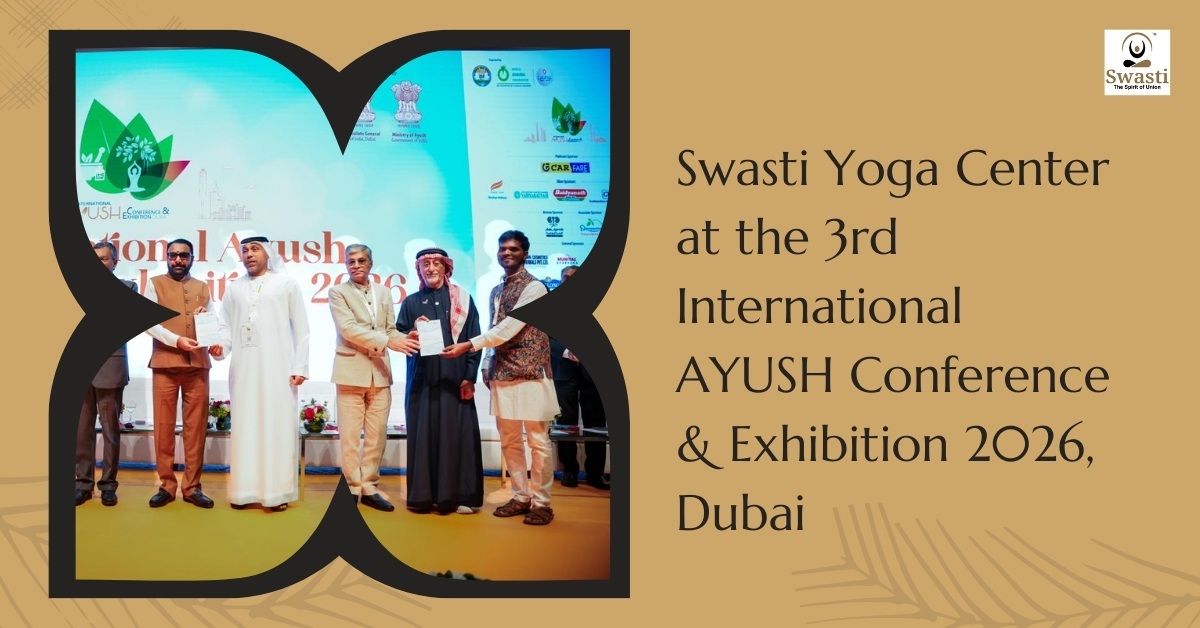
Swasti Yoga Center at the 3rd International AYUSH Conference & Exhibition 2026, Dubai

Swasti Yoga Center at the 3rd International AYUSH Conference & Exhibition 2026, Dubai

From February 15 to 17, 2026, the 3rd International AYUSH Conference & Exhibition (IACE 2026) was held at the iconic Dubai World Trade Centre. The event brought together government officials, spiritual leaders, healthcare experts, and global wellness advocates to strengthen dialogue around Ayurveda, Yoga, Unani, Siddha, and Homeopathy in international health systems. Among the key highlights of the conference was the meaningful presence and contribution of Swasti Yoga Center. A Historic Book Launch That Redefined Accessibility One of the defining moments of the conference was the launch of: Yoga for Everyday Life: A Beginnerโ€™s Guide Co-authored by Dr. Vikas Chothe, Founder of Swasti Yoga Center, and H.E. Ahmed Ibrahim, President of the UAE Yoga Committee, the book was officially unveiled by Prataprao Jadhav in the presence of distinguished dignitaries. Hereโ€™s why this launch mattered. This is the first guidebook from the Arab world aligned with WHO public health principles and AYUSH guidelines for yoga practice. Thatโ€™s not a small achievement. It positions yoga not as a niche wellness activity, but as a standardized, culturally sensitive public health tool. The book was designed specifically for UAE residents and its diverse population of 200+ nationalities. It: Presents yoga as a safe, non-religious wellbeing practice Aligns with WHO-based public health frameworks Reflects AYUSHโ€™s structured yoga standards Respects UAE cultural values and inclusivity Breaks common myths surrounding yoga Offers simple daily routines for beginners What this really means is simple: yoga becomes accessible. Practical. Non-intimidating. A daily habit rather than a distant ideal. The collaboration was supported by the UAE Sports For All Federation, UAE Yoga Committee, and Asian Yogasana Federation, reinforcing a strong institutional backing behind this initiative. Distinguished Global Presence The conference was attended by an esteemed lineup of dignitaries, including: Prataprao Jadhav โ€“ Hon. Minister of State (IC), Ministry of AYUSH Vaidya Rajesh Kotecha โ€“ Secretary, Ministry of AYUSH Dr. Alawi Alsheikh Ali โ€“ Director General, Dubai Health Authority Dr. Deepak Mittal โ€“ Ambassador of India to the UAE Mohanji โ€“ Spiritual leader and wellness advocate Saeed Ali A. Lajil โ€“ President, UAE Sports for All Federation Satish Kumar Sivan โ€“ Consul General of India in Dubai Eesa M. Bastaki โ€“ Chairman of the Organising Committee and President, University of Dubai The gathering reflected a strong commitment toward knowledge-sharing, innovation, and collaborative approaches to global wellbeing. Key themes included: Integrative medicine frameworks Herbal pharma innovation Digital health in traditional medicine Cross-border wellness tourism Live experiential zones and demonstrations The message was strong. AYUSH is not regional. It is structured, scalable, and entering mainstream global healthcare discussions. Dubai, positioned between East and West, proved to be the perfect bridge. Why This Conference Matters Letโ€™s step back for a moment. This wasnโ€™t just about one book or one centerโ€™s participation. It reflected a larger shift. Traditional knowledge systems are moving toward: Public health alignment Cultural adaptability Scientific validation Global partnerships Swasti Yoga Centerโ€™s presence at IACE 2026 represents this evolution. From local practice to international collaboration. From studio spaces to global policy conversations. When yoga is framed as inclusive, structured, and culturally respectful, it becomes something bigger than exercise. It becomes a sustainable lifestyle model accessible to diverse communities. A Step Forward for Global Wellness The 3rd International AYUSH Conference & Exhibition 2026 emphasized collaboration, structured frameworks, and international partnerships in the field of traditional medicine and yoga. The launch of Yoga for Everyday Life: A Beginnerโ€™s Guide stands as a proud moment for Swasti Yoga Center, reflecting its commitment to making yoga accessible, culturally aligned, and practically relevant for modern society. Through both international representation in Dubai and academic cultural exchange initiatives, Swasti Yoga Center continues to contribute to a balanced, healthier future grounded in authentic yogic knowledge and global cooperation.
Read More ยป
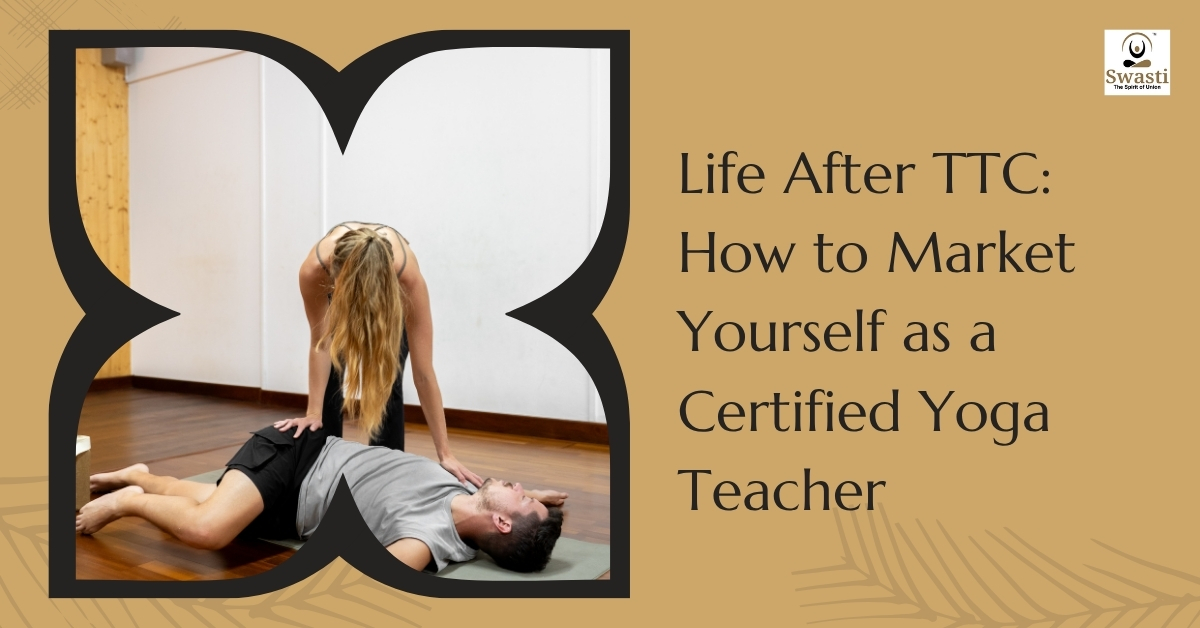
Life After TTC How to Market Yourself as a Certified Yoga Teacher

Life After TTC: How to Market Yourself as a Certified Yoga Teacher

Becoming a certified yoga teacher is a life-transforming journey. Completing a Teacher Training Course (TTC), especially from a YCB-accredited yoga school, opens countless doors for a rewarding and sustainable career in the field of yoga and wellness. Yet, success after certification depends not only on your teaching skills but also on how effectively you position and market yourself. This guide offers a comprehensive roadmap for certified yoga teachers to build visibility, trust, and long-term career growth in India and globally. 1. Choose the Gold Standard โ€“ YCB Certification In todayโ€™s wellness industry, authentic certification matters. The Yoga Certification Board (YCB), established by the Ministry of AYUSH, Government of India, is recognized as the gold standard in yoga education.Graduates from YCB-accredited institutesย such asย Swasti Yoga Center enjoy international credibility, greaterย employability, and professional recognition. YCB-certified teachers are preferred by: International yoga studios and schools AYUSH-recognized institutions Wellness resorts and hospitals Corporate wellness programs When marketing yourself, highlight your YCB credential prominently on resumes, social media profiles, and websites. This single step instantly distinguishes you from unregulated or uncertified instructors. ย 2. Gain Practical Experience through Internships Before launching independent classes, gain hands-on experience by interning with: Senior yoga masters and lead YCB examiners Yoga therapy centers, hospitals, or schools Online community programs Such exposure deepens your understanding of teaching diverse age groups and health conditions. Many YCB schools, including Swasti Yoga Center, offer structured internships under expert supervision, allowing you to refine class design, therapeutic applications, and communication skills. 3. Build Your Personal Brand and Professional Identity Marketing in yoga does not mean aggressive selling; it means sharing your authentic journey and purpose. Start with: A professional teacher profile including credentials, specializations, and teaching philosophy High-quality photographs and short demonstration videos A consistent visual identity (logo, color palette, tone of communication) Use platforms such as Instagram, LinkedIn, and YouTube to showcase your teaching style, testimonials, and snippets of your classes. Authentic storytelling is your most powerful marketing tool. ย 4. Approach Communities, Corporates, and Wellness Spaces Proactively Do not wait for opportunitiesโ€”create them.Reach out to: Corporate HR and wellness departments to conduct employee wellness workshops Local schools for kids yoga and mindfulness programs Community centers, temples, and clubs to offer weekend classes or workshops Every collaboration enhances visibility and helps build local trust networks. Start small, deliver excellence, and let referrals do the talking. 5. Keep Learning: Upskill to Create Your Blue Ocean The most successful yoga professionals are lifelong learners. After your basic TTC, pursue specialized diploma programs such as: Kids Yoga TTC โ€“ for educators and child wellness specialists Prenatal and Postnatal Yoga TTC โ€“ for womenโ€™s health and maternity care Geriatric Yoga TTC โ€“ for senior citizens and therapeutic sessions Diploma in Yoga Therapy โ€“ for medical and rehabilitation applications By combining traditional wisdom with modern therapeutic approaches, you can differentiate yourself in a crowded market and create a โ€œblue oceanโ€ career with unique offerings that few can match. 6. Establish Your Online Presence A professional digital presence builds credibility and attracts global students. Begin with: A personal website (with a booking link and blog section) Consistent posting on social media platforms Testimonials, certifications, and teaching videos A simple email newsletter sharing yoga insights, events, and tips Invest in learning basic digital marketing skillsโ€”SEO, social media strategy, and video production. In todayโ€™s world, these are as essential as asanas. 7. Participate in International Conferences and Networking Events Expanding your professional network opens global opportunities. Attend: AYUSH or International Yoga Conferences to meet leaders and potential collaborators Poster or paper presentation sessions to share research and gain visibility Workshops and retreats abroad to experience different teaching traditions Such experiences help you evolve as a global ambassador of authentic Indian yoga and increase your credibility among international audiences. 8. Explore International Travel and Teaching Opportunities With YCB certification, you become eligible to teach in many countries that recognize AYUSH and WHO-aligned programs. Explore: Teaching residencies at yoga studios abroad Cultural exchange programs or wellness tourism collaborations Online international classes targeting regions like Europe, Japan, or the Middle East Your certification and Swastiโ€™s global alumni network can become a bridge to global recognition. 9. Share Knowledge: Write, Teach, and Inspire Writing enhances authority and attracts attention. Start by: Publishing articles on yoga, health, or philosophy Writing blogs for your website or reputed wellness magazines Creating short educational videos or online courses Eventually, authoring a book or research paper in your area of expertise Every piece of content builds your digital footprint and positions you as a thought leader. 10. Consistency is the Real Secret Building a thriving yoga career is not an overnight process. It requires discipline, patience, and consistency, just like your practice.Continue: Teaching regularly (even small classes) Learning new methods Updating your digital presence Staying aligned with yogic ethics and authenticity Your steady presence will inspire trustโ€”and trust brings students. Conclusion: Be the Change, Share the Light A YCB-certified yoga teacher carries the legacy of authentic Indian yoga, rooted in scientific understanding and ancient wisdom. By marketing yourself ethically, staying committed to learning, and sharing yogaโ€™s benefits with sincerity, you not only build a successful career but also contribute to a healthier, more conscious world. Ready to Start Your Gold Standard Yoga Career? Success in the global wellness industry begins with the right foundation. Choose Swasti Yoga Center, recognized as a trusted AYUSH Yoga TTC center in India, which provides the essential international credibility, expert mentorship, and specialized advanced courses you need. As a YCB-accredited institute, Swasti ensures your certification truly opens doors worldwide, allowing you to stop searching and confidently start teaching your authentic, high-standard yoga. Enroll in a YCB-Accredited TTC or Diploma Program at Swasti Yoga Center today.

Read More ยป
What Indian Yoga Professionals Can Learn from China to Scale?

Innovation in Yoga โ€” Yogapreneurship in Action: What Indian Yoga Professionals Can Learn from China to Scale?

The global wellness economy is booming; Chinaโ€™s tech-first fitness market shows how platforms, live commerce, mini-programs and data can scale wellness rapidly. Indian yoga professionals can leapfrog by productizing expertise (courses, subscriptions, B2B wellness), adopting platform-first distribution, integrating certification and measurable outcomes, and embedding sustainability โ€” the Swasti Yogapreneurship model. @ Consulate General of India Hong Kong Why innovate now? The opportunity The global wellness economy reached $5.6โ€“6.3 trillion in recent annual monitors and continues to expand rapidly, driven by consumers demanding prevention, mental health, and lifestyle solutions. Indiaโ€™s yoga market is already sizable (5.67 billion in 2023) and growing fast, with online yoga courses and services showing the highest velocity. China is a useful lens because its fitness and virtual-fitness markets have grown aggressively through digital tools (live streaming, short video commerce, super-apps), creating new distribution channels for wellness services and content. For instance, Chinaโ€™s online/virtual fitness markets are projected to grow at double-digit CAGRs in the 2020s. Swasti Yoga Center launched two books in Chinese on Yoga & Ayurveda at the Consulate General of India, Guangzhouโ€” bridging languages, cultures, and ancient wisdom Swasti Yoga Center launched two books in Chinese on Yoga & Ayurveda at the Consulate General of India, Guangzhouโ€” bridging languages, cultures, and ancient wisdom. What China does well โ€” lessons for yogapreneurs? 1. Platform-first distribution (Douyin/Xiaohongshu/WeChat)China turned social platforms into commerce engines: short video + live streaming drives product discovery and conversions at scale (live commerce GMVs in the hundreds of billions). WeChat mini-programs (hundreds of millions of MAUs) make service discovery, booking and payment frictionless inside a single super-app. These patterns turned creators and studios into fast-scaling businesses. 2. Live classes + live commerce = instant monetizationLive group classes, with integrated commerce (class passes, merch, courses), create high LTV per user. Chinaโ€™s virtual fitness and live-stream economy have proven the conversion power of live interactive formats โ€” viewers become attendees and buyers. 3. Localization + trust signalsLocal language content, partnerships with trusted local organizations, and demonstrable credentials (certs, university affiliations) drive adoption. Chinaโ€™s market prizes KOLs but also institutional trust โ€” the same is true for international wellness offerings. 4. Data & personalizationFitness apps in China rapidly adopted wearables, personalised plans, and algorithmic content feeds. Personalization increases retention and enables premium pricing. 5. Integrated payments & low frictionSeamless payments (wallets, QR codes) and easy refunds/subscriptions remove barriers to purchase โ€” a small UX improvement that multiplies conversions. Concrete strategies Indian yoga professionals can deploy 1) Productize your expertise Build discrete, stackable offers: free short-form content โ†’ paid live series โ†’ certified online course โ†’ 1:1 therapy/consulting โ†’ retreats. Create B2B packages for corporates (stress programs, desk-yoga), schools (kidsโ€™ modules), and clinics (yoga therapy protocols).Why: Diversified revenue increases resilience and client LTV. 2) Get YCB / IYA recognized certifications visible and portable Promote Yoga Certification Board (YCB) credentials and standardized assessment outcomes to university partners, corporates and international platforms. YCB standards are a credibility multiplier for entering regulated corporate and healthcare markets. 3) Go platform-first โ€” short video + live classes Invest in short, repeatable content for reels on Instagram. Schedule regular live classes with commerce hooks (class passes, limited bundles). Live formats drive engagement and conversion โ€” replicate Chinaโ€™s live commerce playbook for wellness. 4) Build a native-like mini-app experience Use Indiaโ€™s app ecosystem (WhatsApp for Business, Instagram Shop, YouTube Memberships) and create a low-friction booking + subscription flow; consider Progressive Web Apps or a branded mini-app for streamlined booking and content accessWhy: Reduces drop-off and increases conversions. 5) Use data, wearables & measurement Partner with wearables or use simple outcome metrics (sleep quality, stress scale, adherence) to show impact. Sell outcomes (e.g., โ€œreduce workplace stress by 20% in 8 weeksโ€) to corporates โ€” measurable outcomes justify premium pricing. 6) Co-create with local partners & cultural adapters For international expansion, partner with cultural institutions, consulates, or local fitness organizations (as Swasti Yoga Center did in China). Local champions reduce friction, improve discoverability, and open B2B channels. 7) Leverage live commerce & product bundles Create branded wellness bundles (cookbook + millet starter kit + online nutrition session) and sell via live demos. Integrate time-limited offers to mimic the urgency tactics proven in Chinese social commerce. 8) Sustainability + storytelling Highlight sustainable practices (millet menus, zero-waste retreats, carbon-neutral travel). Consumers and corporate buyers increasingly prefer ESG-aligned partners โ€” link yoga outcomes to planetary benefits. Risks & mitigations Over-reliance on a single platform: diversify channels (YouTube + Instagram + localized platforms). Quality dilution while scaling: enforce assessments (YCB-aligned) and trainer certification gates. Regulatory differences for wellness claims: avoid medical claims; use outcome language and documented case studies. Case for India: Why this will work here India has credibility (authentic yoga, AYUSH), a growing domestic market, and a huge global diaspora. By adopting Chinaโ€™s platform playbook โ€” but coupling it with Indiaโ€™s authenticity, certification (YCB), and sustainability focus โ€” Indian yogapreneurs can scale globally while preserving quality and ethics. Recent market reports show Indiaโ€™s yoga services market in multi-billion USD territory and rapid online growth โ€” the product-market fit exists. Quick resources/reading [i] https://globalwellnessinstitute.org/industry-research/2023-global-wellness-economy monitor/?utm_source=chatgpt.com [ii] https://www.expertmarketresearch.com/reports/india-yoga-market [iii] https://deepmarketinsights.com/vista/insights/online-fitness-market/china? [iv] https://bloggingwizard.com/social-commerce-statistics [v] https://www.accio.com/business/chinas-smart-fitness-market-trend?

Read More ยป
Top 10 Countries Where Yoga Teachers Are in Demand

Top 10 Countries Where Yoga Teachers Are in Demand

Anxiety is now recognized as one of the most pressing global health concerns, affecting over 300 million people worldwide (WHO, 2023). While modern medicine explains anxiety through overactive amygdala pathways, excessive cortisol secretion, and imbalanced neurotransmitters such as serotonin and GABA, ancient traditions framed it as a disturbance of inner harmony. Today, combining ancient wisdom with the modern science of anxiety offers a holistic approach to restore calm. Ancient Wisdom for Inner Peace In yoga and Ayurveda, anxiety (chittodvega) is linked to imbalances in prana and the nervous system. Practices such as meditation, mantra chanting, pranayama, and mindful rituals were prescribed to stabilize the mind. Similarly, Buddhist mindfulness emphasized non-reactivity to thoughts, while Traditional Chinese Medicine used Qi-regulating practices like Tai Chi and acupuncture to reduce inner turbulence. Science of Anxiety Relief Modern research validates these ancient practices: Yoga and Meditation: A 2018 meta-analysis in Depression and Anxiety found yoga significantly reduced symptoms of generalized anxiety disorder (GAD). Pranayama Breathwork: Slow diaphragmatic breathing increases vagal tone, activates the parasympathetic nervous system, and improves heart rate variability (HRV), a key marker of stress resilience (Frontiers in Human Neuroscience, 2020). Mindfulness: Randomized controlled trials published in JAMA Psychiatry (2022) show mindfulness-based interventions are as effective as escitalopram, a common anti-anxiety medication, for mild to moderate anxiety. Mechanisms of Action Neurobiological:ย  Meditation reduces hyperactivity of the amygdala, the brainโ€™s fear center, while enhancing prefrontal cortex regulation. Hormonal: Yoga and pranayama lower cortisol and adrenaline, balancing the HPA (hypothalamic-pituitary-adrenal) axis. Neurochemical: Mind-body practices boost serotonin, GABA, and dopamine, neurotransmitters linked with calm and well-being. Holistic Management When ancient wisdom meets modern evidence, we gain not only symptom relief but also long-term resilience. Integrating yoga, breathwork, and mindfulness into daily routinesโ€”alongside healthy lifestyle choicesโ€”creates a holistic management strategy for anxiety. This union of science and tradition helps us truly move from chaos to calm. Author: Dr Shwetambari Chothe

Read More ยป
Why Global Exposure Matters for Modern Yoga Teachers?

Why Global Exposure Matters for Modern Yoga Teachers?

Yoga originated in India, yet it now thrives in almost every corner of the world. From small-town studios in Europe to corporate wellness retreats in Silicon Valley, yoga has transcended oceans and cultures, becoming a universal language of health and harmony. For yoga trainers working locallyโ€”whether in a community center, private studio, or even from homeโ€”the question naturally arises: Why does global exposure matter? Can it really change the way we teach and grow as professionals? The short answer is yes. For local yoga trainers, global exposure is not an optional โ€œnice-to-have.โ€ It is the single most powerful accelerator for professional credibility, career variety, income diversification, and real-world impact. ย Let us explore why. 1. Yoga Has Become a Global Profession Yoga is no longer confined to ashrams or exclusive spiritual circles. It is a $100+ billion global wellness industry, with millions of practitioners worldwide. Institutions like the United Nations now recognize International Day of Yoga, and universities across the globe offer yoga studies as part of academic curricula. For local yoga trainers, this means: Your career opportunities are not restricted to your city or region. The demand for authentic, certified teachers is rising worldwide. The standards of yoga education are being set at a global level, particularly by organizations like the Yoga Certification Board (YCB), Ministry of AYUSH (India), World Health Organization (WHO), and Yoga Alliance. If you remain limited to local exposure, you risk being left behind while other trainers, who bring global perspectives, advance more quickly in their careers. 2. Learning From Cultural Exchange Yoga is universal, but its expression changes depending on cultural context. For example: In Japan, yoga often integrates mindfulness and Zen simplicity. In the U.S., there is a strong focus on fitness and commercial studio models. In Europe, yoga is often tied with psychology, therapy, and scientific research. In Africa and Latin America, yoga is emerging as a tool for youth empowerment and community building. When Indian yoga trainers interact with global communities, they realize that yoga is not just about teaching asanasโ€”it is about meeting people where they are. This cultural sensitivity allows teachers to design programs that are not only authentic but also accessible and relatable to diverse audiences. A teacher who has taught yoga in both Pune and Paris, for example, will naturally gain a wider perspective on how to adapt yoga to corporate employees, children, athletes, or even trauma survivors. This adaptability is a hallmark of a modern yoga teacher. 3. Raising the Bar of Professional Standards Letโ€™s be honestโ€”yoga teaching in many local contexts is still informal. Some trainers work without certifications, structured curriculums, or scientific grounding. While passion is important, professional credibility matters in todayโ€™s global wellness marketplace. Global exposure helps local trainers by: Benchmarking quality: Seeing how studios and wellness centers abroad maintain high standards of safety, ethics, and professionalism. Understanding regulations: Many countries require yoga teachers to meet certain certifications, insurance policies, and liability standards. Improving communication: Exposure to international platforms improves English proficiency, presentation skills, and the ability to teach across cultural and linguistic barriers. When you come back home, these upgraded skills naturally set you apart from other local trainers. Parents trust you more with their children, companies prefer you for corporate wellness programs, and international students seek you for advanced training. 4. Bridging Tradition and Modern Science Yoga originated in India as a spiritual discipline, rooted in texts like the Yoga Sutras of Patanjali, Hatha Yoga Pradipika, and Bhagavad Gita. However, in todayโ€™s world, yoga is increasingly validated by modern medical research, neuroscience, and psychology. Global exposure provides opportunities to: Attend international conferences where researchers present studies on yogaโ€™s impact on stress, immunity, and mental health. Collaborate with universities, hospitals, and wellness centers abroad that integrate yoga into medical treatment. Learn new methodologies like yoga therapy protocols, trauma-informed yoga, aqua yoga, or chair yoga that are not always widely practiced locally. By blending traditional Indian wisdom with modern scientific validation, teachers position themselves as credible authorities capable of addressing diverse needsโ€”from managing diabetes to enhancing corporate productivity. 5. Building a Strong Personal Brand In the digital age, yoga teachers are not only trainers but also personal brands. Students choose teachers based on trust, authenticity, and global recognition. Global exposure helps you: Share stories of teaching yoga in different countries on social media. Build an international following through collaborations, podcasts, or guest teaching. Attract students from across the world for online classes, retreats, and TTCs. For example, a teacher who participates in a yoga festival in Bali or leads workshops in Dubai can showcase this on their website and social platforms. Such achievements boost credibility, attract students, and even open doors to sponsorships or partnerships. 6. Career pathways unlocked by global exposure Here are the concrete career opportunities that open when you step beyond local practice โ€” and how global experiences make them reachable. International teaching roles โ€” studios, resorts, and yoga festivals around the world hire visiting teachers for short residencies, seasonal contracts, and long-term posts. A teacher who has taught a few international workshops or led a study tour is far more likely to be invited back, or hired by a retreat operator. Corporate wellness consultant โ€” corporates hire providers who can combine practical classes with outcome metrics (reduced stress, improved wellbeing scores). Teachers with exposure to international corporate programs and measurement frameworks are higher value. Fortune Business Insights Yoga therapy and clinical integration โ€” collaborating with hospitals, rehabilitation centers and mental health services requires both training and a demonstrated ability to apply yoga to clinical populations; global conferences and collaborations often create the bridge to clinical partners. Lippincott Journals Retreat design and wellness tourism โ€” destination retreats, boutique hotels and wellness tourism operators recruit teachers who can deliver consistent, culturally-attuned programming to international guests. Teachers with study-tour or retreat leadership experience travel with groups and command premium fees. Vogue Business Academia, research and policy โ€” presenting papers and posters at international conferences, or collaborating on cross-border research, positions teachers for

Read More ยป
Yoga for Expats in Pune A Transformative Investment in Health, Culture & Inner Growth

Yoga for Expats in Pune: A Transformative Investment in Health, Culture & Inner Growth

Pune, known as Indiaโ€™s Oxford of the East and a spiritual heartland, is emerging as a powerful wellness destination for expats seeking purpose, balance, and authentic Indian living. For those living in India temporarily for work, education, or family, practicing traditional yoga is not just an activityโ€”itโ€™s a valuable investment in personal and family well-being. Why Yoga in Pune? While many think of Rishikesh or Goa for yoga, Pune offers something more grounded: a daily, integrated yogic lifestyle amidst vibrant urban and cultural life. With government-certified institutions like Swasti Yoga Center, expats can access genuine yogic education that blends ancient wisdom with modern needs, far beyond the commercialized offerings abroad. Here, yoga is not โ€œfitness with incenseโ€โ€”itโ€™s a science of living. You may like to read:ย  What Makes Pune the Perfect Place for a Certified Yoga TTC? Challenges Expats Face โ€“ and How Yoga Helps Being far from home, expats often struggle with: Cultural adjustment and loneliness Work-life imbalance Mental stress, sleep disorders Raising children in unfamiliar settings Limited social bonding Yoga addresses these challenges holistically: Asana & pranayama regulate the nervous system and improve sleep Mindfulness & meditation build emotional resilience Yogic parenting tools help raise grounded, calm children Group practice fosters genuine friendships across cultures Satvik diet & lifestyle improve digestion, immunity, and mood Removing Common Misconceptions About Yoga Many expats arrive with the impression that yoga is just physical exercise, or too religious. But in India, especially at centers like Swasti, yoga is: Non-religious and inclusive A blend of asana, breathwork, meditation, Ayurveda, OM Card Therapy, and philosophy A path of personal evolution and mental clarity An opportunity for certified global careers backed by the Indian Government (YCB โ€“ Yoga Certification Board) Yoga here nurtures the soul, not just the body. Yoga for Women, Children & Families Swasti Yoga Center emphasizes family-centered wellness: Mothers find relief from emotional burnout, PCOS, or hormonal issues through therapeutic yoga. Children are introduced to discipline, focus, and emotional intelligence through fun tools like OM Card Game and story-based yoga. Couples discover stronger bonds through joint practice and shared inner growth. Yoga becomes a common language of well-being at home, deepening connections in foreign soil. Invest in Your Future with a Certified TTC Many expats explore yoga as an alternative career or a valuable life skill. Swastiโ€™s 200-Hour and 400-Hour YCB-certified Teacher Training Courses are: Globally recognized Taught by experienced Indian masters Blending Ayurveda, lifestyle coaching, anatomy, and Vedic knowledge Affordable and high-value compared to Western TTCs Inclusive of cultural immersion, excursions, and mentorship Whether you’re looking to teach professionally or deepen your practice, this is one of the best investments you can make while in India. Cultural Immersion, Family Bonding Like No Other Learn Satvik cooking with Indian spices and herbs Participate in local festivals and village excursions Experience Indian family values, rituals, and sustainability practices Share chai, stories, and silence with a global yoga family Unlike short retreats, these experiences transform your inner landscape and worldview. Tips to Get Started as an Expat Choose a YCB-certified, culturally rooted school like Swasti Yoga Center. Join a short beginner course or attend a yoga event to ease in. Involve your spouse or childrenโ€”yoga is a beautiful bonding tool. Attend free workshops or satsangs to meet other expats. Donโ€™t let language or age hold you backโ€”yoga is for everybody. Conclusion: Yoga as Your Anchor in India As an expat in India, donโ€™t just be a visitorโ€”become a seeker. Yoga in Pune is not about trend or tourism; itโ€™s about truth, health, family, and purpose. Whether youโ€™re here for six months or six years, investing in authentic yoga will reward you for life, with clarity, strength, and a deep connection to yourself and the world around you. When in the land of yoga, why not learn it at its source?  

Read More ยป
Yoga Meets ESG A Blueprint for Future-Ready Workplaces

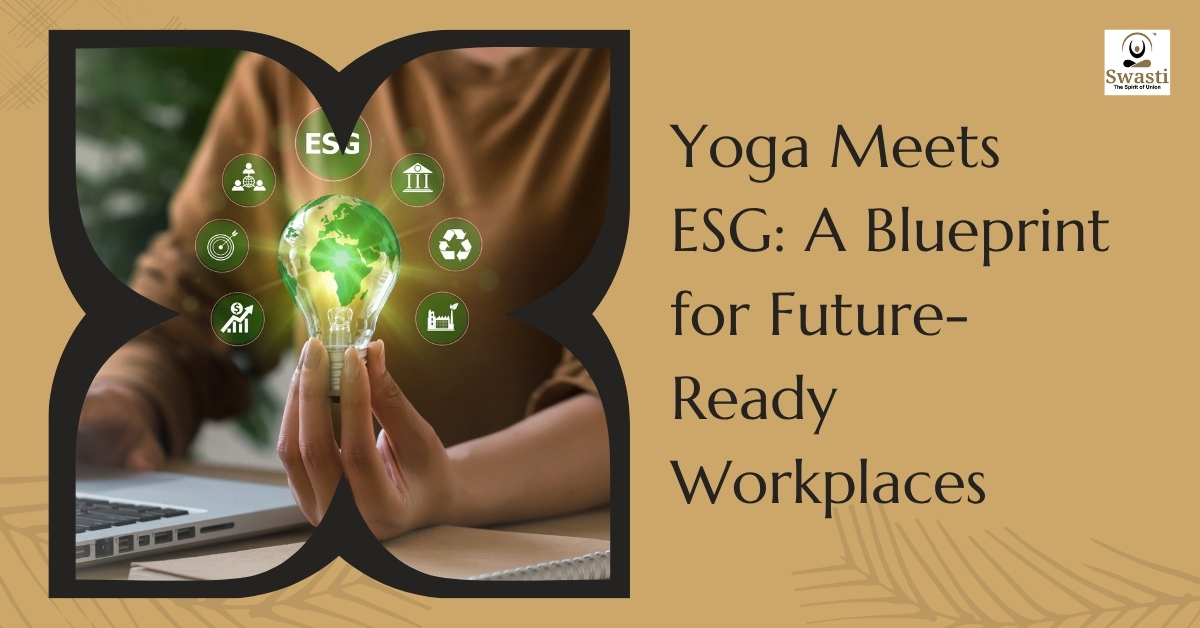
Yoga Meets ESG: A Blueprint for Future-Ready Workplaces

In todayโ€™s rapidly evolving business landscape, sustainability is no longer just a buzzwordโ€”itโ€™s a necessity. As companies embrace Environmental, Social, and Governance (ESG) principles to align with global responsibility trends, there’s an unexpected yet powerful ally waiting in the wings: Yoga. Integrating yoga into corporate ESG strategies isnโ€™t just about employee wellnessโ€”itโ€™s about unlocking holistic transformation, brand trust, and measurable business impact. Why ESG Needs a Wellness Pillar Like Yoga? Corporate ESG strategies often focus on environmental initiatives or diversity metrics. However a critical piece often overlooked is employee well-being. Burnout, stress, and mental health challenges are now leading causes of attrition and productivity loss. Hereโ€™s where yoga comes in. Rooted in ancient wisdom and validated by modern science, yoga enhances mental clarity, emotional intelligence, resilience, and physical healthโ€”traits directly contributing to the ‘Social’ and ‘Governance’ pillars of ESG. Yoga is more than just exerciseโ€”itโ€™s a lifestyle framework. Concepts like Ahimsa (non-violence) and Aparigraha (non-possessiveness) align naturally with environmental ethics and minimalist living. When adopted across a companyโ€™s culture, these values subtly push teams toward sustainable thinking, ethical governance, and conscious decision-making. Three Powerful Ways to Integrate Yoga into ESG Frameworks 1. Yoga as Part of Social Sustainability (S in ESG) The โ€˜Socialโ€™ aspect of ESG revolves around how a company treats its peopleโ€”diversity, inclusion, health, and well-being. By offering regular yoga and mindfulness programs, businesses can: Reduce absenteeism and healthcare costs Improve mental health, emotional intelligence, and interpersonal relationships Support inclusion by ensuring yoga is culturally inclusive and accessible to all levels of employees Companies like Google, TCS, and Infosys have embedded yoga and mindfulness into their employee development plans, reporting higher retention, creativity, and lower stress levels. Structured programs such as the Green Yoga Instructor Certificationโ€”specifically designed for corporate environmentsโ€”are gaining momentum. These programs equip wellness professionals with tools to teach yoga while also addressing sustainability, emotional intelligence, and mindfulnessโ€”making wellness a part of the companyโ€™s ESG fabric. 2. Promoting Environmental Consciousness through Yogic Living (E in ESG) Yoga teaches awareness and interconnectedness with the planet. Corporates can: Link yoga retreats or sessions with environmental causes (tree plantation drives, zero-waste challenges, plastic-free days) Encourage yogic values like Satvik (pure) food choices, which have a lower carbon footprint Promote mindful consumption and digital minimalism as part of workplace habits The Green Yoga Instructor Program, for instance, includes modules on climate-conscious living, workplace sustainability practices, and eco-mindfulness, helping companies meet their environmental goals while empowering wellness leaders within. 3. Yoga-Based Leadership and Governance Models (G in ESG) Governance isnโ€™t just about policiesโ€”itโ€™s about people making ethical, balanced decisions. Yoga improves self-regulation, emotional resilience, and clarity, which are essential leadership traits. HR can: Introduce yogic leadership training for CXOs and senior managers Integrate decision-making practices rooted in mindfulness (pause, reflect, act) Use yogic ethics as part of leadership KPIs or appraisal systems Companies committed to ESG and BRSR (Business Responsibility and Sustainability Reporting) have started integrating BRSR-aligned Yoga Programs, like those offered by Swasti Yoga Center, to foster leadership that is not only strategic but deeply rooted in ethics and self-awareness. These programs help businesses meet evolving reporting mandates while nurturing conscious leadership. Tips to Get Started: A 5-Step Plan for HR and ESG Leaders Begin with a Needs AssessmentSurvey your employees to understand stress levels, mental health needs, and openness to yoga. Use this data to design customized programs. Pilot a Wellness + ESG ProgramStart smallโ€”a 21-day mindfulness challenge or yoga-at-desk series that includes sustainability talks. Measure its impact on mood, productivity, and employee feedback. Collaborate with Certified Yoga ProfessionalsPartner with reputed centers offering structured ESG-aligned yoga programs, such as Green Yoga Instructor Certification or BRSR Yoga Training. Ensure cultural inclusivity and alignment with international wellness standards. Embed it in ESG ReportingTrack metrics like mental well-being scores, employee engagement, absenteeism, and carbon-conscious behavior. Publish them in sustainability or annual reports. Scale with Culture, Not Just ClassesIntegrate yoga in daily ritualsโ€”start meetings with 1-minute breathwork, include yoga-themed corporate gifts, or offer weekend yoga retreats linked with green travel. Market Opportunity: Where Yoga + ESG is Heading The global corporate wellness market is expected to reach $94 billion by 2027, with mindfulness and yoga programs leading the trend. Simultaneously, ESG investments are projected to cross $53 trillion by 2025, making up one-third of global assets under management. Imagine the synergy: A company offering yoga-based ESG programs signals to investors that it cares about its people and the planet. It boosts employer branding, attracts Gen Z and millennial talent who prioritize purpose over paychecks and creates organic PR through positive employee advocacy. Case in Point: A Vision for the Future A mid-size tech company in Pune recently implemented a โ€œGreen Yoga Workplaceโ€ model in collaboration with Swasti Yoga Center. The initiative included weekly yoga sessions, carbon-neutral office practices, and sustainable team-building activities like composting and community gardening. Within 6 months, they reported: 22% drop in stress-related sick leaves 34% increase in productivity scores A featured ESG case study in a leading investor newsletter Higher retention in mid-level management roles This is not just wellnessโ€”itโ€™s strategic transformation. Conclusion: Future-Ready Companies are Yogic and Sustainable As the world faces climate anxiety, burnout, and ethical crises, future-ready companies will not be defined by how fast they grow, but by how consciously they grow. Yoga fused with ESG offers a blueprint that is sustainable, ethical, profitable, and human-centric. For HR professionals, this is the moment to lead the changeโ€”not just for employee wellness, but for long-term corporate well-being. Start small, measure consistently, and scale mindfully. The ROI wonโ€™t just be in numbersโ€”but in purpose, peace, and planet-positive profits. Let yoga be not just a mat activity, but a boardroom strategy. By Dr. Vikas ChotheFounder, Swasti Yoga Center

Read More ยป
How International Yoga Day Can Transform Your Studio into a Global Brand

Global Yoga, Local Impact: How International Yoga Day Can Transform Your Studio into a Global Brand

In the age of global connectivity, yoga is no longer just an Indian heritage practiceโ€”itโ€™s a global movement. International Yoga Day (IDY), celebrated annually on June 21st, presents a golden opportunity for yoga centers across the world, particularly in India, to expand their outreach, branding, and impact. When yoga centers engage international students through exchange programs, immersive workshops, and cultural retreats during IDY, the results are profoundโ€”both for the students and the centers. This article is crafted for elite yoga and wellness professionals, studio owners, and holistic educators who wish to position themselves as leaders in the international wellness space. Here, we explore how IDY programs involving international students create ripple effects in branding, community-building, cultural diplomacy, and conscious living. 1. Branding Through Authentic Cultural Exchange Nothing builds a brand better than authenticity. IDY programs that invite students from various countries to experience yoga in its birthplace provide a uniquely immersive and transformative experience. These arenโ€™t just yoga classesโ€”theyโ€™re cultural immersions. When students learn yoga alongside practices like Ayurveda, Sanskrit chanting, tribal art like Warli, and Indian culinary traditions, your yoga center transforms into a living ashramโ€”a space of cultural integrity. Tip for Professionals:Bundle IDY programs with cultural components. Include hands-on workshops in Indian traditional cooking, Warli art, and mantra chanting. Let your participants live yoga, not just practice it. 2. Building Lasting Relationships through Families and Children International yoga programs often bring not just students, but their families. Children interact, exchange stories and games, and grow up with a better understanding of diversity. Mothers share wellness tips, healthy recipes, and family routines. Fathers bond over philosophy, culture, and music. This family-level interaction sows the seeds of long-term global relationships. Tip for Professionals:Create family-friendly IDY retreats. Include parallel childrenโ€™s yoga classes, parenting and wellness sessions, and healthy cooking demos for mothers. Consider offering an โ€œAdopt a Familyโ€ format, pairing Indian and international families for shared activities. 3. Organic Marketing and Global Outreach When international students and families return home, they become your most loyal brand ambassadors. They share their experiences on social media, blogs, and in their communities. This kind of organic word-of-mouth marketing is more powerful and credible than paid advertisements. The yoga center’s name becomes synonymous with cultural authenticity and deep healing. Tip for Professionals:Encourage your students to document their experiences. Provide a media kit or branded hashtags for them to use. Collect testimonials and offer referral benefits for returning students or new international enrolments. 4. Strengthening India’s Soft Power Through Yoga Diplomacy Every international yoga participant becomes a cultural ambassador for India. Their experience with Indian values, art, food, and lifestyle becomes an embodiment of Indiaโ€™s soft power. This is especially important when global politics are complexโ€”yoga serves as a bridge between nations and cultures. Tip for Professionals:Collaborate with embassies, consulates, and tourism departments. Share your IDY event reports and photos with Indian missions abroad. Offer annual scholarship programs for students from underrepresented countries. 5. Creating Yogic Citizens of Tomorrow Through immersive yoga and cultural exchange, children and young adults develop emotional intelligence, discipline, sustainability values, and compassion. These youth will become global citizens grounded in yogic ethics and mindful livingโ€”our future policymakers, entrepreneurs, educators, and environmental advocates. Tip for Professionals:Offer specialized youth exchange programs during IDY with themes like โ€œYoga for Climate Action,โ€ โ€œSustainable Living Through Yoga,โ€ or โ€œMindful Leadership for Youth.โ€ 6. A Platform for Local Arts, Crafts, and Tribal Traditions IDY programs serve as powerful platforms to showcase indigenous Indian knowledge systems and local artisanship. Teaching Warli art, for example, not only enriches the studentsโ€™ experience but also supports tribal communities, encourages eco-conscious living, and revives forgotten traditions. Tip for Professionals:Invite local artisans to your IDY programs. Organize exhibitions and live demonstrations. Offer local art as part of your take-home yoga kitsโ€”like hand-painted Warli bookmarks, eco-friendly bags, or Ayurvedic soaps. 7. Creating a Global Wellness Network When like-minded people meet through yoga exchange, lifelong professional collaborations emerge. Teachers collaborate across borders, yoga centers twin with each other, and new wellness ventures are born. IDY programs can act as international wellness summits that spark co-teaching, retreats, and even research collaborations. Tip for Professionals:Collect contact information and create an alumni network. Host annual virtual reunions or follow-up workshops. Create a WhatsApp group or private online community for ongoing discussion and cross-cultural learning. 8. Investing in Wellness, Not Just Tourism Unlike commercial tourism, yoga-based exchanges during IDY are investments in personal and family wellness. Participants leave with improved health, deeper awareness, and meaningful relationships. Theyโ€™re more likely to return, not as tourists, but as committed wellness seekers. Tip for Professionals:Position your IDY programs as โ€œWellness Investment Retreats.โ€ Offer pre- and post-retreat resources like meditation guides, healthy recipes, and personal mentoring to extend the benefits beyond the event. Conclusion: International Yoga Day is more than a symbolic event. Itโ€™s a transformative opportunity for yoga professionals to build community, expand their brand internationally, and strengthen Indiaโ€™s cultural influence. Through well-designed cultural exchange programs, yoga centers can foster lifelong relationships, create global wellness ambassadors, and position themselves as beacons of conscious living. As yoga professionals, our role goes beyond teaching postures. We are cultural curators, brand storytellers, and wellness diplomats. With the right strategy, IDY becomes not just a date on the calendarโ€”but a catalyst for global harmony, conscious commerce, and holistic growth.

Read More ยป
Why India Is the Ultimate Retreat for Global Content Creators

Why India Is the Ultimate Retreat for Global Content Creators?

In an age where authenticity is currency and stories are the bridge between cultures, content creators and writers worldwide are seeking deeper, more meaningful experiences. One such transformational journey awaits in the heart of India โ€” the land where yoga was born. For those looking to immerse themselves in a holistic way of living, a YCB-certified yoga course accredited by AYUSH (Ministry of Ayurveda, Yoga & Naturopathy, Unani, Siddha and Homeopathy) and cited by the World Health Organization (WHO) offers not just a wellness education, but a soul-stirring narrative to carry home. Why India? India is not just a country; it’s a mosaic of living traditions, spiritual depth, and ancient wisdom. Unlike a vacation that ends when you return home, a learning experience hereโ€”especially in the field of yogaโ€”continues to evolve with you. It is in India that yoga is not merely a fitness regime; it is a way of life that aligns body, mind, and spirit. For global content creators and writers, this immersive journey offers an opportunity to authentically capture the ancient and modern pulse of yoga at its very source. AYUSH & YCB Certification: Global Credibility with Ancient Roots The AYUSH ministry under the Government of India ensures the quality and authenticity of Indian traditional healthcare systems, including yoga. The Yoga Certification Board (YCB), established by the ministry, offers globally recognized certifications for various levels of yoga teachers and therapists. These are aligned with international standards and are even cited by the WHO in its global strategy for integrating traditional and complementary medicine into mainstream healthcare systems. This gives content creators not only a deeper, structured understanding of yoga but also a prestigious credential to add to their professional portfolio. Whether you’re a wellness blogger, travel journalist, documentary filmmaker, or a spiritual author, this adds depth and credibility to your narrative. Live the Story: Stay with an Indian Family What sets this experience apart is the chance to stay with an Indian family. This is not a hotel stay; itโ€™s an invitation into the everyday rhythm of Indian life. From waking up to the aroma of masala chai, to participating in home-cooked satvik meals and engaging in evening bhajans or temple visits, you are no longer an outsider. You become part of a story that you can later retellโ€”not from imagination, but from lived experience. The simple conversations with your host family often provide more insight than guidebooks. Their stories, traditions, and values begin to shape your perspective. Whether it’s understanding the significance of a turmeric-rubbed entrance or the quiet power of morning silence before prayers, these moments are gold for storytellers. Soaking in the Cultural Richness and Local Festivals Indiaโ€™s calendar is dotted with vibrant festivals, each with its unique rituals, colors, and energy. From dancing in the streets during Ganesh Chaturthi to lighting oil lamps during Diwali, or witnessing the spiritual austerity of Mahashivratri, these celebrations offer a vivid palette for creative documentation. Imagine doing yoga as the sun rises on the ghats of Varanasi, followed by attending a local Holi festival where youโ€™re drenched in colors and joy. Or learning pranayama in the Himalayas and later attending a folk dance night in a nearby village. This blend of physical practice and cultural immersion makes your yoga journey not just informative but artistically inspiring. Spiritual Vibes and Sacred Spaces India is dotted with powerful spiritual centersโ€”Rishikesh, Varanasi, Auroville, Dharamshala, and Pune, to name a few. These places resonate with centuries of meditation, devotion, and inner exploration. Practicing yoga and meditation here allows for a kind of spiritual transformation that is rare elsewhere. As a content creator, this is where your storytelling becomes experiential. You are not just writing about yoga philosophy; you are embodying it. Your words or visuals carry the stillness of a morning mantra chant, the vibration of temple bells, the scent of incense in a puja room, and the serenity of a forest walk post meditation. A Chance to Detox from Digital Overload In an increasingly fast-paced, digital world, creators often suffer from burnout, anxiety, and creative blocks. A yoga course in India offers an antidote. The structured daily routine, deep breathing practices, guided meditations, and mindful lifestyle provide a mental reset. The YCB course emphasizes ethical living (Yamas and Niyamas), conscious eating, balanced emotions, and a connection with natureโ€”all of which support mental clarity and creative revival. Cross-Pollination of Cultures and Ideas Yoga schools in India, especially those catering to international students, become microcosms of global unity. In your class, you might find someone from Brazil, Japan, Germany, or Kenya. The conversations during meal breaks and tea sessions evolve into cultural exchanges. For writers, this is a rich tapestry to draw fromโ€”ideas, perspectives, and global friendships blossom here. Sustainability, Simplicity, and Slow Living Many YCB-certified centers, like Swasti Yoga Center in Pune, are adopting eco-conscious practices such as zero waste, organic farming, and minimalistic living. This adds another layer of richness to your learning, showcasing how yoga and sustainability go hand in hand. These principles resonate deeply with modern audiences who are increasingly conscious of the planet and their impact. Documenting Your Transformational Journey Whether through a blog, vlog, podcast, or documentary, this journey becomes your transformational arc. From arriving as a seeker to returning home as a storyteller, your narrative is not just about India or yogaโ€”itโ€™s about finding stillness in chaos, discovering strength in simplicity, and embracing unity in diversity. Final Thoughts India doesnโ€™t just teach you yogaโ€”it transforms you through it. For global content creators and writers, this is not just a certification course. It is an invitation to walk the path of self-awareness while documenting a culture that continues to inspire millions worldwide. With its spiritual depth, cultural richness, and certified learning backed by global standards, India offers a once-in-a-lifetime opportunity to live the stories you long to tell. – Dr Rodan (Jordan)

Read More ยป
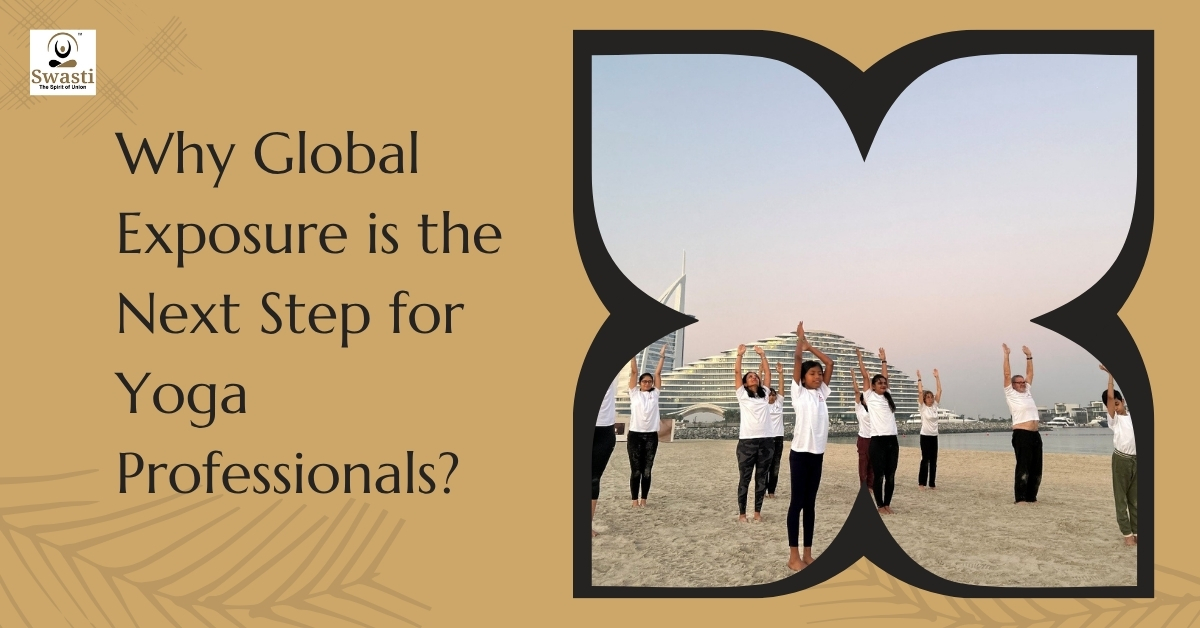
Why Global Exposure is the Next Step for Yoga Professionals?

Global Yogi: Why Global Exposure is the Next Big Step for Yoga Professionals

In the past year, headlines have read like plotlines from a sci-fi dystopia: “Thousands of tech workers laid off.” “AI is replacing coders faster than ever.” “ChatGPT can now write entire apps as worldโ€™s top coders.” The software industry, once the holy grail of job security, innovation, and global relevance, is now experiencing a reality check. From Silicon Valley to Singapore, software professionals are waking up to the sobering truth: AI isnโ€™t just a tool โ€” itโ€™s competition. But here’s the good news: In every crisis lies a hidden opportunity. What if I told you that losing your job to AI could be the best thing that ever happened to you? And what if I told you that your next career move isnโ€™t another coding bootcamp or startup hustle… but Yoga? Yes, you read that right. ๐Ÿ“‰ The Tech Tumble: Whatโ€™s Really Happening? AI platforms like ChatGPT, GitHub Copilot, and other generative technologies are not just enhancing productivity โ€” theyโ€™re replacing the need for large development teams altogether. Companies are downsizing. Tech roles are being consolidated. Even entry-level jobs โ€” the traditional gateway into software โ€” are evaporating. The stress is real. Burnout is widespread. And despite your technical prowess, you might be feeling replaceable for the first time. So… what now? ๐Ÿง˜โ€โ™‚๏ธ From Burnout to Balance: Why Yoga Makes Sense Many tech professionals donโ€™t realize this, but Yoga is more than a physical exercise. Itโ€™s a lifestyle, a science of mental clarity, emotional stability, and holistic health. It offers what the tech world lacks: inner peace. Here’s why yoga could be your ideal second career: 1. Youโ€™re Already Wired for Learning Engineers are analytical thinkers. Yoga, when taught authentically, has layers of anatomy, philosophy, psychology, and energy science. Your intellectual mindset gives you an edge in understanding and teaching yoga deeply. 2. The World Needs AYUSH Certified Quality Yoga Teachers Post-COVID, the global demand for wellness experts has skyrocketed. Corporates, schools, hospitals, and wellness resorts are hiring certified yoga professionals. Remote work? Global travel? Impactful purpose? Check, check, and check. 3. Freedom, Flexibility, and Fulfillment Yoga offers location independence, low investment, and high personal reward. You’re not chasing product deadlines anymore. You’re transforming lives, including your own. ๐ŸŒ Meet the Game-Changer: Swasti Yoga Center, India If you’re thinking about this pivot seriously, you need more than casual YouTube yoga. You need world-class, traditional, and globally recognized training. Enter: Swasti Yoga Center, Pune, India โ€” a government-certified institution offering Yoga Teacher Training Courses (YTTC) approved by AYUSH Ministry and Yoga Certification Board (YCB), Government of India. Swasti Yoga is not just a school. Itโ€™s a movement, a place where doctors, engineers, and corporate leaders come to realign their lifeโ€™s direction. ๐Ÿ’ก Career Guidance: How to Make the Shift Hereโ€™s a practical blueprint for software engineers considering yoga as a career: โœ… Step 1: Assess Your Readiness Are you passionate about helping others? Do you crave more meaning and health in your life? If yes, you’re ready. โœ… Step 2: Start Learning Enroll in a certified YTTC โ€” ideally 200 or 400-hour programs โ€” that provide a deep foundation in yoga philosophy, anatomy, teaching methods, and therapeutic applications. โœ… Step 3: Get Certified Choose AYUSH/YCB-approved certifications that are globally valid. Swastiโ€™s programs meet international standards, enabling you to teach worldwide. โœ… Step 4: Explore Career Options Post-certification, you can: Teach yoga online or offline. Work with corporates on stress management. Open a boutique yoga studio. Offer specialized sessions in therapy, kids yoga, prenatal yoga, or wellness tourism. โœ… Step 5: Grow Your Brand As a techie, your digital skills will give you an edge in building your wellness brand. Swasti even provides career mentoring and exposure to global collaborations. ๐Ÿ™Œ Real Stories, Real Transformation โ€œI lost my job at a major IT firm during the layoffs. I joined Swasti Yogaโ€™s 200-hour teacher training as a way to cope with stress. Within months, I felt physically healthier, mentally stronger, and emotionally calm. Today, I run a thriving online yoga studio helping other professionals find balance.โ€ โ€” Meera, Ex-Software Developer, now Yoga Coach ๐Ÿš€ Your AI-Proof Future Starts Now Letโ€™s face it โ€” the machines are only going to get smarter. But humans will always crave real connection, healing, and presence. Yoga is not just a profession โ€” itโ€™s a revolution of self-awareness. In a world driven by speed, yoga invites you to slow down, reflect, and rise with strength. So if your job was taken by AI, perhaps itโ€™s a cosmic nudge. Maybe itโ€™s time to upgrade not your skills, but your soul. And maybe, just maybeโ€ฆ your next big breakthrough is on a yoga mat, not a keyboard. ๐Ÿ”— Ready to Transform? ๐Ÿ‘‰ Learn more and enroll in internationally certified yoga teacher training programs at www.swastiyogacenter.com ๐Ÿ“ฉ Or email us at info@swastiyogacenter.com to begin your second career in wellness today.

Read More ยป

Add Yoga To Retain The Beauty Of Body And Mind

Vitae aliquam porta sed augue consectetuer. Parturient posuere sed habitasse quisque malesuada platea. Dis suspendisse integer ut facilisis maximus mus.