
๐Ÿ‡ฎ๐Ÿ‡ณ India | ๐Ÿ‡บ๐Ÿ‡ธ USA | ๐Ÿ‡ซ๐Ÿ‡ท France | ๐Ÿ‡ฒ๐Ÿ‡ฝ Mexico | ๐Ÿ‡ฆ๐Ÿ‡ช UAE

๐Ÿ‡ฎ๐Ÿ‡ณ India | ๐Ÿ‡บ๐Ÿ‡ธ USA | ๐Ÿ‡ซ๐Ÿ‡ท France | ๐Ÿ‡ฒ๐Ÿ‡ฝ Mexico | ๐Ÿ‡ฆ๐Ÿ‡ช UAE

Blog

News & Articles

Tech Neck

Tech Neck

Madhuri Patil Yoga and Diet Consultant Bad Posture? Are we aware about the bad posture? Are we aware about the change taking place in the curvature of the spine? If you are unaware of all these changes taking place in your body then try to notice few things. Are you regularly using mobile phones by taking your head slightly ahead or by bending forward in your neck and holding the mobile low? Are you continuously sitting in a chair for long hours and watching the laptop/computer screen? Then you are facing โ€œTech Neckโ€, you are facing a postural problem, extended neck, rounded shoulders, spasm and stiffness around the neck. Todays lifestyle changes due to maximum use of technology is leading all of us towards bad posture and lots of health issues. Therefore, how can we solve the postural problem. Few changes in the sitting position, together with some movements of your neck and shoulders which we call it as โ€œSukshmaVyyayamโ€ can bring changes in the posture of your neck, SukshmaVyyayam 1) Neck movements โ€“ moving of head side ways 2) Tuck your chin towards your chest 3) Expand your chest by slightly holding your hands behind your back. 4) Try to keep your palms on your forehead and press your head forward and palms on the head. This helps strengthening the neck muscles, same can be repeated on either sides, by placing your palms on temples 5) Raise your hands in shoulder levels and try to join them above your head backwards that is back of your palms should touch each other, this movement can be done dynamically. Many more SukshmaVyyayam can be done with the help of props for postural corrections. Props or Properties or Support is helpful when we are stiff in a particular joint or muscle or in Yogic language we have lot of Dukha making us weak at a particular area or region of our body. Dukha means bad space. Dus-meaning Bad, Difficult or Hard Kha-Meaning Space Which is generally translated as suffering, uneasy, uncomfortable, unpleasant, difficult
Read More ยป
Role of Yoga in Womenโ€™s life

Role of Yoga in Womenโ€™s life

Shubhangi Walkeย  ย ย  The definition of yoga states that, it is the harmonising system to develop body , mindย ย and spirit that means yoga develops anyone physically ,mentally ,emotionally and spiritually. God made men and women as equal to share the life, its rewards, its burdens, joys and sorrows. As we say that, men and women are the two wheels of life. But in today’s scenario, woman has to perform many roles as home maker, she have to perform family responsibilities, sometimes for her career she has to doย ย job or handle business responsibilities, bringing up children and all. With performing such roles she undergoes different stages of a life from childhood to old age these stages like she goes through physiological changes in her body like menstruation cycle, marriage, pregnancy menopause etc. All the physiological and psychological changes cause troubles in her life physically mentally and spiritually. But yoga plays a vital role in womenโ€™s life as it stabilises mental and physical health of women. In earlier days yoga is considered as an exercise but nowadays different research and studies shows that, it is not only a exercise but much more than that. There are many physical postures in yoga for women health like menstruation cramps, easy child birth, infertility , reduce depression and anxiety due to these physiological changes in her body. The research and study proves that the physical posters and the breathing patterns in yoga have considerable good effect on all the systems of the body like respiratory , digestive system, reproductive system, nervous system etc. Yoga is now being popular in all aspects as it is helpful in proper functioning of body and calm down mind. There are some asanas which are very helpful in problems like infertility andย ย ย pregnancy forย ย easy childbirth which is now going more popular as a pregnancy yoga. In old age also woman undergoes the menopause which will affect on her mental health and physical health, also yoga helps to control impulses and emotions of women in this all the phases of life by balancing the mind. Some asanasย ย ย ย like Baddha-konasana, Bhujangasana, Ustrasana, Supta baddha-konasana are very helpful in menstruation cramps and regulating periods. Women are the backbone of the family.ย ย ย So let’s make yoga is a part of your life and grow yourself physically mentally, emotionally and spiritually.

Read More ยป
Meditacion de AUM

Meditacion de AUM

Alba Cobos Yoga trainer atย Swasti Yoga Center Cuando escuchas โ€œOMโ€ lo primero que viene a la cabeza es Yoga e India. Y es que este sรญmbolo ya tiene gran popularidad por todo el mundo. No obstante, el significado, uso y los beneficios son menos conocidos. En la entrada de hoy, voy a intentar dar un poco de claridad a este sรญmbolo tan potente. Om en sรกnscrito es AUM y cuando cantamos โ€œomโ€ si decimos โ€œAUMโ€ obtenemos mรกs beneficios. Se ha demostrado cientรญficamente que con la vibraciรณn generada en el cuerpo cuando cantamos AUM, estimulamos el nervio craneal vago, que es uno de los nervios mรกs largos y complejos de nuestro organismo. Viaja desde el crรกneo hasta el abdomen y con su estimulaciรณn, estimulamos el sistema nervioso parasimpรกtico. Este forma parte del sistema nervioso autรณnomo que estรก divido en dos: el sistema nervioso simpรกtico y el parasimpรกtico. El simpรกtico tiene la funciรณn de activar al cuerpo mientras que el parasimpรกtico es el responsable de la relajaciรณn del cuerpo y de la mente. Asรญ que cuando cantamos AUM, activamos el nervio vago que a su vez activa el sistema nervioso parasimpรกtico creando una sensaciรณn de bienestar y relajaciรณn casi simultรกnea. ยกAdemรกs, es beneficioso para los pulmones! Con el sonido de โ€œAโ€ se estimula la zona inferior de los pulmones, con el sonido de โ€œUโ€ se estimula la zona media de los pulmones y con el sonido de โ€œMโ€ se estimula la zona superior de los pulmones. Creando esta estimulaciรณn, se obtiene una vibraciรณn que es muy positiva para la salud pulmonar. La vibraciรณn obtenida no termina en los pulmones, sino que se extiende hacia al pecho, garganta, frente, cuello y cabeza, creando a su vez una sensaciรณn de relax. El sรญmbolo representa los cuatro estados de conciencia que estรกn relatados en el Upanishad Mandukya (este es un texto clรกsico de la filosofรญa yรณguica). Estos estados son: Despierto (Jagrat), soรฑando (Svapna), dormido profundamente (shushupti) y estado de Turiya que es el estado de autorrealizaciรณn (o de consciencia universal). En el sรญmbolo tambiรฉn estรก plasmada la idea de Maya, que significa ilusiรณn, haciendo referencia a la dificultad de acceder al estado de Turiya porque nos creemos que el estado real es el de โ€œdespiertoโ€ y asociamos los elementos del mundo fรญsico con la รบnica realidad, guiando nuestro juicio a travรฉs de los sentidos. Esquema del dibujo del sรญmbolo y su significado. El estado de Jagrat: En este estado el Atman (nuestro yo supremo) se identifica falsamente con el kosha Annamaya (que es el cuerpo fรญsico mantenido por comida y agua). En este estado, Avidya (ignorancia) aflora, haciรฉndonos creer que todo lo que obtenemos a travรฉs de los sentidos es lo cierto. Si nos atascamos en este estado, no es posible seguir el camino ascendiente hacia un estado mรกs puro de consciencia. El estado de Svapna: Se refiere no solo a los sueรฑos cuando dormimos, sino que tambiรฉn hace referencia a cuando soรฑamos despiertos. En este estado, la consciencia estรก centrada hacia los objetos del interior de la mente y se mantiene atrapada hasta entrar en otro estado. El estado de Sushupti: Se refiriere a dormir. Al estado en el que nos hayamos cuando dormimos. El estado de Turiya: Es cuando no hay identificaciรณn con ninguno de los koshas y se siente consciente de la propia consciencia. Es en el estado en el que Avidya (ignorancia) se desvanece. Ahora que ya sabemos un poco mรกs de los beneficios y significado de โ€œAUMโ€, podemos empezar a cantar โ€œAUMโ€ y ser conscientes del efecto que este sonido tiene sobre nosotros, a nivel fรญsico, mental y โ€œsuper-conscienteโ€.

Read More ยป
Ideal Human being โ€“ His Dharma

Ideal Human being โ€“ His Dharma

Anupama Khandelwal According to Swami Vivekananda, man is essentially enlightened and is by nature divine. But due to the wrong education and theories, he starts believing that he is a sinner and starts worshiping external matter forgetting the spirituality within. A man should never forget his true nature โ€“ Svadharma. What is the meaning of Dharma? Dharma means the nature. For eg, Dharma of sugar is to be sweet in nature, Dharma of salt is to be salty in nature. Similarly, the Dharma of a human being is divinity, enlightenment, ability to understand the meaning and purpose of life. Chapter 4, Text 7 of Bhagvad Gita says that whenever there will be a decline of Dharma in the world, Lord Krishna will manifest himself. yada yada hi dharmasya glanir bhavati bharataabhyutthanam adharmasyatadatmanam srjamy aham What does the decline of Dharma mean here? Does this mean people will stop following religions, stop believing in God? No, Dharma here means the true nature of human being. Whenever the people will drift away from their inner self, consciousness, Dharma, Lord will appear. If Dharma would mean being religious, visiting temples, holy places, then the name of Kali yug would have changed to Dharma Yug

Read More ยป
El deber del gurรบ

El deber del gurรบ

Alba Cobos Gurรบ Purnima es un festival de origen indio, celebrado por los hindรบes, budistas y jainistas. En este festival se rinde respeto y homenaje a los guรญas espirituales o a los maestros. Una tradiciรณn muy enraizada en la cultura india, ya que tradicionalmente se considera a los maestros y gurรบs a la par con los padres. Es el gurรบ quien muestra un camino hacia la verdad, hacia el propio conocimiento y hacia la consciencia universal. El gurรบ, llamado por la curiosidad, guiado por su afรกn de preguntar y conseguir respuestas y a travรฉs de la propia experimentaciรณn, haya la luz de la verdad que, desterrando la oscuridad de las limitaciones de la mente, da entendimiento a el mundo que le rodea y a si mismo. No es sino desde la gratitud, humildad y compasiรณn que se dirige a sus discรญpulos o estudiantes, no para enseรฑarles el camino a recorrer sino para mostrar que hay caminos que pueden elegir para encontrar la verdad. Los gurรบs no dan todo hecho, como un manual de instrucciones, sino que te ayudan a nutrirte y prepararte para que tu mismo veas las posibles direcciones que puedes tomar. El deber del gurรบ no sรณlo se observa en la cultura india, sino que en muchos textos clรกsicos europeos se enseรฑa la importancia de ir en busca de la verdad y tratar de abrir los ojos de los otros para que asรญ tambiรฉn la vean. El mito de la caverna de Platรณn es una alegorรญa de las personas que buscan y encuentran la verdad. En una cuerva, se encuentran unos prisioneros que viven ahรญ desde su nacimiento. Acostumbrados a ver la sombra de los objectos del mundo fuera de la cueva, creen que la realidad de los objetos del mundo son las sombras que ellos ven en las paredes de la cueva. Los prisioneros representan aquellas personas ignorantes que no se cultivan, que dan por sentada su realidad y creen que esa es la รบnica manera posible de percibirla. Estos no sรณlo se sienten cรณmodos en la ignorancia, sino que se muestran hostiles hacia aquellas personas que muestran o seรฑalan otras perspectivas. Cuando un prisionero se escapa y ve el mundo exterior, se da cuenta de que lo que la gente percibe dentro de la cueva es sรณlo un espejismo de la realidad. Aunque sabe que los demรกs no le creerรกn, es su deber volver a los suyos y explicar lo que ha aprendido, a pesar de que le tomen por loco. Como en el mito de la caverna de Platรณn, el gurรบ o el que encuentra la verdad, tiene el deber de regresar a los otros encerrados en su propia percepciรณn de la realidad y mostrar la luz de la verdad.ย 

Read More ยป
How Yoga Practice Manage Diabetes?

How Yoga Practice Manage Diabetes?

Diabetes is currently considered an epidemic disease that is largely preventable and treatable through a balanced diet, exercise, yoga and lifestyle changes. Lack of physical activities and unhealthy dietary patterns are the major risk factors for the development of various lifestyle disorders, including diabetes. Psychological stress also increases the risk and severity of diabetes by 3 times. Moreover, individuals with diabetes have a reduced capacity to engage in exercise because of overweight and other diabetes-related complications, including cardiovascular disease, peripheral neuropathy and diabetic foot problem. According to the yogic concept, diabetes is generated by the imbalance of Manomayakosha or Mind and depends on the frequency and strength of desire and aversion. The purpose of this study is to identify the yogic concept of human body and diabetes and howย yoga practice manages diabetes. The human body is made with 5 layers. Annamayakosha made of physical material. Our all physical body parts come under this kosha. Second Pranamayakosha is the body of vital energy or prana.ย  All the cells in the Annamayakosha are getting the right quantity of prana or energy by the Pranamayakosha. The third layer is Manomayakosha or Mind. The fourth layer is Vijnanmayakosha. Whatever happens in our life; its soft copy is storing in this kosha. The fifth kosha is the Anandmayakosha or inner happiness or inner peace. All koshas are depended on it. Imbalance of Manomayakosha or Mind is playing an important role to produce psychosomatic illness like diabetes. In day to day life, we are aware of two conditions, like and dislike. Like generates attachment and dislike generates anger or grudge. In the yogic view, both are painful because both generate our imbalance of mind [stress]. Malfunctioning of Manomayakosha or Mind subsequently imbalances Pranmayakosha and Annamayakosha damage the pancreatic beta cells by slow process and persistent long term hyperglycemic response and person become the diabetic patient. By controllingย Manomaya kosha, practitioners are able to manage their emotions and they can improve satisfaction, peace, contentment, bliss. In this way, they can get rid of the diabetic situation and another similar disease. Studies show that meditation and yoga asana are effective in controlling diabetes. The dual practise can actually lower blood sugar levels and also help blood glucose control. Pranayama which actually means breathing exercises is an economical and healthy way to manage this lifestyle disease. Specific asana in yoga for diabetes can rejuvenate pancreatic cells, help in optimum glycemic control, regulate cortisol which is a stress hormone. Yoga also helps us to incorporate lifestyle changes more easily and naturally without force or compulsion. ย Awareness helps us in knowing what we are eating and whether we are getting full. ย This can lead in healthier food choices, improving nourishment, digestion and weight loss, mood, sleep and the need for less diabetic medication, in short, an overall improvement in the quality of life for those with diabetes

Read More ยป
Effective Yoga Practice that Helps in Obesity and Weight loss

Effective Yoga Practice that Helps in Obesity and Weight loss

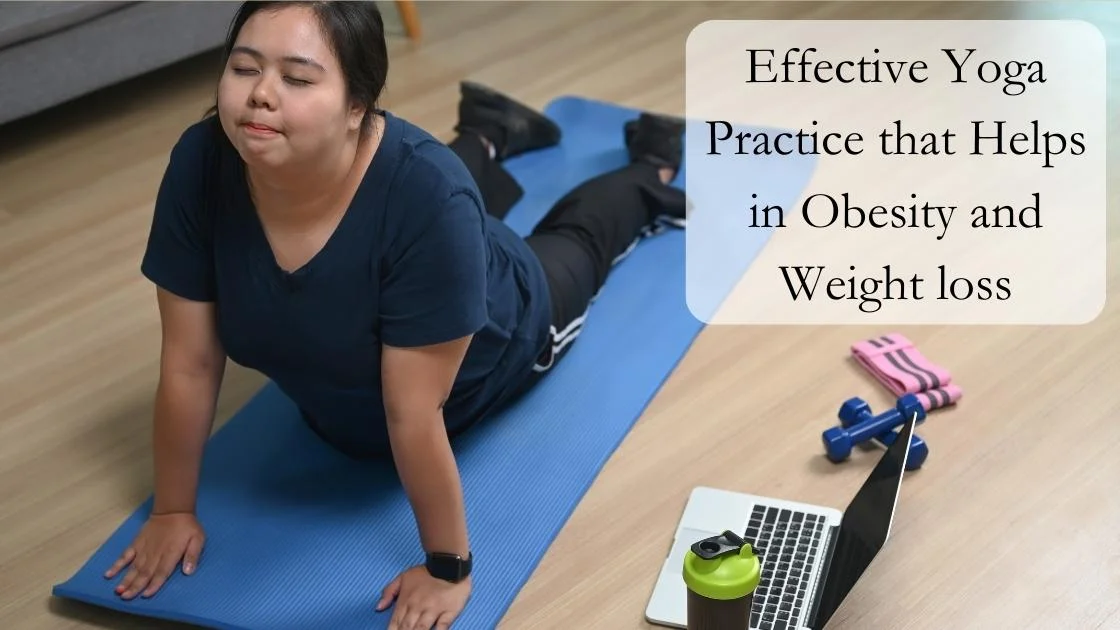
According to WHO, Overweight And Obesityย are defined as abnormal or excessive fat accumulation that may impair health? BMI (Body Mass Index) is a simple tool to classify overweight and obesity. Overweight is a precursor of obesity.ย  BMI ranging greater or equal to 25 indicates Overweight and BMI greater than 30 indicates Obesity. Statistics show a rise in Obesity since last few decades, especially in developed and developing countries. Thanks to the growing affluent societies, fat and sugar-rich food, over-use of technology leading to physical inactivity, sedentary lifestyle and urbanisation. Genetics, leptin-obesity link, Hormonal problems are too the causes of Obesity. The serious consequences of obesity are cardiovascular diseases & events, Diabetes Mellitus, Osteoarthritis, Cancers. Disabilities, breathing difficulties, risk of fractures, insulin resistance, varicose veins, Hiatus Hernia, Sleep Apnoea, Wrong posture, psychological disturbances are some of the consequences affecting the quality of life. Obesity is a lifestyle disorder and is largely preventable and reversed by modulating lifestyle. Yoga provides a holistic solution in terms of Yogic diet,ย Yogasanas, Pranayama, Kriyas, Yogic attitudes and philosophy to prevent as well as reverse obesity. ย Yoga doesnโ€™t only reduce obesity but also creates self-awareness. A study shows that yoga helps with behavioural change, weight loss, and maintenance by burning calories, heightening mindfulness, and reducing stress. These factors may help to reduce food intake and become aware of the effects of overeating. Suryanamaskarย plays a vital role in obese patients. It is a combination of multiple asanas, pranayama, mantra and meditation which makes it a complete practice in itself. It has influence over the endocrine and nervous system thus correcting the deranged metabolism. Yogasanas like Pawanmuktasana, Paschimottanasana, Trikonasana, Ushtrasana, Dhanurasana, Navasana, Halasana, Sarvangasana, Matsyasana, Ardhamatsyendrasana burn the excess fat, strengthen and tones the muscles. Pranayama like Bhastrika, Suryabhedi along with balancing practices like nadi Shodhan, Ujjayi, Sheetali, Sheetkari stimulate metabolism. Sheetkari helps control hunger and thirst thus helping to eat in moderation. Kriyas like Kapalbhati, Jaladhauti, ShankhPrakshalana are effective for obesity. Kapalbhati improves digestion, elimination of waste and toxins, reduces abdominal fat, tones abdominal muscles and strengthens the core. Kunjal Kriya alleviates the Kapha Dosha and thus controlling obesity. According to the researches, Meditation was found to reduce stimulation in the part of the brain linked to impulsiveness which is beneficial for mindful eating and reduction in impulsive snacking and overeating. Meditation helps to relieve stress, addresses emotional issues, controlling thoughts which are essential components for successful weight loss. Omkar chanting has immense benefits like controlling thoughts, emotions, improving hormonal balance, detoxifying mind and body. This has a positive impact on the weight loss journey by creating awareness and mindful eating. Regular practice of Khechari Mudra is known to control hunger and thirst thus helping in controlling weight. Yoga thus is a complete and proven science toย Fight Obesityย in a safe and effective way. Yoga practised on a regular basis under an expert gives long term benefits not only or obesity but also in terms of healthy body and mind. References: www.who.int Level 1 yoga textbook

Read More ยป
Breaking Free: How to Stop Worrying and Start Living

Breaking Free: How to Stop Worrying and Start Living

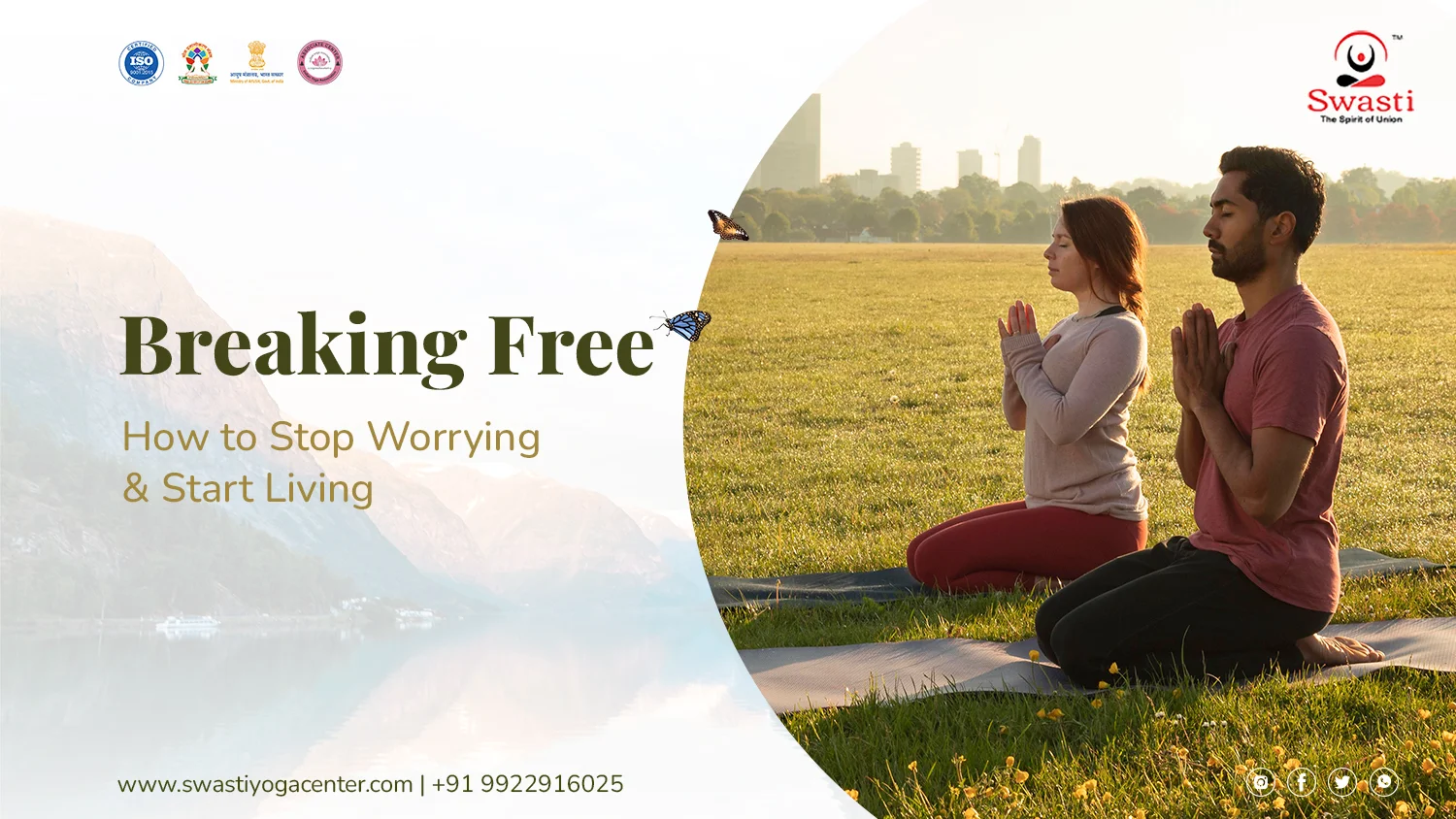
Worrying is a natural human emotion that assists us in anticipating future hazards and threats. When we start worrying in excess, it leads to unpleasant outcomes, such as anxiety, depression, and poor physical health. When you are constantly worrying about things beyond your control, it destroys your ability to concentrate, and then it is time to take action and start enjoying a worry-free life. Here are some suggestions to assist you in putting your worries to rest and live life to the fullest. Practicing Mindfulness and Meditation Mindfulness is the practice of being present in the present moment and accepting your thoughts and feelings without being judgemental. You might learn to monitor your thoughts and emotions without becoming caught up in them as a result of practising mindfulness. It might help you put a stop to your worrying and find peace in the current now. Meditation is a fantastic approach to providing serenity and tranquilly to a preoccupied mind. Many studies reveal thatย Meditation and mindfulness ease mental stressand anxiety. Breathing Right with Pranayamas Most people are unaware that there are two types of breathing patterns – Thoracic (chest) breathing and Diaphragmatic (abdominal) breathing. Breathing increases the supply of oxygen to your brain and promotes a feeling of calmness. Studies have shown that deep abdominal breathing for 20 to 30 minutes every day reduces anxiety and stress. Following Breathing practices like Kapal Bhati Pranayama (Skull shining Breathing technique), Nadi Shodhan Pranayama (Alternate nostril Breathing), Bhastrika Pranayama, and Bhramari Pranayama (Bee breath) can help free the clutter of thoughts and anxiety. Practicing Yoga Asanas Yoga helps release tension and negativity. It helps lower cortisol levels, heart rate, and blood pressure and is effective in treating depression and anxiety. Practising yoga postures such as Matsyasana (Fish pose), Dhanurasana (Bow pose), Hastapadasana (Standing Forward pose), Janu Shirsasana (One-legged forward bend), Setu Bandhasana (Bridge pose), Paschimottanasana (Two-legged forward bend), Adho Mukha Svanasana (Downward facing dog), Sirsasana (headstand), andย Shavasana (Corpse pose) can help youachieve a healthy mind and body. Taking Care of Oneself Self Care is essential for maintaining physical and mental health, especially when dealing with stress and anxiety. It might include getting adequate sleep, eating a good diet, exercising regularly, connecting with nature, going for an Aromatherapy spa session, and making time for activities such as listening to soothing music, singing, colouring, etc., that make you happy and relaxed. When you put your health first, you will be in a better position to face the challenges and uncertainties of life. Being Among Positive Minded People Breaking away from anxiety might be difficult, but you do not have to do it alone. When you spend time with positive-minded people, they may offer you the guidance, encouragement, and perspective you require to overcome your anxieties and begin living a better life. You are influenced by similar positive thoughts which in turn reflects in your positive attitude. A positive mind can breed peace, joy, and relaxation. At Swasti Yoga Center, we have knowledgeable and experienced doctors and yogis passionate about helping you overcome your challenges and lead a healthy life. Here, you will be able to connect with a supportive community as well as like-minded individuals who share common goals and beliefs. In addition to providing yoga classes, Swasti Yoga Center also offers Ayurvedic consultations, meditation classes, and massage therapies. https://www.healthline.com/health/anxiety/yoga-for-anxiety#standing-forward-bendย  https://hopeforhealingfoundation.org/17-simple-ways-to-relieve-worry-stress-and-anxiety/?gad=1&gclid=CjwKCAjwl6OiBhA2EiwAuUwWZUnWEGgMX6xg8Z3S4iZvJSwDaHjuwMPVMikzbF-UW2tCcd11wxZ2VxoC2y4QAvD_BwE https://www.ncbi.nlm.nih.gov/pmc/articles/PMC3415184/ https://www.artofliving.org/in-en/wellness/mental/holistic-living/yoga-tips-on-how-to-overcome-anxiety-disorder https://www.ncbi.nlm.nih.gov/pmc/articles/PMC5843960/

Read More ยป
Are You Taking Care Or Bombing Your System?

Are You Taking Care Or Bombing Your System?

Indigestion, what is it? How is it produced? And why it is so important to have a good diet and a strong and healthy mind. Did You Know That It Says That The Gut Is Our Second Brain?ย Yes, it is! This is because the intestine has more neurons than the spinal cord and acts independently of the central nervous system. The intestine is directed by the enteric nervous system, which is a “branch” of the autonomic nervous system, in charge of controlling the digestive system. The enteric nervous system spans the tissue that lines the digestive system, stomach, and intestine. Which has its own neural circuits. Although it functions independently of the central nervous system, it communicates with it through the sympathetic and parasympathetic systems. So, Now That We Know That Our Intestine Is Our Second Brain … Did You Realize That Many Times In Situations Of Stress, Anguish, Or Anger When You Ate Something, And Feel Sick? Do You Feel Heaviness?ย Or Even Worse, You Had Indigestion?ย BINGO! It is all related, for this reason, it is important to seek the balance of the BODY and the MIND.ย “Strong Mind-Healthy Body“ Indigestion is quite common today. Partly, it was already explained above. In our times, stress has increased, which produces emotions such as anguish, fear, anger, or other negative emotion. For that reason, I consider extremely important the daily practice of meditation which is a balm for our mind. Helping us “to slow down” and to transmute negative emotions. Those “negative emotions” that we accumulate day by day, week by week, month by month and year by year. Talking about our body, we should understand, for example, that โ€œfast foodโ€, which includes processed, deep-fried food with artificial colours, get you out of trouble in many situations, but is one of the worst things we can do for ourselves. Remember,ย You Are What You Eat! As well is important consider not to abuse of spicy food, high fibre foods, alcohol, tobacco, and the use of certain drugs such as antibiotics, anti-inflammatories, painkillers, and aspirin. All Of This Leads To A Slow Or Fast But Sure Disease Process. An Accumulation Of “Seasonings” Forming A Bomb Inside Us.ย Indigestion could be a warning, which later could end up in serious diseases such as gallstones, gastritis, inflammation of the pancreas, ulcers (intestinal and / or gastric). To Prevent This, I Invite You To Be Aware And Take Care Of Your “Temple” Accordingly. For those who suffer indigestion, I recommend a good and healthy diet: Food with flares and roughage in daily diet. Plenty of raw vegetables, fruit whole-wheat chapatis, etc. Fennel, cinnamon, ginger, and curcumin infusions can help for ingestion. Yoga Practiceย Can Be Immensely Helpful. I Will Recommend Different Types Of Asanas And Pranayama. Asanas:ย Uddiyana, Bhujangasana, Salabhasana (the posture), Salabhasana (the locust posture), Dhanurasana, Trikonasana, Pachimottasana(stretching the back and legs), Sarvangasana, Savasana. Pranayama:ย Bhastrika(bellows), Nadi-sodhana (Alternate breathing). By Luchi Benavides.

Read More ยป
Yoga - Mind Body and The Consistency

Yoga: Mind, Body and The Consistency

Arti Dhamale Yoga Instructor and Fitness enthusiastartidhamale@gmail.com “There is nothing training cannot do. Nothing is about its reach. It can turn bad morels to food; it can destroy bad principles and recreate good ones; it can lift men to ANGELSHIP.”-Mark Twain While reading one of the best sellers, motivational book, my eyes ran through this inspiring quote. This immediately took me to the yoga philosophies and our old texts which explains way of living. The same is beautifully portrayed in paths of Yoga which takes some resemblance from Bhagwat Gita (Page 83). The Jnana yoga, also known as the treacherous path (shows the path for self-realization). Jnana Yoga is typically characteristic of the non-dualistic (Advait) Vedanta. Here we learn to discriminate self from non-self (ego, body, mind and intellect) to find the real self. As Maharshi Patanjali said: YOGAH CHITTA VRUTTI NIRODHA Its only mixed modification which lead to miseries as well as our happiness. So, at the last we have our mind to make modification to reach our life goals.Jnana yoga provides ways to reach our goals by following SadhanaChtushtaya (how to learn Veda) which explains: 1.ย Vivek (Nityanityavastuvivek)ย i.e. the knowledge which helps us to make Discrimination between real and unreal. Itโ€™sย being able to identify what is changing and what is non-changing; what is short-term and what are long-term benefits in life. 2.ย Viaragya (non- attachment)ย i.e. we should attain non-attachment towards the fruit of our deeds which eventually leads us to release the feelings: Sukhanishayi raga, dukhanushayiDvesh (The things which makes us happy we get attached to it and the ones which gives us pain we hate that) 3. Shat Sampat (SamaadiShaktasampathi) – in ancient time itโ€™s said that strength of character is very essential. The Shat Sampat are the six virtues that contribute towards oneโ€™s greatness in character โ€“ hence termed as wealth. a. Shama(Calmness) โ€“To sharpen the intellect, you first need to calm the mind. Without peace your mind become dull and you donโ€™t understand anything happening around you. Suppose you see someone doing wrong and you get angry instead keep yourself calm and educate the other person about their mistake. And if they are not willing to understand, then ignore and move on.This ability to keep a calm mind under any kind of circumstances with sense of detachment is Kshama. b. Dama(self-control) โ€“ turning Jnanaindirya and karma indriya away from Vishay i.e. self-control over your senses. For example, you want to study but your mind says to watch movie and you watch movie, in spite of knowing that you should study. To have Dama means to have a perfect alignment between your mind and your senses. c. Uparati(detachment) โ€“ Means Enjoying everything that you do, even if its small. It means to have enthusiasm in whatever you do. One who does not have enthusiasm cannot create or invent anything new. Uparati means to do everything wholeheartedly, finding joy and taking total interest in it. d. Titiksha(Patience) – Titiksha means forbearance. This helps us to live in any situation and surrounding. Nothing hampers our individuality. You Stand firm in front of people and unpleasant or negative people are not able to pull you down. U remain unaffected and focused on your goal.To maintain a balance and be able to bear it when undesired situations arise in life โ€“ that is a sign of having Titiksha. e. Sharadha(faith) -Shraddha means to adore something that you donโ€™t completely know. Eg. Faith on guru or faith on Doctor.You do not need to have faith in what you already know. Faith is always in something that you do not know, yet you feel a sense of connectivity to that unknown. Putting a foot forward before you get the fruit of the action is called Shraddha. f. Samadhan(content) – Samadhana means contentment. A person who content exuberates a certain sense of joy from deep within. Contentment is not lethargy. Do not confuse contentment with lethargy. Contentment is creativity, and creativity blossoms in us when there is Samadhana. 4. Mumukshatva- It is the desire to be free. Holding on tightly to the keys of the house and wanting to control everything is a sign of lack of Mumukshatva, and knowledge cannot dawn in such a state.Accept the things as they are, you live your life and let others live. Do not control anybody or anything. Let Life flow and let everybody enjoy it, learn from it and cherish it. So, coming back to our Start point, whatever we can think of, imagine of, we can achieve with persistence, determination and focus. This is poetically demonstrated by the great poet Vrunda: โ€œKarat Karatabhyas k jadmati hot sujan,Rassiaawatjatte, sil par paratnisan.โ€ Same is written by Paatanjali in Yoga Sutra: TatraSthitiyatnoabhyasahAbhyaseVishamVidya. To walk in any situation and doing continuously is โ€œAbhyasโ€ and can lead to achieve your goal, as the persistent rubbing of rope also makes mark on the stone. Bhagwat Gita has defined how to study Vedanta under Guruโ€™s guidance in 3 stages: 1. Shravana (Listening) 2. Manan (Reflection) 3. Nidhidhyasana (Continuously repeat the process) Weather itโ€™s India or any other country, the only way to master any field is that you need to work on the factor which finally leads to Liberation. Liberation from everything, the emotional or physical attachment to all the worldly thoughts. It takes efforts and time to get what you want and for that you should follow Shravana, MananaNidhidhyasana. It might not always look like that our all efforts are that effective but still keep going and have trust they are! And once they reveal your success, every dot will be connected, and everything will make sense. KEEP GOING!!!

Read More ยป

Add Yoga To Retain The Beauty Of Body And Mind

Vitae aliquam porta sed augue consectetuer. Parturient posuere sed habitasse quisque malesuada platea. Dis suspendisse integer ut facilisis maximus mus.