๐Ÿ‡ฎ๐Ÿ‡ณ India | ๐Ÿ‡บ๐Ÿ‡ธ USA | ๐Ÿ‡ซ๐Ÿ‡ท France | ๐Ÿ‡ฒ๐Ÿ‡ฝ Mexico | ๐Ÿ‡ฆ๐Ÿ‡ช UAE

๐Ÿ‡ฎ๐Ÿ‡ณ India | ๐Ÿ‡บ๐Ÿ‡ธ USA | ๐Ÿ‡ซ๐Ÿ‡ท France | ๐Ÿ‡ฒ๐Ÿ‡ฝ Mexico | ๐Ÿ‡ฆ๐Ÿ‡ช UAE

Blog

News & Articles

Mastering the Art of Teaching: A Studentโ€™s Journey Through 400-Hour Advanced Yoga Training

Mastering the Art of Teaching: A Studentโ€™s Journey Through 400-Hour Advanced Yoga Training

Ciao, Iโ€™m Alice Boragno from Italy, and Iโ€™m excited to share my unforgettable journey through the 400-hour advanced yoga training at Swasti Yoga Center. If youโ€™re new to yoga or curious about how a deep dive into this ancient practice can transform your life and career, this story is for you. A Quest for Authentic Knowledge When I began my search for a teacher training program, I was determined to find one that offered authentic knowledgeโ€”not just the physical postures, but the rich philosophy, culture, and lifestyle behind yoga. I wanted a course that would deepen my understanding and empower me to share this wisdom with others. I was looking for a teacher training that would give me authentic knowledge and I couldnโ€™t have chosen a better course. Learning from True Masters Studying at Swasti Yoga Center was a revelation. Under the guidance of Dr. Shweta and Dr. Vikas, who truly live yoga in their everyday lives, I was immersed in a world where yoga wasnโ€™t just a practiceโ€”it was a way of life. Their infinite culture and dedication shone through every lesson, making each day a new discovery. As they say, studying with them was an honour and a pleasure! The training was comprehensive: it covered everything from advanced asanas to deep dives into yoga philosophy. I even learned Sanskrit chantingโ€”a skill I never imagined I could acquire. But most importantly, I take with me a profound understanding of the philosophy of yoga, teachings that continue to enrich my daily life.   Immersed in the Heart of Indian Culture One of the highlights of my journey was the opportunity to live close to my teachersโ€™ family. For two incredible weeks, they โ€œadoptedโ€ me as a daughter, sister, and cousin. I experienced real Indian traditions firsthand, from home-cooked meals and local rituals to lively conversations that made me feel truly at home. I experienced some real Indian traditions and some of the most genuine and fond relationships ever. The only hard part of all this was leaving ๐Ÿ™ Transforming My Career and Life This 400-hour advanced training was more than just an educational courseโ€”it was a life-changing experience. It gave me the skills and confidence to step into the role of a yoga teacher, a journey that has since blossomed into a thriving career. The authentic teachings and immersive cultural experiences at Swasti Yoga Center have not only enriched my personal life but also empowered me to share the transformative power of yoga with others. Why Swasti Yoga Center? If youโ€™ve ever dreamed of a career that combines wellness, deep personal growth, and a touch of adventure, I wholeheartedly recommend exploring the world of yoga at Swasti Yoga Center. Here, youโ€™re not just learning a practice; youโ€™re embracing a lifestyle that nurtures your mind, body, and soul. Whether youโ€™re just starting out or looking to advance your skills, Swasti provides an authentic, immersive experience that will leave you inspired and empowered. Join us at Swasti Yoga Center and begin your own transformative journey. Discover the art of teaching, the beauty of ancient traditions, and the joy of a community that feels like family. Namaste, Alice Boragno

Read More ยป
How a 200-Hour YTT Program Opened Doors to a Thriving Yoga Career?

How a 200-Hour YTT Program Opened Doors to a Thriving Yoga Career?

Namaste, Iโ€™m Floor Slagter, a psychologist and founder of a Learning Center in Tilburg, Netherlands, and a proud YCB-AYUSH Level 1 student at Swasti Yoga Center. My journey into the world of yoga began with a quest for authenticityโ€”one that resonated with my desire for personal growth and professional enrichment. Today, Iโ€™m excited to share how my immersive 200-hour Yoga Teacher Training (YTT) program at Swasti not only transformed my career but also enriched my life in ways I had never imagined. Discovering Authentic Yoga in India Before stepping onto the yoga mat, I was deeply engaged in the world of psychology, constantly seeking ways to enhance my practice for the benefit of my clients. I yearned for an authentic experience that could integrate holistic well-being into my work. My search led me to India, the birthplace of yoga, where I discovered Swasti Yoga Centerโ€”an institution accredited by the government of AYUSH. This accreditation reassured me that I was embarking on an in-depth, genuine journey into the world of yoga.   A Transformative 200-Hour Journey I did the full-time 200-hour authentic yoga teacher training at Swasti Yoga Center, and it was an absolute delight! I wanted to learn authentic yoga, not only for my own development but also to enrich the courses I deliver as a psychologist. From day one, the course impressed me with its balance of one-on-one attention and group interactions, allowing for a personalized yet communal learning experience. The teachers, with their vast knowledge and wisdom, created an environment that was both nurturing and intellectually stimulating. What Made the Experience Exceptional? Comprehensive Curriculum: The training covered essential aspects such as anatomy, yoga philosophy, and teaching skills, providing me with a robust foundation to explore yoga beyond the physical postures. In-Depth Cultural Immersion: Living with an Indian family was one of the most transformative aspects of the program. It allowed me to learn about yoga from withinโ€”experiencing the rich tapestry of Indian history, culture, daily life, and even the nuances of the local kitchen. Holistic Learning: Beyond the technical knowledge, I was introduced to the profound spiritual heritage of yoga through local excursions, community celebrations, and cultural exchange programs. Participating in seva at the ISKON temple and engaging in yoga education for school children further deepened my appreciation for this ancient art. Embracing a Global Yoga Community Joining the Swasti community opened doors to a network of like-minded individuals who share a passion for wellness and self-discovery. The global connections I forged during my training have been instrumental in shaping my thriving yoga career. Whether through exclusive community celebrations or intimate cultural exchange programs, every interaction reinforced my belief in yoga as a transformative life practice. The Impact on My Career and Lifestyle The 200-hour YTT program at Swasti Yoga Center was a rich, lifetime experience that went far beyond traditional education. It empowered me to integrate yoga into both my personal life and professional practice. As a psychologist, the insights gained from yoga have deepened my understanding of mindfulness and well-being, enhancing the quality of care I offer my clients. Today, I proudly recommend Swasti Yoga Center to all yoga enthusiasts, particularly those seeking an opulent, authentic journey that merges yoga with wellness. For anyone curious about authentic yoga, I wholeheartedly recommend visiting Pune and experiencing life as a yogi with an Indian family at Swasti. Immerse yourself in the rich history, culture, and community that define Swasti Yoga Center, and take the first step towards a transformative global journey. Floor Slagter

Read More ยป
From Beginner to Certified Yoga Teacher: A Global Studentโ€™s Journey at Swasti Yoga Center

From Beginner to Certified Yoga Teacher: A Global Studentโ€™s Journey at Swasti Yoga Center

Namaste, Iโ€™m Lionel Jeannin โ€“ Founder of Swasti Yoga Vosges, retired engineer, and, most importantly, a devoted student of Swasti Yoga Center. My yoga journey has taken me from the precision of engineering to the soulful world of yoga. Today, Iโ€™d like to share my transformation, in the hope that those unfamiliar with yoga will feel inspired to explore this life-changing practice. A Leap of Faith: From Engineer to Yoga Enthusiast I once spent my days immersed in technical details and engineering calculations, but my heart yearned for something deeper. My journey began when I decided to travel to India in search of spiritual growth and a greater understanding of life. There, I enrolled at Swasti Yoga Centerโ€”a place that not only teaches yoga but also nurtures a sense of community and self-discovery. The Path of Certification and Continuous Learning At Swasti Yoga Center, my education was both rigorous and heartwarming. I started as a beginner and, over time, earned my YCB-AYUSH certification as a: Level 2 Yoga Wellness Instructor Level 3 Yoga Teacher And now, Iโ€™m pursuing Level 4 Yoga Master These certifications have been more than just qualifications. They represent milestones on my personal journeyโ€”a journey filled with growth, compassion, and deep inner exploration.   Immersed in the Culture of Yoga India opened my eyes to the multifaceted world of yoga: Temple Visits & Spiritual Immersion: I had the privilege of visiting ancient temples, each echoing centuries of tradition and spirituality. Kirtan and Bhakti Yoga Activities: Participating in soul-stirring kirtans and bhakti sessions helped me connect with my inner self and foster a profound sense of community. Historical Insights: A visit to the Shivaji Maharaj FACT museum allowed me to understand the historical development of yoga, blending ancient wisdom with modern practice. These experiences enriched my understanding of yoga far beyond its physical posturesโ€”they nurtured my spirit and connected me with fellow seekers from around the world. Community Celebrations and Cultural Exchange The journey didnโ€™t end in India. When the Swasti Yoga faculty brought their expertise to France, they organized events that celebrated the universal spirit of yoga: International Yoga Day Celebrations: Engaging communities, schools, and even culinary institutes with Ayurveda cooking workshops, these events were a testament to how yoga can be a bridge between cultures. Building a Global Community: Through workshops, classes, and lively discussions, I forged lasting friendships and a supportive network that continues to inspire my work. A New Chapter: Sharing Knowledge Locally Today, I am proud to say that yoga has given me a fulfilling career. I not only teach yoga but also contribute to spreading its wisdom in my own way. One of my proudest achievements is translating the Panchatantra and Yogasutra into French, making these timeless texts accessible to my local community in France. Why Swasti Yoga Center? For anyone curious about yoga, especially those coming from different walks of life, Swasti Yoga Center is more than a place to learn poses. It is a sanctuary where: Beginner-Friendly Approach: Even if youโ€™re new to yoga, the guidance here is gentle, supportive, and clear. Holistic Learning: The center embraces the full spectrum of yogaโ€”from physical postures to spiritual insights and historical context. Community & Connection: Youโ€™ll join a diverse community that values learning, growth, and mutual support. If youโ€™ve ever wondered how to start a career in yoga or simply wish to explore a path of self-improvement, I wholeheartedly encourage you to take that first step with Swasti Yoga Center. Final Thoughts My journey from an engineer to a certified yoga teacher has been transformative in every sense. I discovered that yoga is not just a form of exercise, but a pathway to inner peace, community connection, and lifelong learning. I invite you to begin your own yoga journeyโ€”experience the profound changes that await and join a community that truly cares. Embrace the practice, nurture your soul, and step into a world where every breath brings new beginnings. Dhanyawad Lionel Jeannin

Read More ยป
Azariah Mohrโ€™s Yoga Journey: From USA to India, A Life-Changing Experience at Swasti Yoga

Azariah Mohrโ€™s Yoga Journey: From USA to India, A Life-Changing Experience at Swasti Yoga Center

My Transformational Journey with Swasti Yoga Center: A Life-Changing Experience My name is Azariah Mohr, and I’m a Botany student at Cal Poly Humboldt College in California. For years, I practiced yoga through online videos and local studios, but I always felt something was missing. I wanted to take my passion to the next level and become a certified yoga teacher, but I had no idea where to start. Thatโ€™s when I found Swasti Yoga Center in India, and my life changed forever. The Decision to Join Swasti Yoga After months of researching different yoga teacher training programs worldwide, something about Swasti Yoga just felt right. The authenticity of traditional Indian yoga, the globally recognized certification, and the balance of ancient wisdom with modern teaching methods made it stand out. I attended a few online introductory sessions and spoke with past students, and their experiences reassured me that this was the perfect place for me. One of the key factors that convinced me was the Ayush Certification offered by Swasti Yoga. While Yoga Alliance accredits many yoga programs, I realized that Ayush Certification is recognized by the Government of India, making it a more authentic and prestigious qualification in the field of yoga. Unlike Yoga Alliance, which primarily focuses on the commercial aspect of yoga teacher training, Ayush Certification ensures in-depth knowledge, rigorous training, and adherence to traditional Indian yoga principles. This gave me confidence that I was receiving a comprehensive and government-backed education in yoga. “Even before arriving in India, I deeply connected with Swasti Yoga. The warmth of the mentors and their passion for yoga was something I had never experienced before.”   My Journey from Beginner to Certified Teacher When I arrived in Pune, India, I was welcomed with open arms by the Swasti Yoga faculty and fellow students from different countries. My journey started with the 200-hour Yoga Teacher Training (YTT) program, which was an intense yet enriching experience covering asanas, pranayama, meditation, philosophy, anatomy, and teaching methodology. The Challenges I Faced As a beginner in formal yoga education, I initially struggled with maintaining postures for long durations and remembering the Sanskrit names of yoga poses. But the personalized attention from my instructors and the supportive learning environment helped me push through. “The teachers didnโ€™t just teach me yoga asanas; they helped me understand the deeper essence of yoga. It wasnโ€™t just about flexibility; it was about discipline, breath control, and mental peace.” An Unforgettable Learning Experience Swasti Yoga Center provided an education that extended far beyond the yoga mat. I had the opportunity to participate in so many unique and immersive activities that shaped my understanding of yoga and wellness: Study Tour to IIT Bombay โ€“ A fascinating experience where I learned about the scientific research behind yoga. Visit to an Ayurveda College โ€“ Gaining insights into holistic healing and how Ayurveda complements yoga. Anatomy & Physiology Session in a Medical College โ€“ Observing real human organs and models in the dissection hall, deepened my knowledge of the human body. Visit to ISKCON Temple โ€“ Exploring the spiritual aspect of yoga through Bhakti Yoga, participating in seva (selfless service), and engaging in community activities. Discipline & Daily Routine โ€“ Waking up at Brahmamuhurta (before dawn) for daily yoga practice, taught me the power of self-discipline. Karma Yoga Initiative โ€“ Teaching yoga to maids and domestic helpers, allowing me to understand the true meaning of selfless service. These experiences not only enriched my learning but also gave me a deeper understanding of how yoga extends beyond physical movementโ€”itโ€™s a way of life. Experiencing Indian Culture Beyond the yoga training, my time in India was filled with beautiful cultural experiences. From savoring authentic Indian food to participating in local festivals and traditional ceremonies, I felt deeply connected to the spirit of India. The hospitality of the people was overwhelming, and their kindness made me feel at home. I explored the vibrant markets, learned about Ayurveda, and even tried my hand at preparing Indian meals with my fellow students. “What touched me the most was the warmth and generosity of the people. They welcomed me as one of their own, and I felt like I was part of a big, loving family.” My Transformation During my time at Swasti Yoga, I underwent a profound transformation, both physically and mentally. Physical Growth: I developed flexibility, strength, and endurance, mastering asanas that once felt impossible. Mental & Emotional Growth: The daily meditation and pranayama sessions helped me manage stress and cultivate a sense of inner calm. Professional Growth: By the end of the course, I gained the confidence to teach yoga and structure a class effectively. Life After Certification When I completed my 200-hour YTT certification, I returned to Canada with not just a globally recognized qualification but also a newfound sense of purpose. I started offering private yoga classes, leading group sessions at wellness centers, and even launched an online yoga coaching platform to reach a wider audience. Since my certification is Ayush-approved, I found that I was able to stand out in the competitive yoga market. More students trusted my expertise because of the credibility that comes with government-recognized training. This allowed me to work with wellness centers, collaborate with health professionals, and even attract international students to my online classes. “Swasti Yoga didnโ€™t just give me a certificate; it gave me the confidence and knowledge to turn my passion into a career. Now, I wake up every day excited to share the gift of yoga with others.” Looking Forward to Returning to India One of the most unexpected joys of this journey was my deep connection with Indian culture and the people I met. I never imagined that in just a few months, I would fall in love with the country, its traditions, and its way of life. The friendships I built and the spiritual experiences I had are something I will cherish forever. “I know that this isnโ€™t the end of my journey with India.

Read More ยป

Confronting Abhinivesh

Abhinivesh, one of the many causes of suffering, is a concept we can relate to through our daily experiences. It refers to the fear of death or the strong desire to cling to life, even when it may not be fulfilling. Why do we fear death when we are alive in the present moment? Consider how a baby instinctively stops at the edge of a table while crawling. Could this fear of falling stem from past experiences with death? Perhaps it’s a memory imprinted in our subconscious. We often playfully talk about our loved ones being reborn. My grandmother adored my brother immensely, even in her final days referring to him as her own son. Her attachment was profound. When our niece was born (my brotherโ€™s daughter), we all felt as though Grandma had returned with her๐Ÿ˜Œ เคฎเฅ‡เคฐเฅ€ เคฆเคพเคฆเฅ€, เคญเคพเคšเฅ€ เค•เฅ‡ เคฐเฅ‚เคช เคฎเฅ‡เค‚ เคตเคพเคชเคธ เค† เค—เคˆ เคญเคพเคˆ เค•เฅ‡ เคชเคพเคธ. Could it be that we’ve lived multiple lives before, forming strong attachments to our identities and bodies? We can better understand this through our past riding experiences. Even if you haven’t ridden a scooter in a long time, you can still ride today with minimal practice. Is it because of practice or past experience? Muscle memory ? Absolutely. That’s precisely what I’m trying to convey. Yoga teaches us to silence the mind and attain liberation. Yet, attachment to material possessions, relationships, or even our own egos can hinder our progress. Living a fearless life undoubtedly requires fearlessness, particularly regarding death. However, achieving this state is challenging. Maharshi Patanjali’s Yoga sutra “Swaraswahi Vidushopi Tatha Rudho Abhinivesh” says that even knowledgeable/wise individuals can be strongly attached to their existence or identity. This means, Understanding yoga principles alone may not be enough for liberation, as people can still be tied to their identity even if they grasp them intellectually. In simpler terms, even highly intelligent individuals, like CEOs who can distinguish between flattery and honesty among their colleagues, may still prioritise bolstering their ego. I am taking the liberty to define Abhinivesh simply as โ€œfearโ€. In today’s world, despite medical advancements and trust in modern medicine so much so that a diabetic person freely eats sugary food items. Life expectancy has doubled since independence. Then what do we really fear? What are we afraid of? – Are we afraid of how we’re perceived? Feeling the need to conform to certain appearances because of our roles, like dressing a certain way as a school principal or speaking a certain way as a yoga instructor? – Do we fear change? Sticking to our current job because it’s familiar, even if we yearn for something different, simply because it’s comfortable? Is not this fear of change, keeping us stuck in familiar but unfulfilling routines? Trust me I have seen as well experienced this. – Do we fear societal expectations? Whether it’s owning high-end cars or wearing branded clothes? – Are we afraid of physical harm, restricting our children from play out of fear they may get hurt? – Fear of Missing Out, commonly known as FOMO, refers to the anxiety people feel when they believe they might be missing out on something exciting or interesting happening elsewhere. I read somewhere โ€œFOMO is like being stuck in a game of musical chairs, except the music never stops and the chairs keep multiplying.โ€ – Are we afraid of being judged? เคฒเฅ‹เค— เค•เฅเคฏเคพ เค•เคนเฅ‡เค‚เค—เฅ‡? เค›เฅ‹เคŸเฅ‡ เค•เคชเคกเฅ‡, เคฌเคนเฅเคค เคœเฅเคฏเคพเคฆเคพ attitude, เค•เฅเค› เคœเฅเคฏเคพเคฆเคพ เคนเฅ€ social etc. The constant worry of what others will say or think can hold us back from giving our 100% in everything we do. Managing fear isn’t enough; we must strive to overcome it. Maharshi Patanjali offers solutions tailored to the intensity of our suffering. In my next blog, I’ll delve deeper into Patanjali’s teachings on overcoming these causes of suffering. Stay tuned! Meanshile listen to Piyush Mishraโ€™s famous song โ€œเค†เคฐเคฎเฅเคญ เคนเฅˆ เคชเฅเคฐเคšเคฃเฅเคกโ€, sharing 2 lines here เคฎเฅŒเคค เค…เคจเฅเคค เคนเฅˆเค‚ เคจเคนเฅ€เค‚ เคคเฅ‹ เคฎเฅŒเคค เคธเฅ‡ เคญเฅ€ เค•เฅเคฏเฅ‹เค‚ เคกเคฐเฅ‡ เคฏเฅ‡ เคœเคพเค•เฅ‡ เค†เคธเคฎเคพเคจ เคฎเฅ‡เค‚ เคฆเคนเคพเคกเคผ เคฆเฅ‹ ! Yoga Practitioner, Preevi Jain  

Read More ยป
India, the Mystical Land of Spices

India, the Mystical Land of Spices

Many know this country as the land of spirituality, spices, crazy traffic and copper-skinned people. But is this all that India is? I expect your answer is no, because India is much more than this. I arrive to the city of Pune and the immigration officer smiles when he sees my passport from Brasil. The Uber pick-up point of the airport is already busy. Dozens of taxi drivers honk to each other inside a building garage, looking for their passengers. Driving through the city in the middle of the night is supposed to be calmer, so I go looking at the window the new scenario that waits for me. I see thousands of โ€œAuto-Rickshawโ€, also known as โ€œTuk-tukโ€ in the West, plus thousands of scooters and many trailers as to be street food places in the daylight. Some big buildings and also some small wood shacks. Unfortunately I also see a lot of trash among the streets. Temples with amazing colors and LED lights around, showing that inside there resides a hindu divinity to be adored. I get to the family house early in the morning with a pure energy of joy and appreciation. They receive me with a welcoming ritual that includes painting two dots on my forehead: one yellow and one red representing respectively purification and prosperity. A cup of water is served in a copper made cup, very fresh and perfect for the occasion, since I was absolutely thirsty. The weather in India is extremely dry and I feel the difference right away, leaving my home country of 95% humidity to this of 15%. We talk a little bit and they present me to my bedroom for the next seventeen days, right in their house. They make sure I feel comfortable and say โ€œplease, make yourself at homeโ€. My first thought is โ€œwow, this is so nice of them, trusting a stranger like me to live in their house, eat at their table and interact with both their parents and daughterโ€. I go to sleep and when I wake up at lunch time, Mama Rajendra has prepared everything with the help of other ladies that come here daily and serve the food on the table, together with spices and water. Food here is served on a steel tray, separating the space to the bread – Chapati – and the other dishes, that include rice and a broth with a bunch of spices and vegetables. But donโ€™t be limited to it, there are plenty of options and variety on Indian cuisine, which I am loving to taste. It is delightful. Now, my first challenge takes place: eating with the hands. Indians do not eat with cutlery as western people; they make a shell out of their right fingers and eat the things, using the bread as an eatable spoon to place the liquid food. To me, it is very strange, since I grew up with my parents saying how impolite it is to eat using the hands and that I should always use fork and knife. Here, I take the help of a spoon. Many might say โ€œoh this is so unhygienicโ€. But I tell you: open your mind and respect other people cultures and the way they have been living way before some group of European people told the world how to behave. Well, I came to Pune to take a Yoga course and learn about the Indian culture. This experience is definitely teaching me that and broadening my horizons. The course starts with a practical session at 6:30 AM. We practice together at the studio for one hour, learning the execution of the Asanas and how to deep breath as a Yogi, focusing on our bodies and keeping a smile on our faces (to be honest, in this part I struggle. Iโ€™m always very concentrated and closed faced!). After, we have time to do some lecture or meditation and at 8:30 Mama makes breakfast. Everyday is a different and delicious dish. At around 11 AM, I have my individual session with my guru dr. Vikas. We talk about the fundamentals of Yoga and the theory. How to apply the peace of mind that Yoga brings to our day-to-day lives, being conscious of yourself and the others around you. I learn about detachment. I see in the presentations the biological explanation of some phenomena that have happened to me during meditation and feel very glad, also a little bit proud. But most of all, grateful! At 12:30 or 1 PM, we have lunch. Every meal comes with a prayer first. We pray for God and for those who made the effort in the plantation fields to provide us with food. We honor every single person in the food-making process and thank God for the opportunity of having food on our tables. Later in the afternoon, the students are supposed to take their individual practices, repeating what was done in the morning and adding other Asanas that our bodies might ask for. It is also desired that we read books on spirituality and learn some concepts. The rest of the day is about dinner and some outdoor activities. One day we had a non profit Ayuverda event at the studio, where families could come with their children to receive preventive medication for immunity and well being. I was amazed to see how many people came in one day; children of every age, even 4 months old babies have been there. Everything is natural and they donโ€™t make any use of chemical medication. They trust that, if you maintain your organism clean and healthy, no disease can strike you down. Another case concerning myself, was the fact that I got a cold (maybe from the weather, maybe from the airplane or the trip) and I asked dr. Shwesta if I should isolate myself, really concerned about others health and not wanting others to get sick, as we would do in Brasil. She said I should not worry about

Read More ยป
Flexibility of Mind

Flexibility of Mind

Itโ€™s been a while since I am learning and practicing Yoga and I often wondered why we really need to focus not just on flexibility of the body but also on the flexibility of the mind. Flexibility means the ability to change to suit new conditions or situations. We can infer that as the ability to think about things in new or different way. When it comes to physical flexibility we can easily observe that in any sportsperson. As they have to bend their bodies in different directions as per the demand. Or in day to day life, if you can easility bend down to tie your shoe laces or pick up things from floor etc shows you are physically flexible. But where do we see flexibility of the mind and why it is important for the growth? เคฎเคจ เคเคต เคฎเคจเคทเฅเฅเคฏเคพเคฃเคพเค‚ เค•เคพเคฐเคฃเค‚ เคฌเคจเฅเคงเคฎเฅ‹เค•เฅเคทเคฏเฅ‹เคƒ เฅค เคฌเคจเฅเคงเคพเคฏ เคตเคฟเคทเคฏเคพเคธเค•เฅเคคเค‚ เคฎเค•เฅเฅ เคคเฅเคฏเฅˆเคจเคฟเคฐเฅเคตเคฟเคทเคฏเค‚ เคฐเฅเคตเคฟ เคธเฅเคฎเคคเคฎเฅƒ เฅเฅฅ mana eva manuแนฃyฤแน‡ฤแนƒ kฤraแน‡aแนƒ bandhamokแนฃayoแธฅ เฅค bandhฤya viแนฃayฤsaktaแนƒ muktyai nirviแนฃayaแนƒ smแน›tam เฅฅ As the mind so the person. Bondage or liberation are in your own mind. If you feel bound, you are bound. If you feel liberated, you are liberated. Things outside neither bind nor liberate you; only your attitude toward them does that. Now, to understand whether we are bonded or liberated, we should be open minded. Which essentially means you must have flexibility of mind here it described as attitude. Lets talk about where we can observe flexibility of mind. For example You are a chef, and your friend told you that there is a faster and better way to cook potato. Now the immediate though could be that, I am the chef I know better. But if you have flexible mind, you would listen to your friendโ€™s idea, you will try it and if you find it useful you will continue to use it. Say due to nature of work, you keep shifting to new places. Yes, its a tedious task. You can either be frustrated or accept this shift. By accepting, you are open to learning and experiencing new places, things and ideas. IT professional always keeps finding new ways to automate processes and also how they can save time on manual work. This way they can be more productive, can work on other projects or do some other activity like gyming/playing sport etc. When do you see that your mind is not flexible? 1. When you have set ideas – you think that your idea is the best idea. Your way of working is best. And there is no better way. 2. When you want everyone to follow you. Because you think that is best. For example, chef thinks he has the best ideas for cooking dish and hence never tried new things. 3. When you want your child to study in a certain way e.g. you think by reading 10 times he will remember stuff but not realizing that he wonโ€™t understand the applicability of it. Like doing addition in particular way, Kid might got better way to do it. 4. When you think you are following the best diet practice or 5. When you think your Yoga practice is best or 6. When you think the life goals should be what you think it should be or 7. When you think, how people must dress or 8. When you think, that your way is best way to warship or 9. When you when, your way is best way to fast or 10.When you think, people should follow a particula routine only 11.When you down upon someone without knowing their personality or achievements The list can go on. Now the problem with not having flexible mind is multifold but biggest one is that it wonโ€™t allow you to progress. If you have set mindset about everything, there is no room for change and hence no progress. Having flexible mind is not easy, sometimes you have to keep aside your ego, for example to learn from a Kid. Lets say, you are a working woman. You and your mother in law cooks a vegetable differently. Everytime she cooks, even though you like the taste you dint like the way she cooks. Now to solve this, there are only two choices 1. Either you cook all the time which seems not feasible as you are working 2. You learn to appreciate her efforts and accept that everyone wants to do work with their understanding and their own style. Imagine if someone forces you to change your style of working, will you like it and do it? Also, if there are 5 people in the house you can’t make everyone do things you want them to do. Or can satisfy 5 other people with their expectations? Now the set mindset is not limited to cooking, it can be in any field. For example, you think that, people must save for XYZ amount for future if they dont want their retirement will be difficult. But there is someone who does not want to save and want to see the world before he or she retires as that gives them happiness. None of the approach is wrong as they find pleasure in different things. A lot of times I heard people saying you must chant only this or that Mantra. Thats the best. But not everyone feels connected with what you believe in. Not everyone is seeking the same thing as you do. Some are in search of wealth, others might be in search of knowledge. No one is right or wrong. We all have freedom to do whatever we want to achieve in life. We all have something to learn from each other. Understanding that is flexibility. Preevi Yoga Practitioner, Student at Swasti Yoga Center  

Read More ยป
Super Woman

Super Woman

Interestingly I wanted to be the one. A super women, whose house is spotless, whose job is highly respected and offcourse she gives 100% in her job, A mother who is always available for her kid, A daughter and daughter-in-law who takes care of their parents and offcouse a perfect sis for my siblings(I know for sure this I am ๐Ÿ™‚). Little about me, I am an IT professional. My career journey is not in one straight line but its broken into breaks and different fields. I worked with IT for 10 yrs. Took 10 yrs break and back in IT again. While I was on break I learned to take care of myself. Did fitness related courses and started my own fitness club with my sister. After a year the COVID had hit the world. We had to shut down our business and we shifted to Online model. During this time, I started practicing and playing Kettlebell lifting game. All the learning was fun and challenging and sometimes stressful. Eventually, I have realized that I could do more. I started leaning Yoga even though it does not really matches with my behaviroual characteristic,(so it seemed to me) I started to enjoy. When I say Yoga, it means more than just Asan and Pranayam. So it started happening, with Yoga practices I started to become aware of my actions and my feeling. Well, not aware, but actually I started paying attention to those. I learnt many things about my self like how easily I get influenced. How easily I get distracted, how much I was comparing myself with people around me, how much attention I was seekingโ€ฆthe list goes on. And most importantly, How I never appreciated myself. I always felt I am an under doer, under performer. And anytime if I sat myself down and ask, what do you want. I never had any answer. Not even vague. The practice of Yoga continued and lot many questions started to pop in my mind, like what do I really enjoy doing? What is that one thing I can do for rest of my life. Why do I get anxious about my work? What is Ishwar? Why people die and lot others. Let me be honest, YOU will never get answers to all the questions because thatsโ€™s for the best but you should always ask. In my brief exploration of Yoga, this is the insight I’ve gleaned from my personal journey 1. It does not matter how much you earn and progress in life if you are not enjoying. 2. Only earning money can not be goal of your life. Human beings need more than that. 3. It is not wrong to prioritize yourself. After all you can pour into otherโ€™s glass only if yourโ€™s is not empty. 4. Creating a joyful atmosphere around children is paramount, as it fosters their development in numerous ways, far outweighing the significance of intellectual prowess. And, it goes without saying that you should be happy. 5. When feeling anxious, consider worst-case scenarios and prepare yourself accordingly as a means to manage your emotions. 6. Some questions are better not answered but it does not mean the question should not come/raised. We are on this earth to learn and experience. Maximize that. 7. Other people’s progress should/does not affect your life. Comparing yourself is pure waste of time. Imagine a Cheetah wants to be a fish. Or vice versa. Does not seem right. Does it? 8. Every now and then, appreciate yourself for whatever you are doing/trying. Dont wait for otherโ€™s validation. 9. Organize your wardrobe when you’re feeling downโ€”it can greatly boost your mood. The messier the wardrobe, the greater the potential for enhancing your sense of well-being. Worth a try๐Ÿ™‚ 10. Surrond yourself with happy people. Don’t be jealous of them. 11. Your happiness rests solely in your hands. There are no ifs or butsโ€”period. 12. Recognize our human nature; if you aspire to excel, focus on self-careโ€”it’s the one aspect entirely within our control. As I articulate these thoughts, I feel a sense of philosophical insightโ€”a transformation fostered through my Yoga practice. It’s important to note that perfection isn’t the goal here; rather, improvement. Your progress directly impacts the well-being of your family and loved ones. Life doesn’t demand seriousness, but sincerity. I hope you found something of value in what was shared here Thank you, Preevi Yoga Practitioner  

Read More ยป
Kids Yoga Teacher Training Classes

Kids Yoga

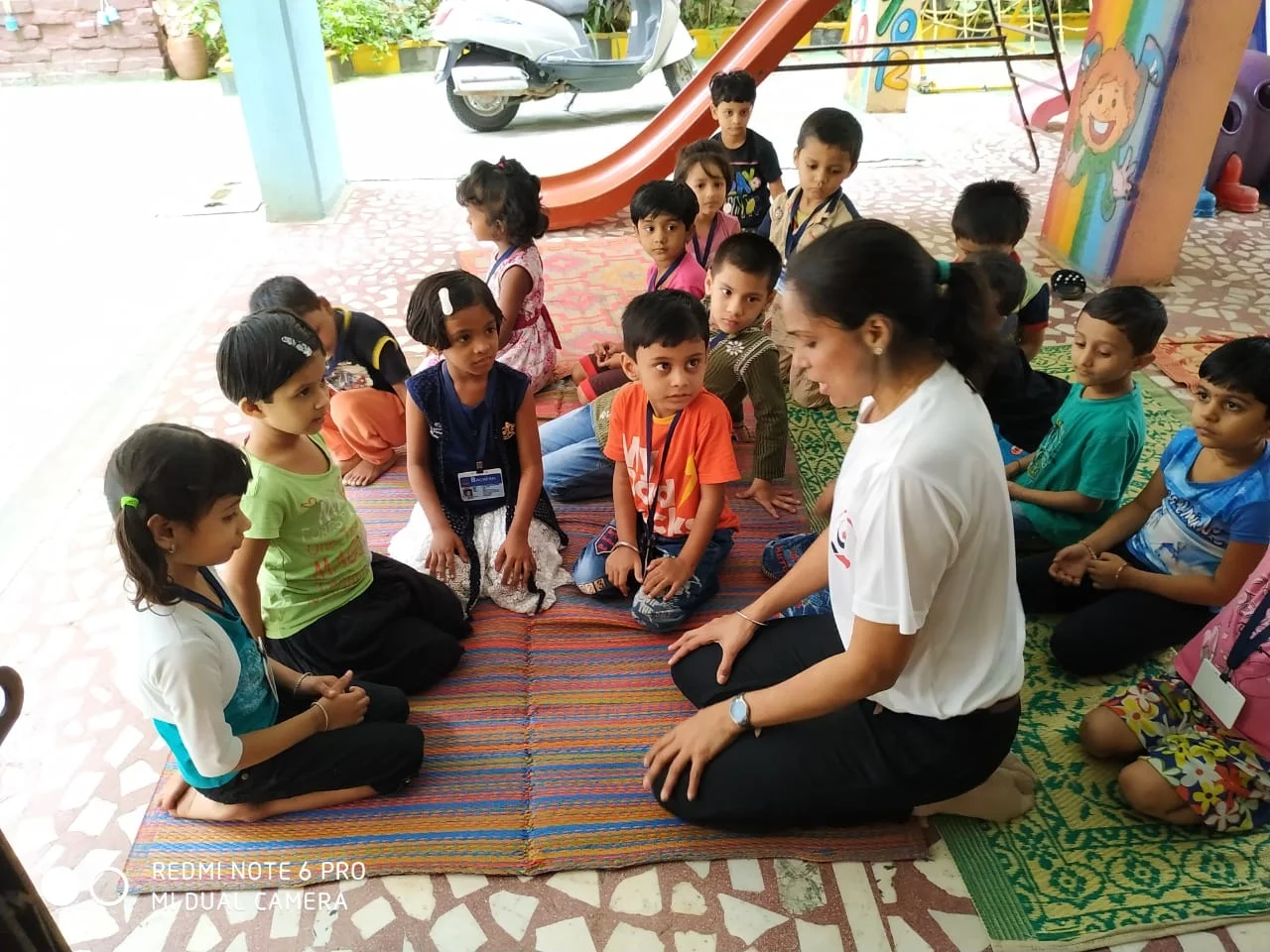
Heena Sharma Level 2 certified yoga teacher at Swasti Yoga Center My short story – It seemed difficult for me to introduce my 1year old kid to yoga. I love doing yoga and I wanted to introduce my kid to the culture of YOG. Initially, I found it difficult because I was trying to teach her yoga Asanas but then I realized that we can’t force them to do anything. Then I started doing some of the yoga postures in front of her. I started to bring her into my yoga class. And to my surprise, she herself started doing some of her favourite asanas. Kids do what they see as they always observe elders. So as a parent we need not force them for anything instead we should do things in front of them what we like them to do Kids these days are busy with electronic gadgets. In fact, we are so busy in our lives that we barely notice the growth and development of our kids. There are very less outdoor activities for them to play because they are busy with their electronic gadgets and televisions. Also with wrong food habits, kids are suffering from different diseases in such a small age. Yoga should begin at an early age. Yoga helps kids to relax, relieve stress and anxiety, sleep better, improve emotional regulation, increase empathy and improve mood, Increase in their concentration and helps them to cope up with difficult situations in their life. Physically, it enhances their flexibility, strength, coordination, and body awareness. In addition, their concentration and sense of calmness and relaxation improve. Yoga brings that marvelous inner light that all children require. Practicing’s yoga with kids also teaches them how to be more mindful, which happens to be just one of the many ways in which we can teach mindfulness to kids.

Read More ยป

Add Yoga To Retain The Beauty Of Body And Mind

Vitae aliquam porta sed augue consectetuer. Parturient posuere sed habitasse quisque malesuada platea. Dis suspendisse integer ut facilisis maximus mus.